
REVIEW · AUSTRALIA
Cairns: Tandem Skydive Experience over Reef & Rainforest
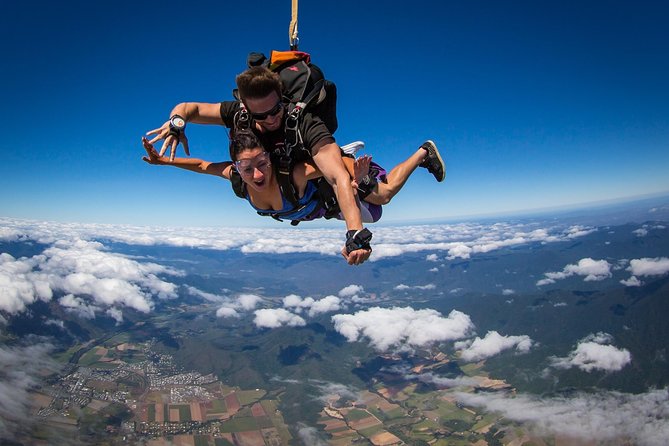
The big draw here is simple: you step out of a plane at 15,000 feet above Tropical North Queensland and fall toward a patchwork of coast, rainforest, islands, and sugar fields. You need no previous experience, and a trained instructor handles the parachute, checks your harness, and guides the landing.
I like the excellent instructor support and the chance to see Cairns from an angle no reef cruise can match. I also like the short three-hour format, which leaves room in your day for another activity. The main caution is that reef views can be distant, and the best photographs and video cost an additional A$179.
Key points before you book
- 15,000-foot jump: The highest option gives you a longer, more dramatic freefall than a lower-altitude jump.
- Reef and rainforest views: You may see the Great Barrier Reef, Fitzroy Island, Green Island, the Coral Sea, and rainforest, though some views are far away.
- Calm professional instructors: Instructors such as Sam, Brant, Victor, Phil, and G have been singled out for clear instructions and reassuring manner.
- Short safety lesson: Expect about 15 minutes of preparation before boarding the aircraft.
- Extra cost for memories: Photos and video are not included. The listed package price is A$179 per person.
- Weather matters: Rain or poor conditions can delay or cancel the jump, so keep some flexibility in your Cairns schedule.
A 15,000-foot view of Cairns
This is not a sightseeing flight with a parachute attached as an afterthought. The main event is the freefall. From the aircraft, you get time to take in the coast and islands, then the ground rushes closer as you fall securely attached to your instructor.
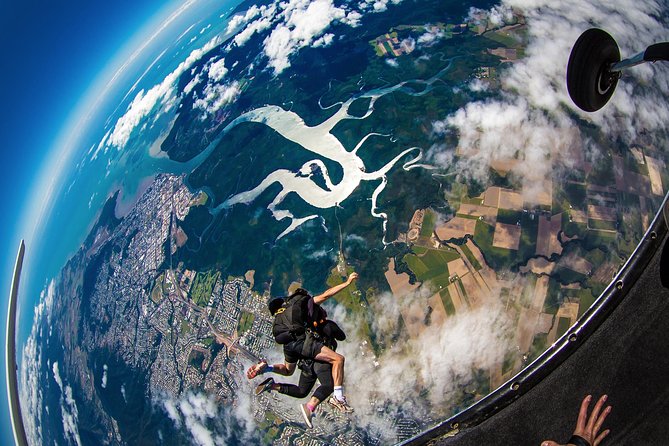
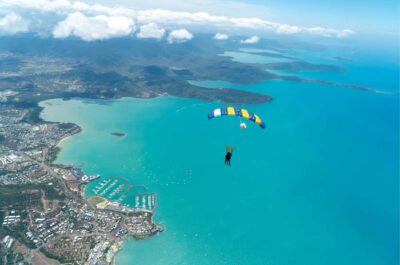
The setting is unusually scenic for a first jump. Cairns sits between the Coral Sea, the Great Barrier Reef, the Atherton Tablelands, and several areas of World Heritage rainforest. On a clear day, you can look toward Fitzroy Island and Green Island, with rainforest and agricultural land below.
Still, set your expectations carefully. The phrase reef and rainforest does not mean you land on a beach beside coral water. The drop zone is on land, and one person described the landing area as a sugar field. The reef may be visible in the distance rather than directly beneath you. You are buying a thrilling aerial experience with scenic views, not a close-up reef flight.
That distinction matters if the view is your top reason for booking. The freefall remains the strongest part of the experience, while the scenery is an excellent bonus when weather and visibility cooperate.
More Tandem Skydives in Australia:
- Airlie Beach: Tandem Skydive over the Whitsundays
★ 4.8 · 726 reviews - Gold Coast Tandem Skydive
★ 5.0 · 467 reviews - Airlie Beach: Tandem Skydiving Experience with Beach Landing
★ 4.9 · 382 reviews
From the Cairns meeting point to the aircraft
The listed meeting point is 11 Spence Street in Cairns City, close to public transport. The activity lasts about three hours and returns to the same meeting point. That makes it easier to fit around a morning reef cruise, an afternoon in town, or an evening meal.
The schedule can change. Rain has caused delays, and the jump time may be moved by the operator. I would avoid booking this immediately before a flight, wedding, cruise departure, or other fixed appointment. Give yourself breathing room, since weather decisions are made for safety rather than convenience.
The group limit is 20 people. That is large enough for a lively operation but not a huge crowd. You may spend some time waiting for aircraft movements, instruction, or your turn, so bring patience as well as nerves.
At the start, you receive a safety lesson lasting about 15 minutes. You learn how to position your body, respond to the instructor, and prepare your legs for landing. The lesson is short because you are not managing the parachute yourself, but you still need to listen closely.
The preparation is practical. You must empty your pockets and remove necklaces or other loose items. You cannot bring your own camera, since anything unsecured could be lost in the wind. Protective equipment is available, and one participant noted that trainers, shorts, and a T-shirt were suitable clothing.
The climb above the reef and rainforest
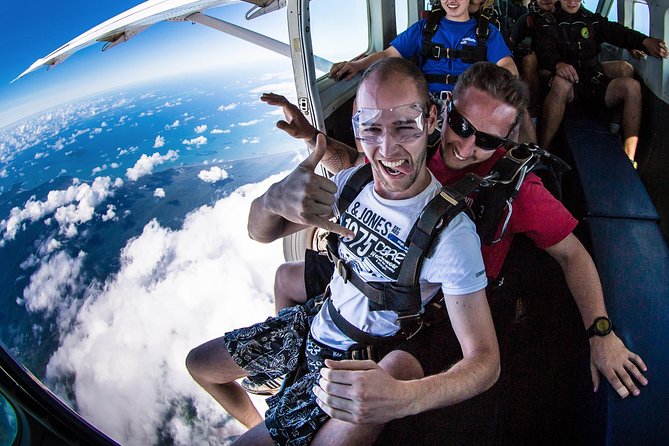
Once airborne, the aircraft climbs toward the jump height. This is your best chance to study the wider view before the freefall takes over. Look for the Coral Sea, the reef, the two island national parks, the Atherton Tablelands, and the dark line of rainforest.
The view from the aircraft is more useful than a quick glance during the fall. You may see Green Island and Fitzroy Island as separate shapes offshore, with Cairns and the coastal plain spread between the sea and the hills. On a very clear day, the scene can be striking.
Cloud cover can change the experience. One person described passing through a cloud, which sounds dramatic and memorable, but it also means your views may be brief. Low cloud, rain, or poor visibility can cause a delay or cancellation.
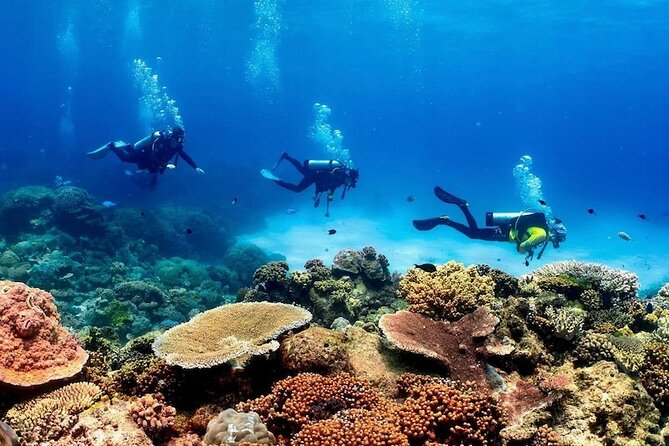
This is one reason I would avoid treating the tour as your only scenic activity in Cairns. If you want detailed reef viewing, book a boat or snorkeling trip separately. From the air, you get scale and perspective, not the close marine detail you see from the water.
The freefall: the part you will remember
At the aircraft door, you are secured to your instructor by a tandem harness. Your instructor checks and tightens the connections, positions you at the door, and handles the exit. You do not need to make technical decisions at the most intimidating moment.
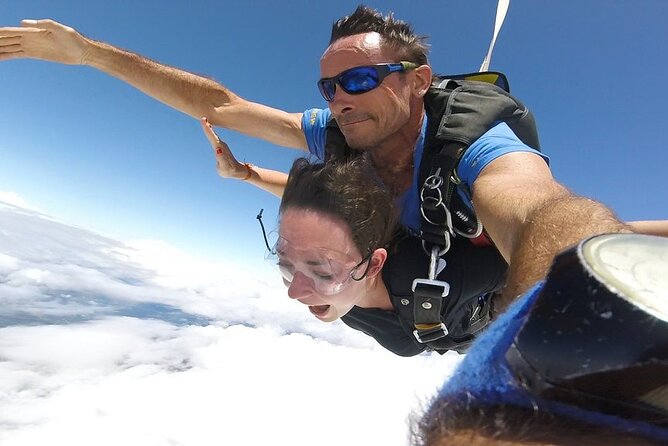
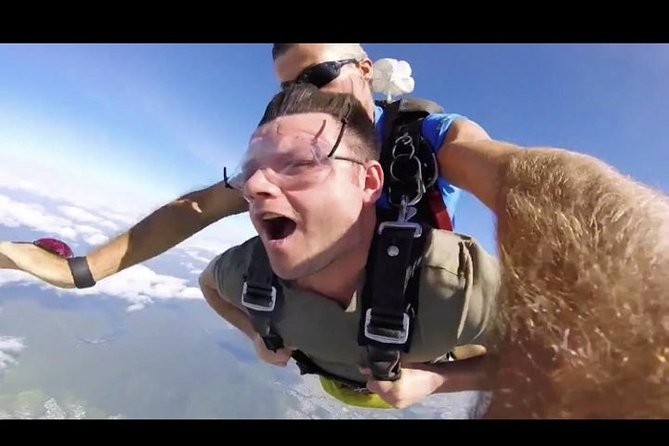
The first seconds can feel unreal. You move out of the aircraft, the air rushes past, and the ground appears to tilt away below you. The freefall is fast, loud, and physical. Several people found it less frightening than expected because there was little time to overthink the exit.
Your ears may pop during the fall. A face visor is used for the initial part, and it can be removed once the parachute opens. The instructor may use humor to settle your nerves, but the tone can vary by instructor. Sam was praised for keeping a nervous participant calm, while Brant was credited with making the experience feel easy. Victor was noted for clear, precise instructions, and G was praised for capturing the jump on camera.
The quality of this instructor relationship matters. You are not simply buying a ticket on an aircraft. You are trusting another person with the equipment checks, body position, parachute deployment, and landing. The strongest part of this experience is the sense that the instructors remain in control while you enjoy the sensation.
More Skydives in Australia:
- Cairns: Tandem Skydive Experience
★ 4.9 · 282 reviews - Rottnest Island Tandem Skydive
★ 5.0 · 258 reviews - Airlie Beach Tandem Skydive Over the Whitsunday Islands
★ 4.5 · 255 reviews - From Sydney: Tandem Skydive Experience over Beach
★ 4.7 · 234 reviews
The quiet parachute ride back down
After the freefall, the parachute opens and the mood changes quickly. The noise drops away, and you have time to look around. This is when the broader view becomes easier to appreciate.
You may see the rainforest areas, the coastal plain, sugar fields, and distant islands. The scenery can be impressive, but keep the earlier warning in mind: the reef is not necessarily directly below you. The exact view depends on the flight path, weather, and visibility.
The parachute ride also gives you a chance to talk with your instructor. Some instructors may point out features below or help you settle into the harness. You can enjoy the contrast between the intense freefall and the quiet descent.
The landing is less dramatic than many first-time jumpers expect. You raise your legs as instructed, and the instructor lands on their feet. You then walk forward, although some people may slide slightly across the grass. Flexible knees and hips help, but the physical demands are described as moderate rather than extreme.
One 54-year-old participant with a troublesome knee managed the jump, but that does not replace personal medical advice. The operator requires a moderate fitness level, and you should consider your own health before booking.
The four named scenery areas
The itinerary calls attention to four areas. They are best understood as visual reference points rather than a land-based sightseeing route.
Daintree Rainforest and Cooper Creek Wilderness
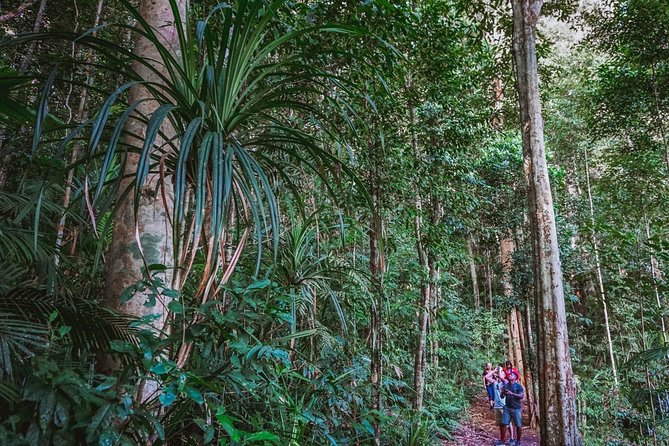
The Daintree region represents the rainforest side of Tropical North Queensland. From above, you may see the broad green mass of the World Heritage rainforest, though the jump itself does not take you on a forest walk or to Cooper Creek.
This part of the view adds contrast to the coast. You see a region of dense forest and hills rather than only the sea and city. If you want to explore the Daintree at ground level, you will need a separate outing.
Atherton Tablelands
The Atherton Tablelands sit inland from Cairns and provide a different view of the region. From the air, the tablelands help you understand how quickly the area rises from the coast toward higher country.
Do not expect a stop with time to explore local towns, waterfalls, or farms. The tablelands are part of the panorama, not a separate visit during this three-hour activity.
Fitzroy Island National Park
Fitzroy Island is one of the offshore features you may identify from the aircraft or under parachute. Its position off Cairns helps give the scene a sense of distance and scale.
The island may be visible rather than close. If you want beaches, walking tracks, or time on the island, arrange a separate ferry trip. Here, it serves as one of the most appealing markers in the coastal view.
Green Island National Park
Green Island offers another possible reef and island reference point. Seeing it from above helps you understand its place within the wider reef system.
Again, this is an aerial view, not an island visit. The experience gives you a broad picture of the coast and sea, while a boat trip provides the closer look at water and marine life.
Price, photos, and the real value
The listed price is $250.32 per person. That includes the qualified instructor, safety equipment, commemorative certificate, Australian Parachuting Levy, and administration fee. For a specialist activity with an aircraft, trained staff, and safety equipment, the price is reasonable if the jump itself is your priority.
The value is less clear if you mainly want a reef sightseeing flight. The scenery can be distant, and the freefall lasts only part of the three-hour visit. You are paying for the complete experience: preparation, aircraft ascent, freefall, parachute descent, landing, and the certificate.
The largest extra cost is the photo and video package, listed at A$179 per person. That is a substantial addition, almost the price of the jump itself. The camera is operated by the instructor, so you cannot use your own GoPro.
If you want proof of the experience, budget for the media package before you arrive. One package description included about 80 photos and a professionally edited video of roughly four to five minutes, though exact contents can vary. Some people consider the footage essential because the sensation is difficult to explain afterward. Others may prefer to save the money.
Food and drinks are not included. Plan accordingly, especially if nerves make you skip breakfast or if the schedule changes due to weather.
Who should book this jump
This suits a first-time jumper who wants a major thrill without learning to operate the parachute. You are attached to a professional from start to finish, and the strongest feedback centers on calm guidance and a strong feeling of safety.
It also suits repeat jumpers. The instructors, coastal setting, and high-altitude option offer enough appeal for someone who has already tried a tandem jump elsewhere.
You need to be at least 16, with approval required for anyone under 18. A parent or guardian must accompany minors. Anyone over 94 kilograms may pay a surcharge, and people over 110 kilograms must apply. These limits are important, so contact the operator before making firm plans if your weight is close to either figure.
This is not ideal for someone seeking a relaxed scenic flight, a close view of coral, or a tightly timed activity. It may also be a poor fit if you are uncomfortable with weather uncertainty or extra media costs.
The activity carries real risk. The operator warns that parachuting can involve problems during the aircraft flight, descent, or landing, including equipment issues and injuries. Read those terms carefully and be honest about health conditions. An Australian Parachute Club registration may be required, and an optional personal insurance charge of A$30 has also been noted.
Should you book it?
Book this if the thought of freefall from 15,000 feet makes your pulse quicken and you want a first jump with an experienced professional. The instructors are the strongest reason to choose it, and the Cairns setting adds an appealing mix of coast, islands, rainforest, and inland hills.
Do not book it solely for a close-up Great Barrier Reef view. The reef may be distant, and the landing area is on agricultural land. Keep your schedule flexible for weather, budget another A$179 if you want photos and video, and treat the parachute jump as the main event.
For an adrenaline-focused Cairns day, this is a strong choice. For reef exploration, pair it with a boat or snorkeling trip rather than expecting the jump to replace one.
FAQ
How high is the tandem parachute jump?
The jump is from up to 15,000 feet, or 4,572 meters.
Do I need previous experience?
No. First-time participants are welcome, and you jump with a trained professional instructor.
How long does the activity last?
The experience lasts approximately three hours and ends back at the Cairns meeting point.
Where do I meet the operator?
The meeting point is 11 Spence Street, Cairns City, Queensland 4870, Australia.
Is transport included?
The supplied information lists the meeting point and says the activity ends there. It does not state that hotel transport is included.
Are photos and video included?
No. Photo and video packages are paid separately at the drop zone. The listed price is A$179 per person.
What is the minimum age?
The minimum age is 16, subject to approval. Anyone under 18 must be accompanied by a parent or guardian.
Are there weight limits?
Anyone over 94 kilograms may pay a surcharge. Anyone over 110 kilograms must apply.
What happens if bad weather cancels the jump?
You can choose another date or receive a full refund if the operator cancels because of poor weather. You can also cancel for a full refund if you do so at least 24 hours before the start time.
Just added around Australia
- Rottnest Skydive + Hillarys Ferry package★ 5.0 · 20 reviews
- Rottnest Skydive + Perth Barrack St Ferry package★ 5.0 · 11 reviews
- Noosa: Tandem Skydive Experience★ 4.0 · 16 reviews
- Rottnest Island Skydive Including Round Trip Ferry from Fremantle★ 4.5 · 3 reviews
- Coffs Harbour Ground Rush or Max Freefall Tandem Skydive on the Beach★ 5.0 · 11 reviews
- Bungy Jump & Giant Swing Combo in Skypark Cairns Australia★ 5.0 · 14 reviews
- SA Skydiving Adelaide – Langhorne Creek★ 5.0 · 13 reviews
- Sunshine Coast: Tandem Skydive with Beach Landing★ 5.0 · 19 reviews
Australia Skydiving, compared.
Tandem Skydiving Experience with Beach Landing
Read our review →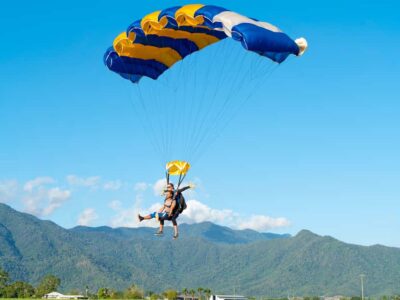
Airlie Beach Tandem Skydive Over the Whitsunday Islands
Read our review →
Browse the lists this tour appears in