
REVIEW · THE UNITED STATES
Chicago Lincoln Park Indoor Skydiving with Two Flights
The most surprising part of this indoor flight is how quickly you leave the floor. A 1,400-horsepower fan pushes air up through the chamber, reaching speeds of up to 180 miles per hour. You do not leap from a plane or feel a stomach-dropping fall. You simply lean into the air and learn to balance.
I like the one-on-one coaching inside the chamber, and I like that two 60-second flights give you a second chance to fix your body position. The main drawback is value: $136.25 buys a memorable hour-plus activity, but your actual flying time is only two minutes.
Key points to know before booking
- Two 60-second flights: You get a proper second attempt, but not a long session in the air.
- One instructor per flyer: Your instructor stays with you inside the chamber and helps adjust your position.
- Ages 3 and up: Children can participate, and anyone under 18 needs a parent or guardian to sign the waiver.
- Strict safety rules: Neck, back, heart, shoulder, pregnancy, hard cast, and weight restrictions apply.
- High-flight option: Several people specifically recommend asking about the higher flight, which can offer more movement and a greater sense of achievement.
- Certificate at the end: You receive a personalized certificate showing what you accomplished.
What you really do at iFLY Lincoln Park
This activity takes place at iFLY Indoor Skydiving at 800 W Scott Street in Chicago’s Lincoln Park area. The full visit lasts about 1 hour and 15 minutes according to the booking details, while the facility’s own first-time flyer schedule can run closer to 1 hour and 30 minutes from arrival to departure.
That difference matters if you are fitting this between a museum visit, dinner, or an airport pickup. Give yourself extra time rather than planning a tight connection. You should arrive 10 to 15 minutes early so check-in does not eat into your session.
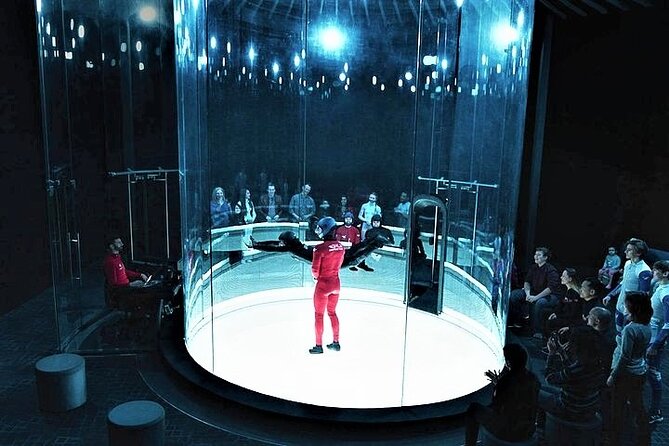
Your group can include up to 12 people. You will not all float in the chamber together. Instead, each person flies one at a time with an instructor while the rest of the group watches from the observation area. This setup works well for families and couples because your companions can see what you are learning and cheer you on.
More Indoor Skydiving in the USA:
Training, helmets, and the first flight
After check-in, you meet the flight team and receive a jumpsuit, helmet, goggles, and other required gear. Wear comfortable clothing underneath, preferably pants and a shirt without a collar. Well-fitting lace-up shoes or running shoes are the right choice.
Long hair should be braided and secured in a low bun. Remove watches, rings, necklaces, bracelets, loose earrings, and hair accessories. Empty your pockets before entering the chamber. Lockers are available, but leaving valuable items at home is simpler.
The safety class is required for first-time flyers. You learn the basic body position and hand signals before entering the chamber. The key is to keep your body relaxed, raise your chin, and use small movements. Trying to fight the air or bend sharply makes control harder.
You can wear glasses under the larger goggles provided for that purpose. Breathing is not difficult, although the wind hits your face like air from a moving car window. The instructor explains how to breathe normally and how to respond to simple signals.
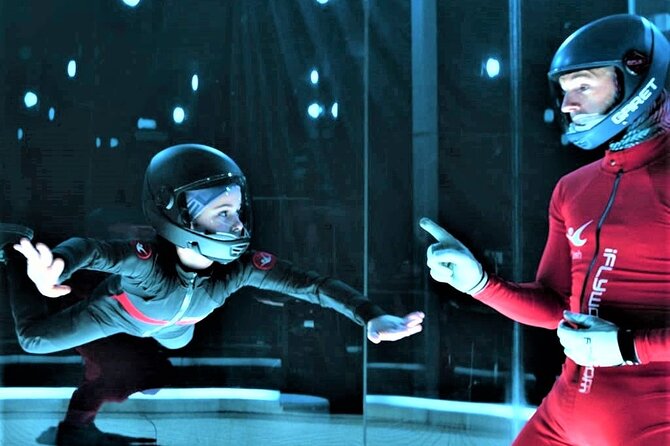
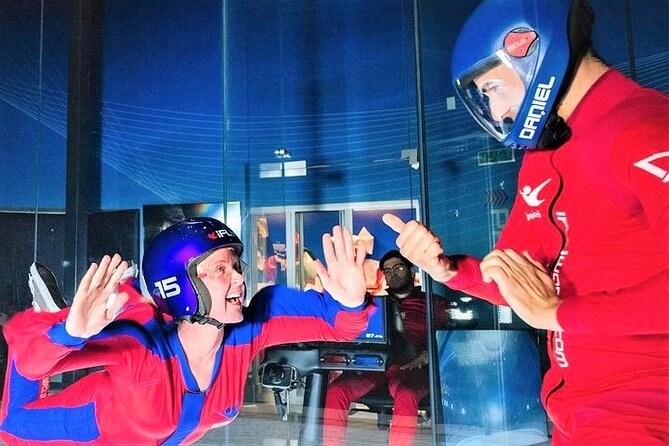
The first flight usually feels more like learning a new body position than performing a stunt. Your instructor can hold the handles on your suit and make small adjustments while another staff member controls the air speed from outside. This two-person system is one of the better features for nervous beginners.
The 180-mph flight chamber
The chamber uses a vertical column of moving air. Fans pull air upward through the flight area, compress it, and send it back into the system. As the operator increases the speed, the air supports your body and lets you float.
The advertised top speed is 180 miles per hour, or about 290 kilometers per hour. That does not mean you personally need to fly at that speed from the start. The operator adjusts the airflow to match the flyer, and your instructor remains with you.
You will not experience the height sensation of a real jump from an aircraft. There is no aircraft, no parachute deployment, and no sudden fall. That makes this a good introduction for someone curious about skydiving but unwilling to commit to a plane jump.
It also explains why some people find the activity less thrilling than expected. If you want a strong sense of free fall, stomach lift, or G-force, this may feel mild. The air supports you rather than dropping you. I would describe the sensation as active balance and controlled movement, not a roller coaster ride.
Why the second flight matters
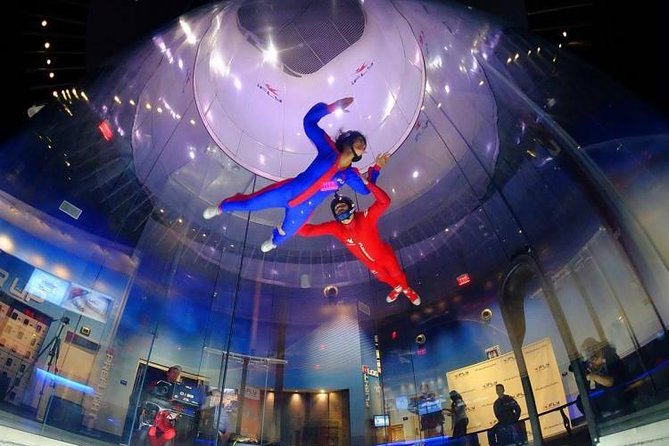
Each flight lasts 60 seconds. That sounds short, and it is. The time passes quickly because you are concentrating on breathing, hand position, leg position, and the instructor’s signals.
The second turn is important because the first one is largely an introduction. You have already felt the air, learned how the instructor communicates, and made your first corrections. On the second flight, you can often stay stable for longer and begin making controlled turns.
Several people buy extra flights after their session because two minutes can leave you wanting more. If you are visiting from outside Chicago, though, extra sessions may not be practical unless you have time for another visit. The facility may also be full later in the day, so do not assume you can add flights at the last minute.
Ask about the high-flight option if your instructor thinks you are ready. This can involve a more advanced climb in the chamber and gives the experience a bigger finish. It is not guaranteed for every first-time flyer, and safety remains the priority, but it is worth asking about.
Flips and more complex tricks are for experienced flyers. You may learn to turn left or right during your first session, but do not arrive expecting acrobatics. The instructor decides what is suitable for your skill and comfort level.
More Skydives in the USA:
- Atlanta Indoor Skydiving Experience with 2 Flights & Personalized Certificate
★ 4.5 · 68 reviews - Fort Lauderdale Indoor Skydiving with 2 Flights & Personalized Certificate
★ 4.5 · 57 reviews - Phoenix Indoor Skydiving Experience with 2 Flights & Personalized Certificate
★ 4.5 · 55 reviews - Charlotte Indoor Skydiving Experience with 2 Flights & Personalized Certificate
★ 4.0 · 46 reviews
The instructors make or break the hour
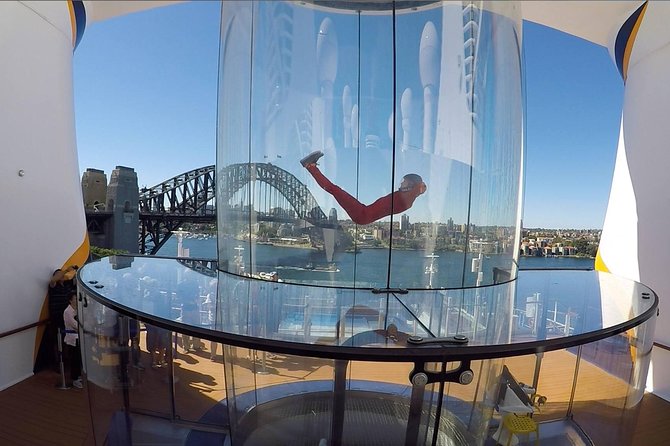
The staff is one of the strongest parts of this experience. Names that come up often include Vinnie or Vinny, Joe, Tommy, Hannah, JJ, Mark, and Jocelyn. You may not be assigned to one of them, but the consistent pattern is clear: the team puts effort into making beginners feel safe and involved.
Tommy has been praised for patient instruction and a calming manner. Hannah is described as energetic and fun while coordinating the flight. Joe receives especially warm comments for his friendly front-desk presence. Vinnie is singled out for helping families enjoy their first session.
That human guidance matters. A wind tunnel can look intimidating from the outside, especially when you see a person being lifted several feet above the floor. A good instructor breaks the task into small corrections and keeps the focus on what you can do next.
For younger flyers, a reassuring instructor is particularly important. Children as young as 3 can fly, but age alone does not tell you how comfortable a child will be with the noise, wind, helmet, and unfamiliar body position. A parent or guardian must sign for anyone under 18.
Is $136.25 good value?
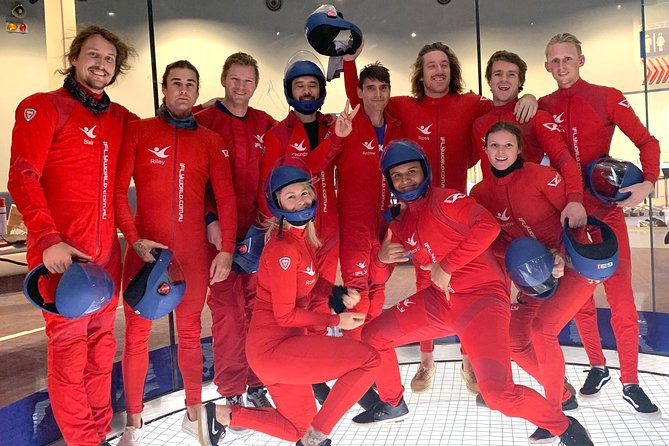
The listed price is $136.25 per person. That is a serious price for an activity with only two minutes of actual flight time, so you should judge it as a coached experience rather than a long ride.
You are paying for the instructor, safety training, equipment, chamber operation, facility time, and the chance to try controlled flight without making a plane jump. The session also gives you a certificate at the end, which is a nice keepsake for a birthday, first visit, or family outing.
I think the price works best for a special occasion or for someone who has always wanted to try skydiving but does not want the height. It is harder to justify if you are simply looking for the biggest adrenaline rush in Chicago. A fairground ride may offer a sharper burst of sensation for less money, although it will not teach you how to control your body in a wind tunnel.
Check the direct facility price before paying through a third-party booking site. Some customers have reported paying noticeably more than the normal iFLY charge, including a complaint about a 20 percent markup. The supplied rate may still be convenient, but price comparison is worthwhile.
Health, weight, and comfort rules
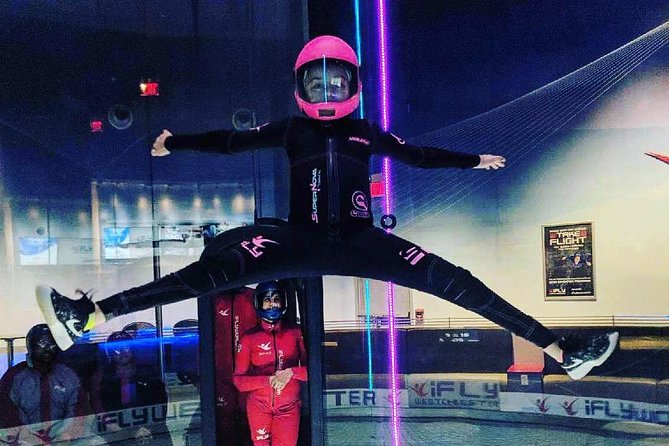
Safety limits are firm. You cannot fly if you are pregnant, wearing a hard cast, or have certain neck, back, heart, or shoulder conditions. Previous shoulder dislocations also rule out participation.
The normal weight limit is under 300 pounds. Anyone between 260 and 300 pounds may require an extra assessment at check-in, and the staff may apply additional restrictions. Record your current weight in the special requirements field when booking if this applies to you.
There is no height restriction. Most people can participate, but the final decision belongs to the local staff after they assess your condition and equipment needs.
If you have physical or cognitive challenges, contact the facility in advance and request a certified instructor for an All Abilities flight. Do not wait until arrival if you need a particular accommodation.
Who will enjoy this most
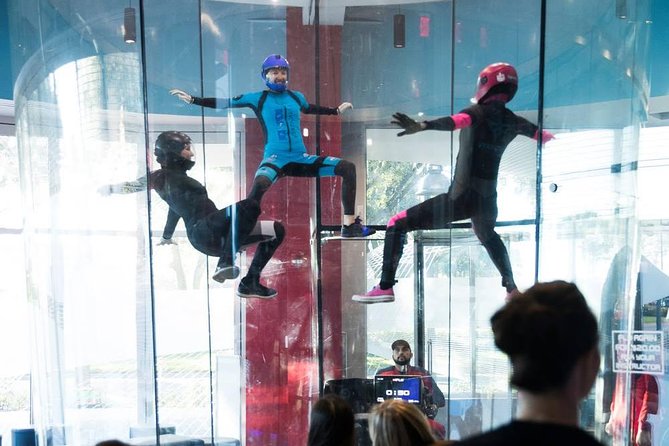
This is a strong pick for families with teenagers, couples looking for an unusual date activity, and solo visitors who want a structured challenge. It also works well as a birthday outing. One parent and a 15-year-old son described the experience as a shared activity with plenty of smiles, and a teenager’s enthusiastic reaction is a useful test for family appeal.
It suits cautious beginners because there is no plane, no jump, and no sensation of falling. You can wear glasses, receive a full briefing, and fly with an instructor directly beside you.
It is less suitable for someone who expects a long period of weightlessness or intense G-force. You will float, but the feeling is controlled and physical rather than wild. If your main aim is a huge rush, manage your expectations before you book.
The activity can also be enjoyable for someone who has already tried real skydiving. The wind tunnel removes the height and free-fall portion, but it lets you work on body control for a longer period and practice turns in a more controlled setting.
Timing, cancellations, and useful planning tips
The meeting point and finish point are the same, at 800 W Scott Street. The booking uses a mobile ticket, and the session is offered in English.
Arrive 10 to 15 minutes early. A late arrival can cause real trouble. One family arrived 15 minutes late because of traffic and did not get to fly, even though staff suggested calling about a new time. If you are coming from outside Chicago, build in a generous traffic buffer.
Free cancellation is available if you cancel at least 24 hours before the scheduled start. Changes or cancellations inside that 24-hour window are not accepted for a refund. If you need to reschedule after booking, call the location directly. Changes cannot be handled through every booking channel.
Bring comfortable clothes and proper shoes, but keep loose items at home. Spectators are welcome in the observation area, so family members can watch without buying a flight.
The certificate and the lasting memory
After both flights, you receive a personalized certificate of achievement. It may record skills such as flying without assistance or making left and right turns. This small touch gives the session a clear finish and helps children see that they learned something rather than simply rode a machine.
The certificate will not make up for a poor session, but here it fits the activity well. Indoor flight is built around progress. You start with a briefing, learn the position, complete the first attempt, adjust your technique, and then try again.
That is why the experience feels more satisfying for many people after the second flight. You are not just waiting for the machine to entertain you. You are learning how to respond to air.
Should you book the two-flight session?
Book it if you want a safe, unusual introduction to skydiving, especially for a family birthday, teen outing, or first-time flyer who dislikes heights. The instructors, clear training, group viewing area, and second attempt make it approachable.
Skip it if you want a long ride or a hard jolt of adrenaline. Two 60-second flights go quickly, and $136.25 is not a bargain in simple minutes-per-dollar terms.
My practical advice is to compare the direct facility price, arrive early, ask about the high flight, and treat the session as a coached skill experience. If that sounds more appealing than a simple thrill ride, iFLY Lincoln Park is a worthwhile Chicago activity.
FAQ
How long does the Chicago Lincoln Park indoor flight experience last?
The advertised duration is about 1 hour and 15 minutes. The facility advises that the complete first-time flyer experience can take about 1 hour and 30 minutes from start to finish.
How long is each flight?
Each flight in the wind tunnel lasts 60 seconds. This package includes two flights per person.
How many people are in each session?
A session can include up to 12 participants. You fly one at a time with an instructor while the rest of your group watches.
Do I need previous experience?
No. First-time flyers receive a required safety class and training session before entering the chamber.
What is the minimum age?
The minimum age is 3 years. Anyone under 18 needs a parent or guardian to sign the waiver.
Is there a weight limit?
Participants must weigh less than 300 pounds. People between 260 and 300 pounds require an additional evaluation at check-in, and extra restrictions may apply.
What should I wear?
Wear comfortable clothing and well-fitting lace-up sneakers or running shoes. Pants and a shirt without a collar are recommended. Long hair should be braided and secured in a low bun.
Can I wear glasses?
Yes. Larger goggles are available to fit over eyeglasses.
Can I cancel for a refund?
Yes, if you cancel at least 24 hours before the scheduled start time. Cancellations or changes made less than 24 hours before the start are not accepted for a refund.
Just added around the USA
- Sacramento Indoor Skydiving Experience with 2 Flights & Personalized Certificate★ 4.5 · 20 reviews
- San Francisco Indoor Skydiving with 2 Flights & Personalized Certificate★ 5.0 · 11 reviews
- Portland Indoor Skydiving Experience with 2 Flights & Personalized Certificate★ 4.5 · 12 reviews
- Paramus Indoor Skydiving Experience with 2 Flights & Personalized Certificate★ 4.5 · 16 reviews
- Westchester Indoor Skydiving Admission with 2 Flights & Personalized Certificate★ 4.0 · 16 reviews
- New York Queens Indoor Skydiving Experience With 2 Flights★ 5.0 · 4 reviews
- 3-Hour Tandem Skydiving in Las Vegas★ 3.5 · 15 reviews
- Loudoun Indoor Skydiving Experience with 2 Flights & Personalized Certificate★ 4.0 · 17 reviews
USA Skydiving, compared.
Orlando Indoor Skydiving Experience with 2 Flights & Personalized Certificate
Read our review →
Baltimore Indoor Skydiving Experience with 2 Flights & Personalized Certificate
Read our review →
Tampa Indoor Skydiving Experience with 2 Flights & Personalized Certificate
Read our review →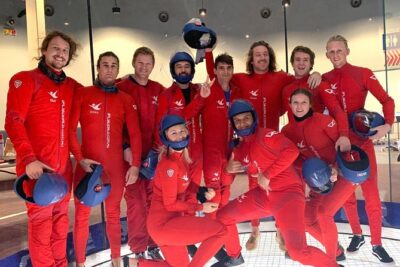
Atlanta Indoor Skydiving Experience with 2 Flights & Personalized Certificate
Read our review →
Fort Lauderdale Indoor Skydiving with 2 Flights & Personalized Certificate
Read our review →
Phoenix Indoor Skydiving Experience with 2 Flights & Personalized Certificate
Read our review →
Charlotte Indoor Skydiving Experience with 2 Flights & Personalized Certificate
Read our review →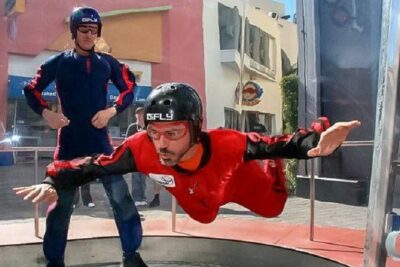
Dallas Indoor Skydiving Experience with 2 Flights & Personalized Certificate
Read our review →Browse the lists this tour appears in