
REVIEW · QUEENSTOWN
iFLY Indoor Skydiving Queenstown
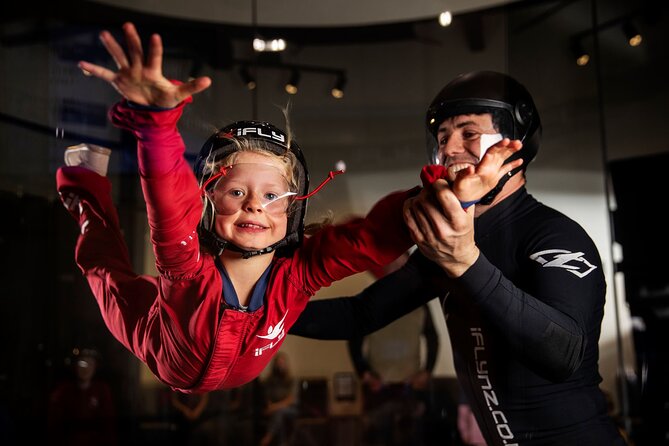
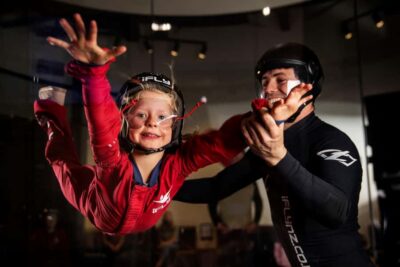
The unusual part of this Queenstown activity is simple: you get the sensation of freefall without an aircraft, parachute, or leap from a mountain. Two 60-second flights take place in a vertical wind tunnel beneath the Skyline Gondola, giving you a controlled way to try human flight.
I like the central Brecon Street location, which makes this a smart choice when rain interrupts outdoor plans. I also like the careful setup: certified instructors teach body position and hand signals, then provide the suit, helmet, and goggles. The main consideration is that the actual flying time is brief, and extras may cost more than you expect if you want add-ons such as a flight video.
Key points to know before you book
- Two one-minute flights: You get two separate chances to find your balance in the airflow.
- Beginner-friendly instruction: A certified instructor explains safety, body position, and hand signals before you enter the tunnel.
- Useful rainy-day plan: The indoor setting keeps this activity running when outdoor Queenstown plans are less appealing.
- Easy central meeting point: Start and finish at 27 Brecon Street, beneath Queenstown’s Skyline Gondola.
- Family-friendly, with limits: Children and first-timers can take part, but participants must weigh less than 125 kilograms.
- Small maximum group: The session is limited to eight people, which helps keep the instruction focused.
What the iFLY Queenstown experience actually feels like
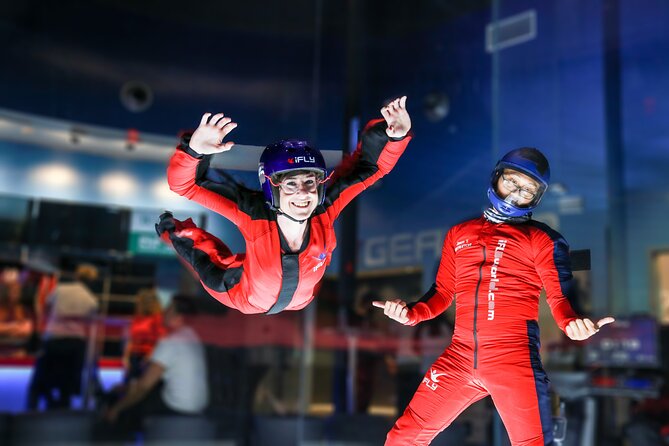
Indoor flight gives you a taste of skydiving without the parts that put many people off. There is no plane ride, no jump from a great height, and no parachute to manage. Instead, a powerful column of air supports your body inside a vertical tunnel.
That makes this a good introduction for someone who likes the idea of freefall but does not want to leave an aircraft. It also suits families looking for something more active than a standard sightseeing stop.
The experience lasts about one hour from start to finish. That hour includes orientation, changing into the supplied gear, instruction, and your time in the tunnel. The two flights themselves last one minute each, so you should set your expectations correctly. This is a short, concentrated burst of activity, not an hour of continuous flying.
Your instructor remains central to the experience. Before your first flight, you learn the basic body position and the hand signals used inside the tunnel. Those signals matter because the wind is loud and communication must be quick. You are not expected to work out the technique alone.
All instructors are certified by the International Bodyflight Association. Safety is presented as the main priority, which is especially important when you are trying to control your body in strong moving air for the first time.
More Indoor Skydiving in New Zealand:
- Queenstown: Ticket for 2 Indoor Skydiving Flights
★ 4.4 · 15 reviews - Basingstoke iFLY Indoor Skydiving Experience – 2 Flights & Certificate
★ 4.5 · 459 reviews - Manchester iFLY Indoor Skydiving Experience – 2 Flights & Certificate
★ 4.5 · 387 reviews
Arriving beneath the Skyline Gondola
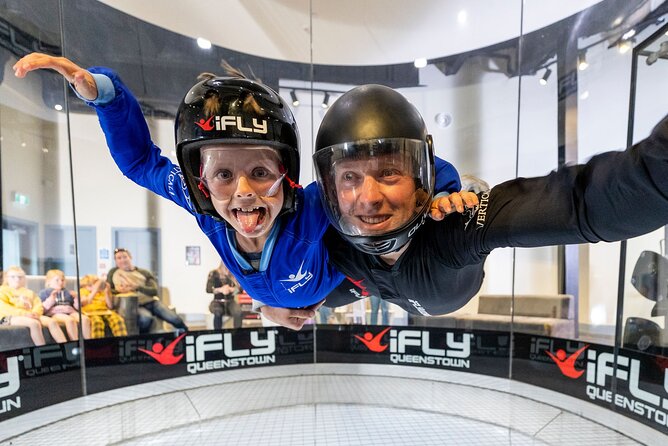
The meeting point is 27 Brecon Street in Queenstown, beneath the Skyline Gondola. You start and finish at this same location, so there is no separate transport arrangement to manage.
The central setting is one of the strongest practical features here. If you are already in Queenstown, you can reach the meeting point using local public transport or on foot from nearby parts of town. Hotel pickup and drop-off are not included, so plan your own way there.
Because the activity is indoors, it works well on a wet day. Queenstown is famous for outdoor adventures, but weather can spoil plans for mountain views, boat trips, or other open-air activities. iFLY gives you a reliable alternative that does not depend on a clear sky.
I would still allow enough time to arrive before the scheduled start. You need time for the safety briefing and for getting into the equipment, and arriving rushed can make the first flight feel more intimidating than it needs to be.
The group size is capped at eight people. That does not mean you will spend the whole hour in the tunnel, since participants take their turns, but the limit keeps the session relatively small. It also gives the instructor a manageable number of people to watch and guide.
The safety briefing and body position lesson
The first formal part of the session is the safety briefing and orientation. This is where you learn how the tunnel works, what your body should do in the air, and which hand signals your instructor will use.
The key lesson is body control. Small movements can change your position, so you need to keep your body in the form shown by the instructor rather than flailing your arms or legs. The training is designed for total beginners, so you do not need previous experience.
You also receive a full-body flight suit, helmet, and goggles. The equipment is included in the price, which makes the booking simpler. You do not need to arrange specialist clothing for the flight itself.
The instructor’s hand signals are worth paying attention to. Once the airflow starts, spoken instructions may be difficult to hear. Clear visual cues allow the instructor to tell you how to adjust your position without stopping the activity.
This preparation is valuable because the flight time is short. With only two minutes in the tunnel, you do not want to spend your first turn guessing what to do. Listen closely during the briefing, and treat the first flight as a lesson rather than a test.
Getting suited up for two 60-second flights
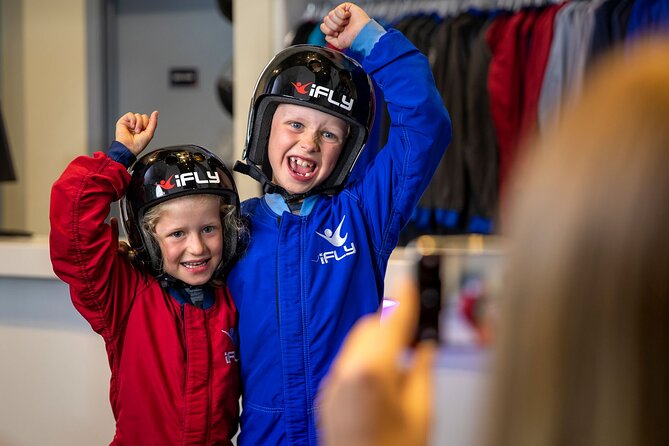
After the briefing, you put on the supplied flight suit, helmet, and goggles. The clothing is part of the safety setup and also helps create the feeling that you are taking part in a real flight session rather than simply standing in front of a large fan.
You then enter the wind tunnel for your first 60-second flight. A minute sounds short, but holding a stable position in moving air requires concentration. For a first-time participant, that minute can feel full because you are processing the airflow, your balance, and the instructor’s signals at once.
The second flight gives you a chance to use what you learned the first time. You may have a better sense of how to position your arms and legs, and you can respond more quickly to the instructor. The two-flight format is more useful than a single attempt because the first turn becomes practice for the second.
You should not expect a long, free-form session where you can experiment without guidance. The instructor is there to keep the flight safe and controlled. That is good news for beginners, although experienced indoor flyers may find the included package too basic.
A practical point is the weight limit. Participants must weigh less than 125 kilograms so the airflow remains at a safe speed. If that applies to you, check the requirement before booking rather than arriving uncertain.
The activity is not recommended for people with previous shoulder dislocations. That restriction is important because the airflow and body position place demands on the shoulders. You should also use your own judgment about any physical condition, even though most people can participate.
More Skydives in New Zealand:
- Skydive Auckland
★ 5.0 · 1,516 reviews - NZONE Skydive Queenstown
★ 4.5 · 1,438 reviews - Queenstown: Tandem Skydive Experience
★ 4.8 · 475 reviews - Lake Taupo 12,000-Foot Tandem Skydiving
★ 5.0 · 359 reviews
What makes this suitable for children and beginners
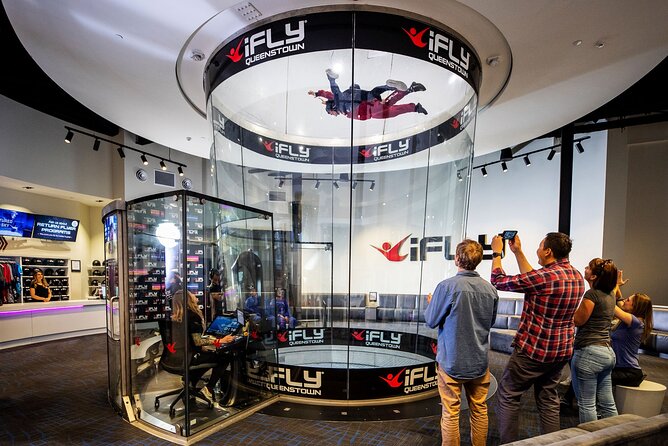
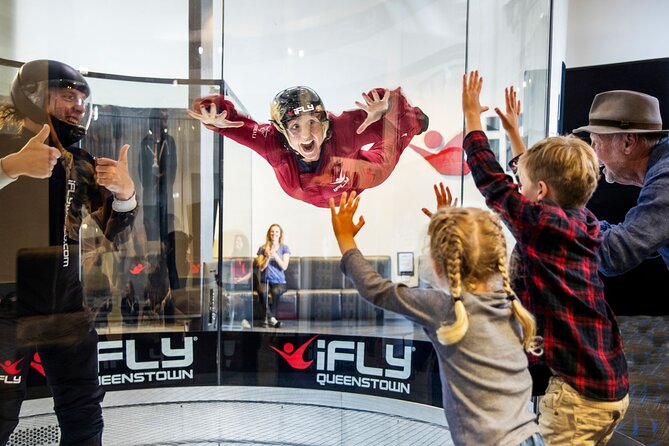
The activity is designed to accommodate children and people who have never tried anything like it. The instructor can tailor the experience to each person’s ability, which matters when one member of a family is confident and another is nervous.
The family-friendly nature is one of the strongest reasons to choose iFLY. A child does not need to understand parachuting or have previous adventure-sport experience. The short flights also make the activity easier to approach than a full outdoor jump.
That said, you should make sure every participant understands that this is active and physical. You are supported by air, but you still need to hold a body position and follow directions. The supplied helmet, suit, and goggles help with the setup, but they do not remove the need for attention.
I would choose this for a family with older children who want one shared activity, especially if some members do not want a real jump from an aircraft. It can also suit couples or friends who want a quick burst of excitement without committing to a full-day outing.
The maximum group size of eight helps maintain a more personal feel. You will not necessarily be alone with the instructor, but the session is not a huge crowd. That is useful when you want clear coaching and a chance to watch how the activity works before your own turn.
The value of the $86.26 price
At $86.26 per person, this is not a cheap filler activity. Its value depends on what you want from it.
The price includes the safety briefing, orientation, flight instructor, full-body suit, helmet, goggles, and two flights of 60 seconds each. You are paying for a complete introductory session rather than simply purchasing access to the wind tunnel.
The two flights are important when judging the cost. One minute alone would make the activity feel more like a novelty. The second turn gives you a chance to improve, and that extra attempt makes the short total flight time more worthwhile.
You should also remember that food, drinks, and hotel transport are not included. Since the activity takes about one hour, you can easily combine it with a meal or another Queenstown stop, but those arrangements are yours to make.
Some participants have been surprised by available add-ons and wished they had known about them in advance. If you are interested in extras, ask what is included in your booking before the session begins. In particular, a video of your flight may be available as an additional purchase, but it is not included in the stated package.
That video can matter if this is a special family occasion or your first flight. It is also the sort of extra that can push up the final cost, so decide ahead of time how much you want to spend.
The published rating is 4.9 from 245 ratings, with 98 percent recommending the experience. Those figures suggest strong satisfaction, especially with the staff and the way the activity is handled for beginners. They do not change the fact that the actual flight time is only two minutes, so compare the price with your interest in the experience itself, not with the length of the booking window.
What the strongest feedback points to
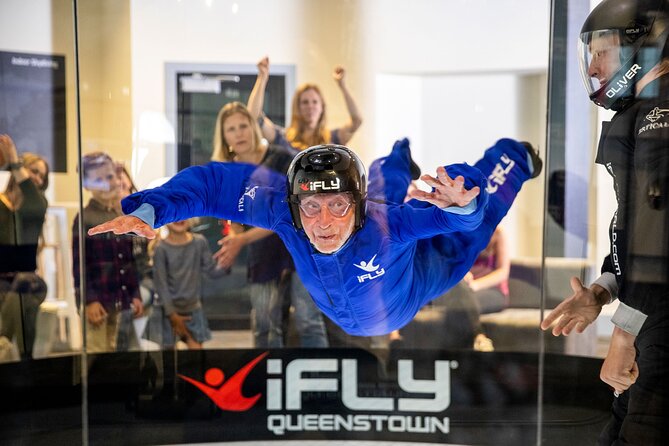
The most consistent praise centers on the staff. Friendly instructors explain safety clearly and keep the mood positive, which helps when someone is nervous about entering the tunnel for the first time.
That combination is more important here than fancy presentation. The instructor controls the pace, watches your position, and gives you corrections through hand signals. Good coaching can turn a confusing first attempt into a satisfying second flight.
The experience also works well with children. Staff can adapt the session to each person’s ability, so a confident adult and a less certain child do not need to approach the activity in exactly the same way.
Another well-liked feature is the chance to receive video of your flight, when purchased as an extra. Flying is difficult to photograph from the participant’s point of view, so a recording gives you a way to remember the moment and show family members what you did.
The small number of add-ons is the one area where you should ask questions in advance. The core package is clear, but extra purchases may not be obvious until you arrive. A quick check before booking can prevent an unexpected bill.
Who should book this Queenstown activity
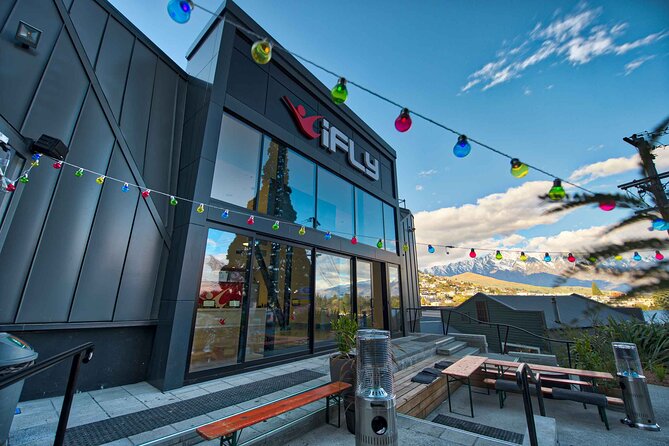
I would recommend iFLY Queenstown to you if you want the feeling of freefall but are not ready to jump from an aircraft. It is also a strong option for a family, a first-time adventurer, or anyone searching for an indoor plan on a rainy day.
It suits people who value instruction and a controlled setting. You do not need to bring technical knowledge, specialist equipment, or previous experience. The instructor handles the safety process and teaches you the basic movements.
It may be less satisfying if you want a long adventure or a remote outdoor setting. You receive two one-minute flights, not a full afternoon of activity. Experienced flyers may also want more airtime than this introductory package provides.
The activity is not suitable for someone with a previous shoulder dislocation, and the 125-kilogram weight limit is firm for safety reasons. Service animals are allowed, and the location is near public transportation, which makes the visit easier to plan for many people.
Free cancellation is available when you cancel at least 24 hours before the scheduled start time. Cancellations or changes made less than 24 hours in advance are not refunded or accepted, so keep that deadline in mind when arranging a weather-dependent Queenstown schedule.
Should you book iFLY Queenstown?
Book it if you want a safe, compact introduction to indoor flight, especially with children or first-timers in your group. The central location, included equipment, certified instructors, and two separate flights make the $86.26 price easier to justify.
Think twice if you want extended airtime or dislike paying extra for optional add-ons. The activity is short, and the tunnel time is limited to two minutes per person.
For most beginners, the biggest benefit is not the length. It is the chance to try freefall in a controlled room, with an instructor showing you what to do at every stage. On a wet Queenstown day, that can be exactly the kind of plan you need.
FAQ
Where does iFLY Queenstown meet?
The meeting point is 27 Brecon Street, Queenstown 9300, New Zealand, beneath the Skyline Gondola.
How long does the activity last?
The experience takes approximately one hour, including the orientation, safety briefing, equipment setup, and flights.
How much flight time does each person receive?
Each person receives two flights, with each flight lasting 60 seconds.
Is equipment included?
Yes. The package includes a full-body flight suit, helmet, and goggles.
Is instruction included?
Yes. A flight instructor provides the safety briefing, orientation, body-position guidance, and hand signals used during the flight.
Is the activity suitable for children and beginners?
Yes. The experience is suitable for children and total beginners, and the instructors can adjust the session to each person’s ability.
Is there a weight limit?
Yes. Participants must weigh less than 125 kilograms to help maintain safe wind speeds.
Can someone with a previous shoulder dislocation participate?
The activity is not recommended for people with previous shoulder dislocations.
Can I cancel for a full refund?
Yes, if you cancel at least 24 hours before the experience start time. Cancellations made less than 24 hours before the start time are not refunded, and changes inside that period are not accepted.
Just added around New Zealand
- Skydive Mt. Cook – 20+ Seconds of Freefall from 10,000ft★ 5.0 · 5 reviews
- Skydive Mt. Cook – 70+ Seconds of Freefall from 16,500ft★ 5.0 · 5 reviews
- Skydive Mt. Cook – 45+ Seconds of Freefall from 13,000ft★ 5.0 · 14 reviews
- Tasman Experience and Skydive | Combo★ 5.0 · 2 reviews
- Bay of Islands: 9000ft Skydive★ 4.5 · 12 reviews
- Queenstown: Ticket for 2 Indoor Skydiving Flights★ 4.4 · 15 reviews
- Queenstown: Nevis Bungy & Catapult Combo★ 5.0 · 2 reviews
- Queenstown: Nevis Thrillogy (Bungy, Swing, Catapult)★ 5.0 · 5 reviews
Queenstown Skydiving, compared.
Browse the lists this tour appears in