
REVIEW · NEW ZEALAND
Skydive Mt. Cook – 70+ Seconds of Freefall from 16,500ft
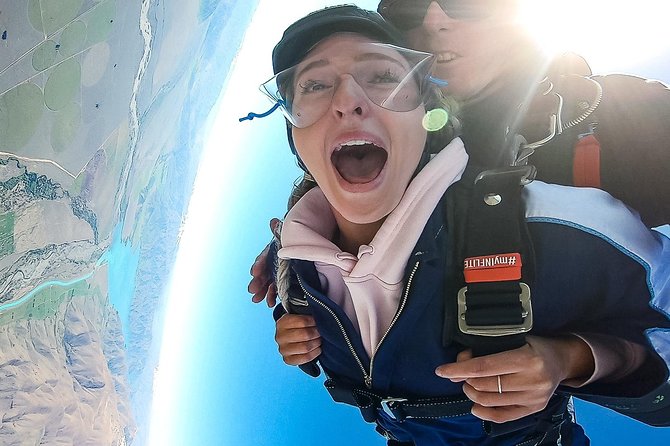
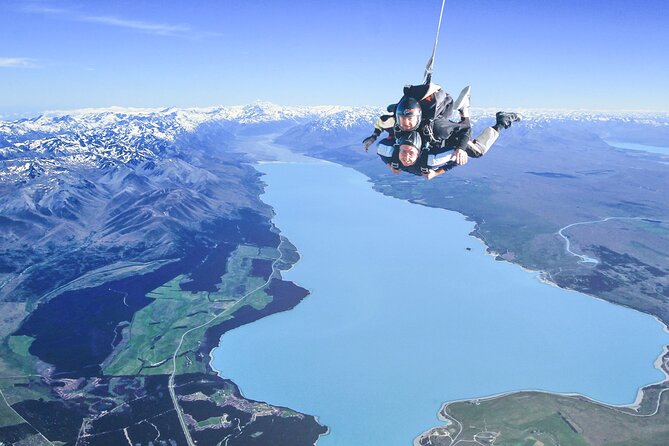
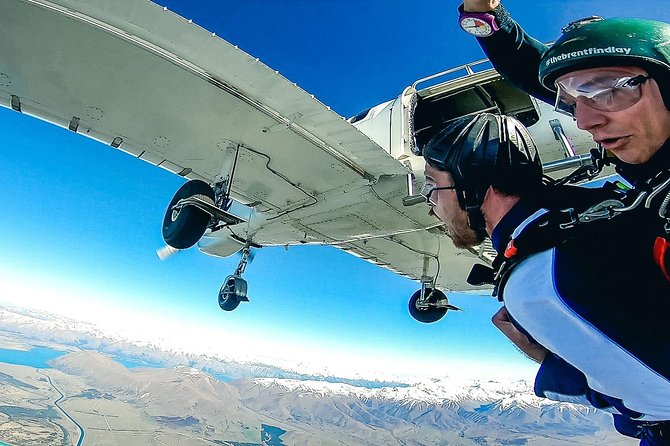
The big draw here is the view. From 16,500 feet, you get more than 70 seconds of freefall above the South Island’s snow-capped mountains, glaciers, lakes, and Aoraki/Mt Cook National Park. This is not a jump over an anonymous field. The scenery is the main event.
I like the small maximum group of nine, which should make the experience feel more personal, and I like the upbeat crew. The team is described as happy, bubbly, and inspiring, useful qualities when your stomach is asking sensible questions before takeoff. The main consideration is weather: poor conditions can force a date change or cancellation.
Key points at a glance
- 16,500-foot jump: You receive more than 70 seconds of freefall, the longest option described here.
- South Island views: Look for glaciers, lakes, snow-covered peaks, and Aoraki/Mt Cook National Park.
- Pukaki Airport base: Check in at 2 Swallow Drive, Pukaki Airport, near Twizel.
- Small group size: The experience accepts a maximum of nine people.
- About two hours: Allow roughly two hours from arrival to the end of the activity.
- Weather matters: You can receive a full refund or choose another date if poor weather stops the jump.
Why this freefall is about more than the jump
Skydiving can be done in many places, but the setting changes the whole experience. Here, the aircraft leaves from Pukaki in the heart of the South Island, with the high peaks and broad lakes of the Mackenzie Basin nearby. You are paying for the time in the air, but you are also paying for a view that would be hard to reach by road.
The 16,500-foot altitude is the headline feature. At that height, the freefall lasts more than 70 seconds, giving you time to take in the setting rather than experiencing the rush as a very short burst. Of course, the first few seconds may be spent processing the fact that you have just left an aircraft. That is normal. The extra freefall time is still valuable for anyone comparing different jump heights.
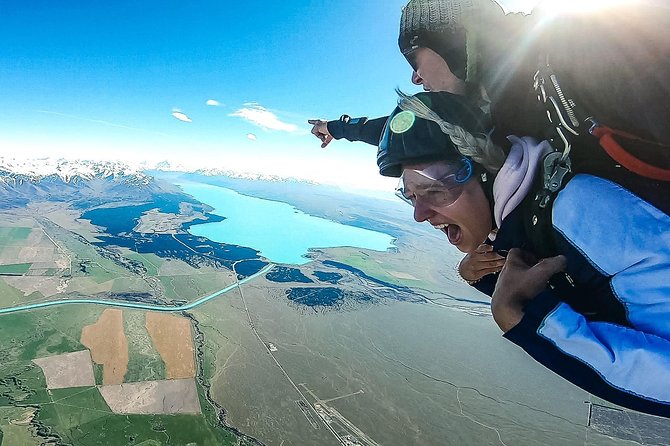
The setting around Pukaki gives the view its character. You may see snow-capped mountains, glacier systems, large lakes, and the wider area of Aoraki/Mt Cook National Park. The appeal is not just the height. It is the contrast between the pale peaks, icy valleys, and blue water far below.
More High-Altitude Skydives in New Zealand:
- 15,000ft Tandem Skydive in Tauranga – Bay of Plenty
★ 5.0 · 305 reviews - Bay of Islands: 12,000ft Skydive
★ 5.0 · 253 reviews - 15,000ft Tandem Skydive in Bay of Plenty
★ 5.0 · 180 reviews
What happens at Pukaki Airport
Your meeting point is Skydive Mount Cook at 2 Swallow Drive, Pukaki Airport, Pukaki, Twizel 7999, New Zealand. The experience starts and ends at this same location, so you do not need to arrange a separate return transfer based on the information provided.
The total duration is about two hours. Treat that as a useful planning window rather than a promise that you will be in freefall for most of the morning or afternoon. The jump itself is only one part of the schedule. The rest of the time covers the operating process at the airport and the flight activity before and after the freefall.
You will receive confirmation when you book, and the ticket is mobile-friendly. That makes the check-in side simple, especially if you are moving around the South Island and do not want to print paperwork. Still, keep the booking details easy to reach on your phone.
The group limit is nine people. That does not mean you will personally share every moment with eight others, but it does give you a clearer idea of the scale. This is not presented as a huge, coach-style operation. A smaller group can also make it easier to hear instructions and keep track of the schedule.
The view from 16,500 feet
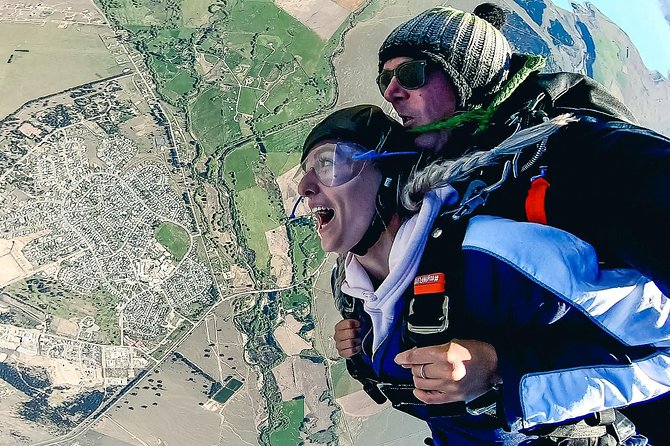
The jump height is the strongest reason to choose this option. More than 70 seconds of freefall gives you an extended look at the terrain, though the experience itself will naturally feel intense and fast. The height also puts more of the surrounding South Island scenery into view.
The area is known for big natural features rather than city sights. Snow-covered mountains give you a sharp horizon, while glaciers add broad pale lines and folds among the peaks. Lakes provide a different color and shape below. Aoraki/Mt Cook National Park completes the setting with one of New Zealand’s best-known mountain regions.
You should keep your expectations grounded. The supplied details do not promise a particular peak, glacier, or lake on every flight, and visibility can change. Weather is especially important in this part of New Zealand. On a clear day, the scenery should be the star. On a poor-weather day, the operator may need to reschedule or cancel.
That weather policy is not a minor footnote for a skydiving activity. Clouds can hide the very views that make this jump special, and bad conditions can affect safe operations. If your schedule is tight, leave some flexibility around the booking rather than placing it on the last possible day of your South Island trip.
The crew can shape the whole mood
A jump begins long before the aircraft leaves the ground. You may arrive excited, nervous, or both. The crew’s attitude matters because the practical side of the experience needs to feel clear and calm.
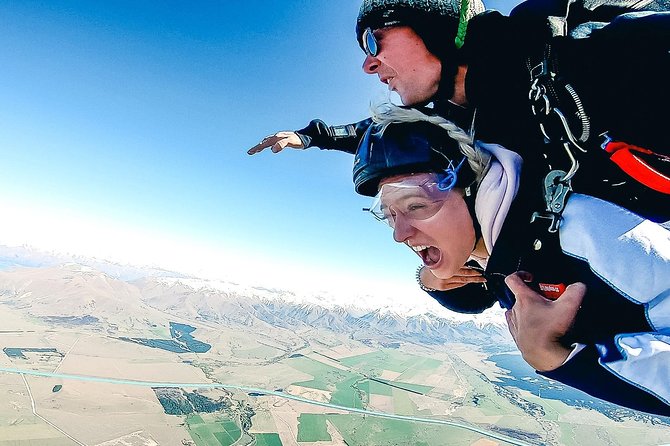
The available feedback highlights a happy, bubbly, inspiring team and says the staff made the jump more enjoyable. That is the most specific praise attached to this experience, and it is worth taking seriously. A friendly crew cannot remove the nerves, but it can make the process feel more human.
No guide names are provided, so I cannot identify individual instructors. What you can expect is a crew-based operation at Pukaki Airport, with staff handling the experience from the meeting point through the return. Pay attention to their instructions and use the time before the jump to ask anything you need clarified.
The limited feedback also means you should avoid treating the 4.8 rating from five reviews as a large statistical sample. It is a strong early signal, especially for the staff experience, but not enough to settle every question about wait times, exact views, or day-to-day consistency.
More Skydives in New Zealand:
- Skydive Auckland
★ 5.0 · 1,516 reviews - NZONE Skydive Queenstown
★ 4.5 · 1,438 reviews - Queenstown: Tandem Skydive Experience
★ 4.8 · 475 reviews - Lake Taupo 12,000-Foot Tandem Skydiving
★ 5.0 · 359 reviews
The two-hour schedule and what it means
The stated duration is approximately two hours. That makes this easier to fit into a South Island itinerary than a full-day excursion, but you should not plan another fixed appointment immediately afterward. Aviation activities can be affected by weather and operating conditions, so a little breathing room is wise.
The sequence is straightforward:
- Arrive at the Pukaki Airport meeting point.
- Check in with the Skydive Mt. Cook team.
- Take part in the preparation for the flight and jump.
- Fly to the stated altitude of 16,500 feet.
- Experience more than 70 seconds of freefall.
- Complete the remainder of the jump and return to the airport.
- Finish back at the original meeting point.
The supplied information does not give an exact check-in time, transport schedule, or minute-by-minute plan. For that reason, do not build your day around assumptions about a precise departure. The booking confirmation is the right place to check the details for your date.
Is $341.08 a fair price?
At $341.08 per person, this is a major activity purchase, not a casual add-on. The value depends on what you want from a skydiving experience. If you mainly want the lowest possible price for a brief jump, this may not be the right comparison. If you want a high-altitude freefall paired with mountain, glacier, and lake views, the 16,500-foot jump gives the price a clear reason.
The more than 70 seconds of freefall is important here. A higher jump generally means more time in the air before the parachute opens, and this is the feature that separates the experience from a shorter freefall option. You are also choosing a location tied closely to Aoraki/Mt Cook National Park rather than a generic drop zone.
The price still does not remove the risk of a weather-related change. If visibility is poor, you might not receive the dramatic views you hoped for on that day. The ability to move to another date or receive a full refund helps protect the purchase, but it does not solve the problem if your wider itinerary cannot change.
For me, the price makes the most sense for a special South Island day, especially if mountain scenery is a priority. It is harder to justify if you are indifferent to the view and only want to check skydiving off a list.
Who will enjoy this most
This experience suits you if you want an active highlight with a strong sense of place. The combination of altitude and South Island scenery gives it more character than a jump chosen only for the thrill.
It is also a good fit if you prefer a smaller operation. The maximum of nine people is reassuring for anyone who dislikes large groups or wants a more direct interaction with the crew. The positive comments about the staff add to that appeal.
Most people can participate according to the supplied information, and service animals are allowed. The activity is near public transportation, although no specific route or timetable is given. If you need detailed access information, contact the provider before booking rather than guessing from the general location.
This is less suitable for a rigid itinerary. Poor weather can lead to a different date, and the experience requires a minimum number of participants. If the operator cancels for that reason, you can choose another date or experience, or receive a full refund.
Planning around weather and cancellation
You can cancel for a full refund if you do so at least 24 hours before the local start time. Changes made less than 24 hours before the start are not accepted, and a cancellation inside that window is not refunded.
The practical lesson is simple: check the forecast and your schedule early. The 24-hour deadline is firm, and the cut-off uses local time. If you need to cancel, do not wait until the morning of the activity.
Weather cancellations work differently. If poor weather makes the jump impossible, you will be offered another date or a full refund. A minimum-group cancellation follows the same general choice of another date or experience, or a full refund.
I would place this booking early enough in a South Island stay to leave room for a second attempt. That is not a guarantee that another date will fit, but it is a sensible way to protect a weather-dependent activity.
How it fits into a South Island trip
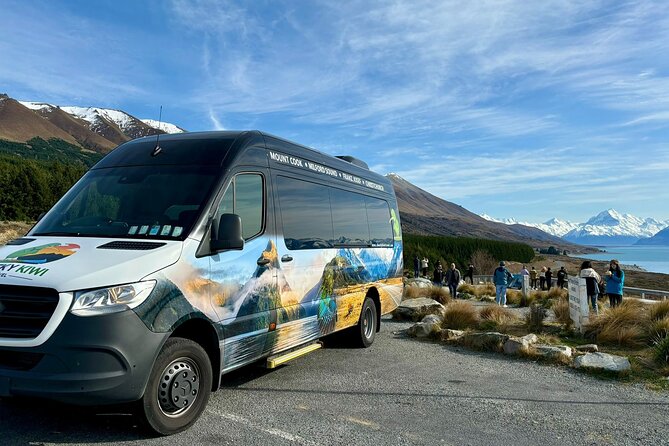
Pukaki is a practical base for a trip focused on the Mackenzie Basin and the Aoraki/Mt Cook area. The airport meeting point gives the experience a clear start and finish, with no stated need to travel elsewhere after the jump.
Because the activity lasts about two hours, you could plan it as one part of a larger day. Keep the other plans flexible, especially if they involve fixed entry times or long drives. The operator’s weather requirements matter more than a neat itinerary.
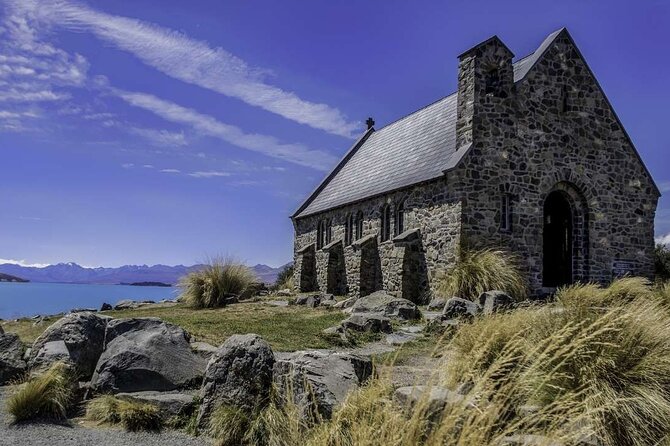
The views also make this a good choice for someone who has already seen the mountains from ground level and wants a different perspective. From the road, you experience the scale of the peaks in one way. From the air, you can take in the relationship between the mountains, glaciers, and lakes at once.
My booking advice
I would book Skydive Mt. Cook if you want a serious freefall with a strong mountain setting, and if $341.08 fits your budget. The 16,500-foot altitude, more than 70 seconds of freefall, small group cap, and upbeat crew make a persuasive package.
I would hesitate if your South Island schedule has no spare time, if you need guaranteed weather, or if the price feels uncomfortable for a single activity. This is a weather-dependent experience, and the available rating comes from only five reviews, so keep your expectations realistic.
For the right person, this is not simply a jump from an aircraft. It is a high-altitude way to see the Aoraki/Mt Cook region, with a small team and a clear refund option if weather or minimum numbers stop the flight. Book it early in your stay, keep the next day flexible if possible, and choose it for the setting as much as for the adrenaline.
FAQ
Where does Skydive Mt. Cook start?
It starts at Skydive Mount Cook, 2 Swallow Drive, Pukaki Airport, Pukaki, Twizel 7999, New Zealand.
Where does the experience finish?
The activity ends back at the original meeting point at Pukaki Airport.
How high is the jump?
The jump takes place from 16,500 feet.
How long is the freefall?
The experience provides more than 70 seconds of freefall.
How long does the full activity last?
The total duration is approximately two hours.
What scenery can I see?
The experience features snow-capped mountains, glaciers, lakes, and Aoraki/Mt Cook National Park.
How many people can join?
The maximum group size is nine people.
Is the ticket available on a phone?
Yes. The experience provides a mobile ticket.
Can service animals join?
Yes. Service animals are allowed.
What happens if poor weather cancels the jump?
You will be offered a different date or a full refund.
Can I cancel for a full refund?
Yes. You must cancel at least 24 hours before the experience start time for a full refund.
Just added around New Zealand
- Skydive Mt. Cook – 20+ Seconds of Freefall from 10,000ft★ 5.0 · 5 reviews
- Skydive Mt. Cook – 45+ Seconds of Freefall from 13,000ft★ 5.0 · 14 reviews
- Tasman Experience and Skydive | Combo★ 5.0 · 2 reviews
- Bay of Islands: 9000ft Skydive★ 4.5 · 12 reviews
- Queenstown: Ticket for 2 Indoor Skydiving Flights★ 4.4 · 15 reviews
- Queenstown: Nevis Bungy & Catapult Combo★ 5.0 · 2 reviews
- Queenstown: Nevis Thrillogy (Bungy, Swing, Catapult)★ 5.0 · 5 reviews
- Queenstown: Nevis Bungy & Swing Combo★ 5.0 · 9 reviews
New Zealand Skydiving, compared.
15,000ft Tandem Skydive in Tauranga – Bay of Plenty
Read our review →
Browse the lists this tour appears in