
REVIEW · QUEENSTOWN
Queenstown: Ticket for 2 Indoor Skydiving Flights
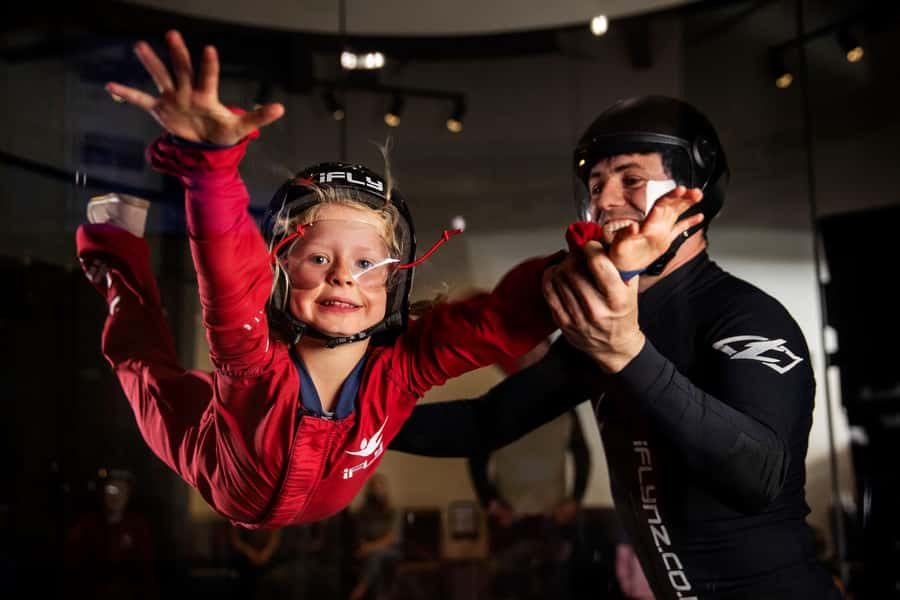
Queenstown’s indoor flight experience lets you feel freefall without climbing into an airplane. You step into a powerful column of air, learn to position your body, and float under the watch of an instructor. Two 60-second flights give you a real taste of the sport, not just a quick photo opportunity.
I like the one-on-one instruction, which turns a strange sensation into something you can manage. I also like the controlled setting: the equipment is provided, the safety briefing is clear, and you can try something adventurous without jumping from 12,000 feet.
The main catch is the clock. The advertised hour includes check-in, teaching, changing, and waiting, while your actual flight time totals only two minutes. At $83 per person, that makes this a short but memorable thrill rather than a long activity.
Key points to know before booking
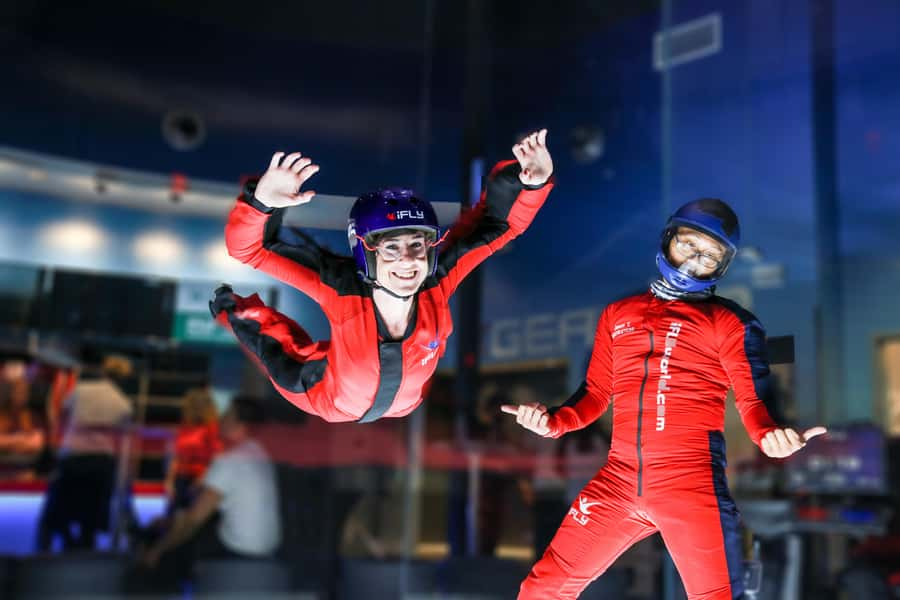
- Two 60-second flights: Your total time in the airflow is two minutes, described as roughly three traditional freefalls from 12,000 feet.
- A controlled first flight: You learn body position with an instructor before entering the airflow.
- Gear is included: Flight equipment is supplied, but you should bring comfortable clothes and closed-toe shoes.
- Small groups: The session is limited to eight participants, so the teaching feels more focused than a large attraction.
- A broad age range: One participant was 71 and another was about 12, though anyone under 18 needs a parent or guardian.
- Important limits: The activity is not suitable for children under five, pregnant women, people over 275 pounds, or anyone with a previous dislocated shoulder or a cast.
What the Queenstown indoor flight feels like
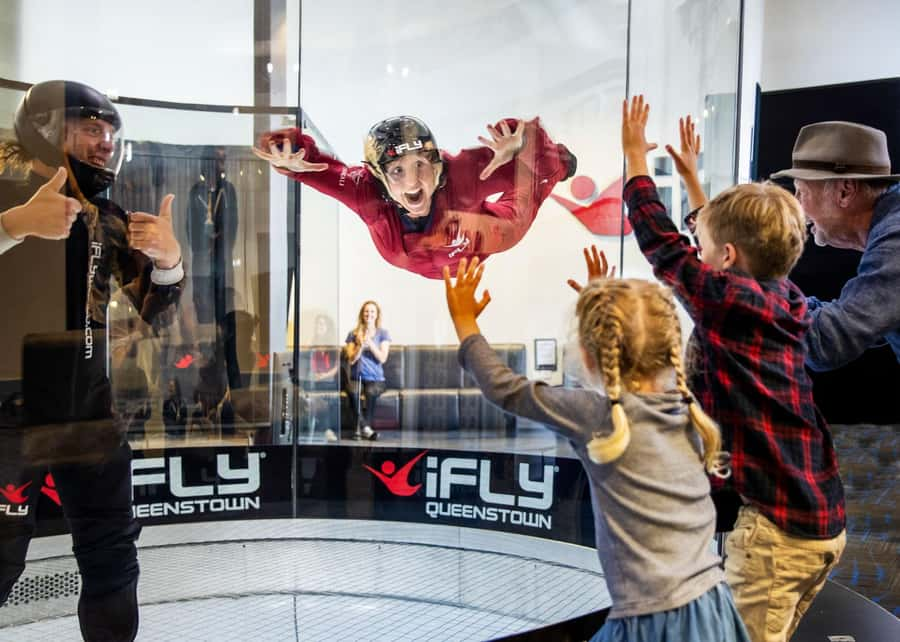
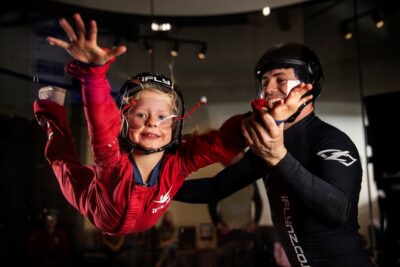
This is not a simulated video game or a simple wind machine aimed at your face. You enter a vertical airflow chamber and use your arms, legs, and torso to keep your body stable. The sensation is close to freefall, but the air column keeps you inside the room rather than sending you toward the ground.
For a first-timer, the hardest part is likely to be trusting the airflow. Your instinct may be to tense up or move too much. The instructor helps you learn the basic shape of your body, then adjusts your position as you float.
The experience uses two flights of 60 seconds each. That sounds brief, and it is. Still, a minute in the airflow can feel surprisingly full because you are concentrating on breathing, balance, and the instructor’s signals. The second flight gives you a chance to use what you learned in the first.
The comparison with three freefalls from 12,000 feet helps explain the attraction, but do not read it as three long skydiving jumps. You are receiving two minutes of flight time in a controlled room, with instruction and equipment included.
More Indoor Skydiving in New Zealand:
- iFLY Indoor Skydiving Queenstown
★ 5.0 · 245 reviews - Basingstoke iFLY Indoor Skydiving Experience – 2 Flights & Certificate
★ 4.5 · 459 reviews - Manchester iFLY Indoor Skydiving Experience – 2 Flights & Certificate
★ 4.5 · 387 reviews
Check-in, safety briefing, and getting ready
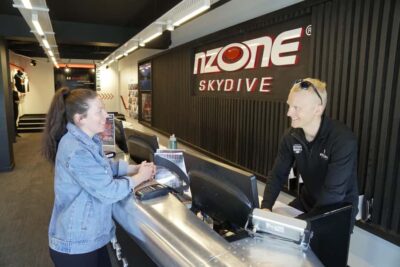
You should check in at iFLY Indoor Skydiving Queenstown at least 30 minutes before your booked time. That early arrival matters because the activity has several steps before you reach the airflow.
At reception, you meet the instructor and receive an orientation. The briefing covers how to hold your body, how to respond during the flight, and how to use the equipment. This is where the session earns much of its value. You are not simply pushed into the chamber and told to figure it out.
You then get fitted with the necessary flight gear. The supplied equipment means you do not need to purchase or pack specialist clothing. Bring comfortable clothes and closed-toe shoes. Open-toed shoes are not allowed.
The full session lasts about one hour, but expect your actual time to be divided among instruction, preparation, and the two flights. That distinction is worth keeping in mind when planning your Queenstown day. This is not a full-hour freefall session.
Your first 60-second flight
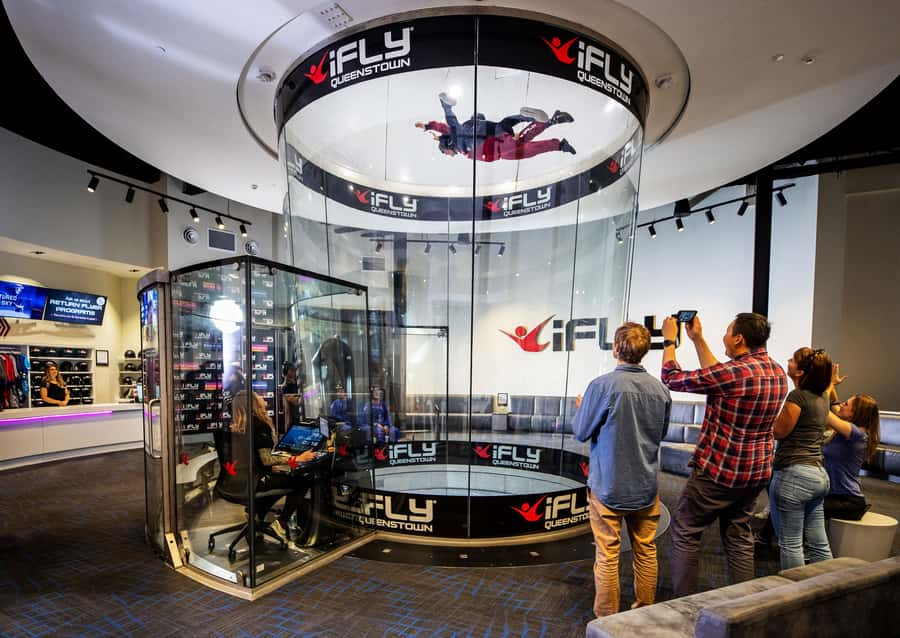
The first flight is about getting used to the airflow. You work with the instructor to find a stable body position and learn how small movements affect your direction.
You may feel less like you are falling and more like you are being held up by a strong cushion of air. That is the central trick of the attraction. Your body remains in a freefall position, but the controlled airflow gives the instructor time to help you correct your movements.
For some people, the first few seconds are the most demanding. You are processing unfamiliar signals while trying to remember the instructions. The one-on-one guidance helps here. The instructor can focus on your posture and give direct help instead of leaving you to copy someone else.
The first flight is also where you learn how much effort is needed. You do not need to thrash your arms or kick your legs. Small changes count. A relaxed body makes it easier to follow the instruction and enjoy the sensation.
The second flight and the value of repetition
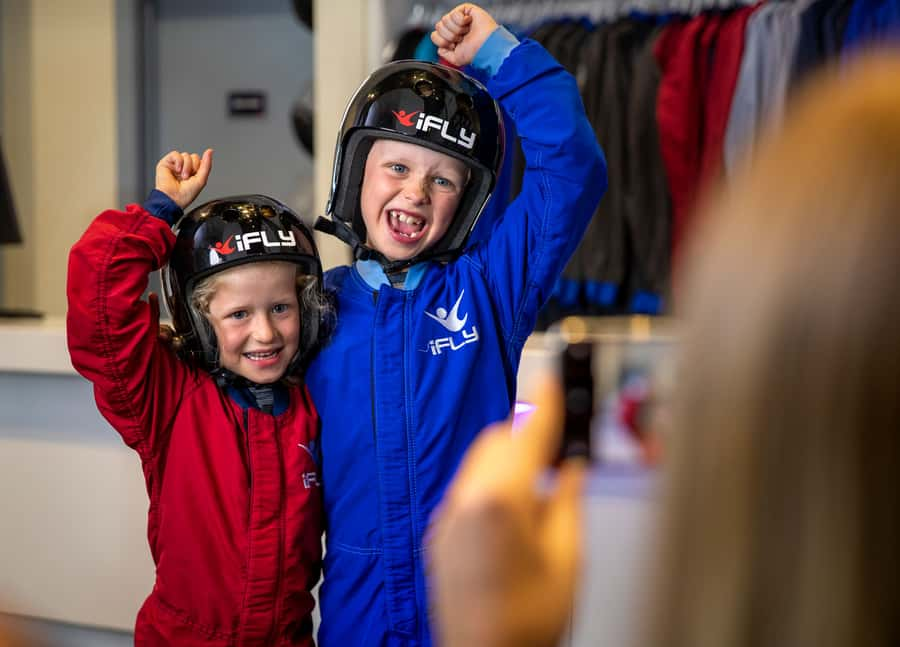
The second flight is the most useful part for many beginners. After the first attempt, the airflow feels less strange and the basic position makes more sense.
You have already learned what the instructor wants you to do, so the second minute can feel more like actual flight. You may have time to make cleaner movements and enjoy the sensation instead of spending the whole flight thinking about what comes next.
That second attempt also makes the ticket better value than a single-flight introduction. The first flight is partly a lesson. The second lets you apply the lesson. If you are buying this for someone who enjoys trying new activities, that short progression is a key reason to choose the two-flight option.
Still, expectations matter. You should not expect advanced tricks or a long solo session from this package. The main goal is to experience controlled freefall and learn the basics of body flight.
More Tickets in New Zealand:
- London: iFLY Indoor Skydiving at The O2 Entrance Ticket
★ 4.0 · 43 reviews - Manchester: iFLY Indoor Skydiving Ticket
★ 4.4 · 14 reviews - Singapore: I-Fly Indoor E-Ticket for 2 Skydives
★ 5.0 · 6 reviews
How the instructors shape the experience
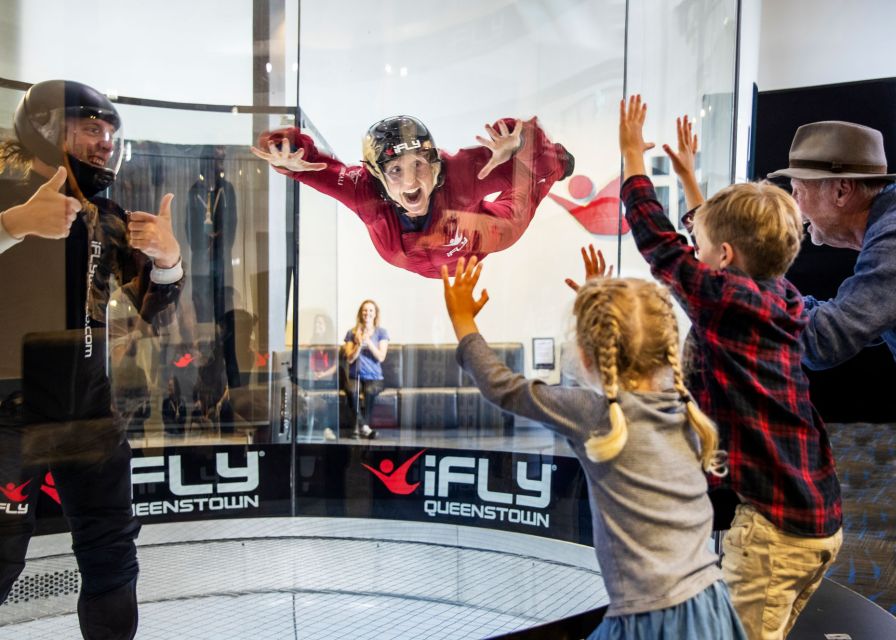
The instructor is central to the quality of this activity. You receive a safety briefing and step-by-step teaching before entering the airflow, then work with the instructor during your flights.
The personal attention is especially helpful for nervous beginners. You do not need previous experience, and you do not need to understand the sport before arriving. The teaching turns the session from a test of nerve into a guided physical activity.
One participant singled out a friendly, chatty instructor and said the teaching was clear and useful. That kind of approach matters here because the activity is short. An instructor who gives simple directions and keeps you calm can make both minutes count.
The exact instructor assigned to your session is not specified in the booking information, so you cannot request a named guide from the details provided. Instruction is in English.
Who should book this Queenstown activity
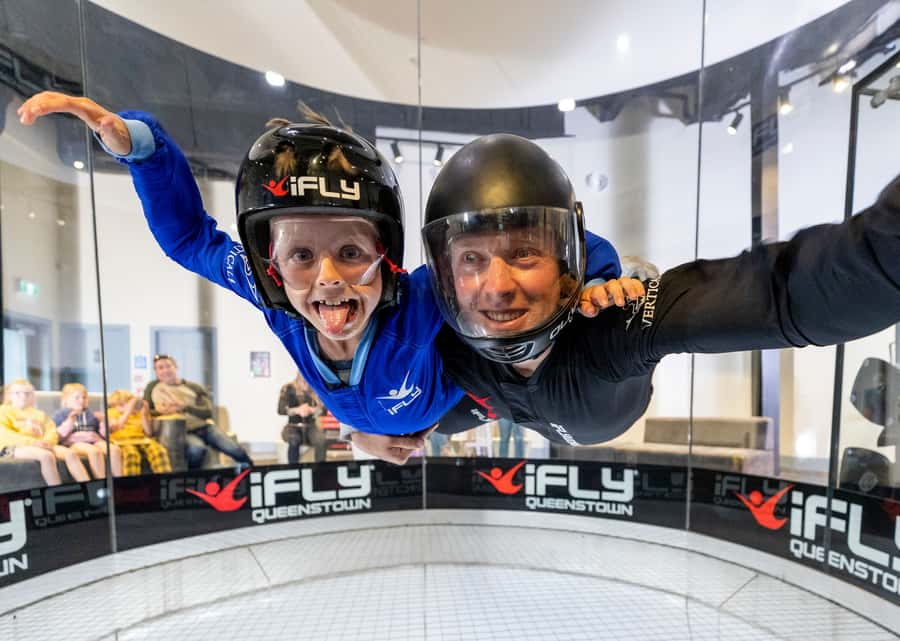
This is a strong choice if you want an adventurous activity but do not want to jump from an airplane. It can also work for someone who finds other high-adrenaline activities too intimidating.
The age range can be broad. One customer described taking part at age 71, with a participant of about 12 following afterward. That does not mean every person in every age group can participate, though. Children must be at least five, and anyone under 18 needs a parent or guardian.
You should also check the physical restrictions before paying. The activity is not suitable if you are pregnant, weigh more than 275 pounds or 125 kilograms, have previously dislocated your shoulder, or are wearing a cast.
The small-group limit of eight participants is another plus. You are not placed in a huge crowd, and the session has a more personal feel. The attraction is wheelchair accessible, though the supplied information does not explain the exact assistance or transfer arrangements. If you need specific support, confirm it when booking.
What the $83 price includes
At $83 per person, this is not a bargain-hour attraction. You are paying for two short flights, an instructor-led orientation, and the use of flight equipment.
The value depends on what you want. If your priority is maximum airtime, the total of two minutes may feel expensive. One customer specifically wished the activity lasted longer after realizing that the one-hour duration included much more than the actual flights.
If you value a managed introduction to body flight, the price makes more sense. You do not need to arrange equipment, find a separate instructor, or commit to an airplane jump. The setting is controlled, and the second attempt gives you a chance to improve.
Food and drinks are available to purchase, but they are not included. Transportation is also not included, so you need to make your own way to the Queenstown center.
I would treat this as a compact activity to place between other plans, not as the main event of a full day. It fits well into a schedule that includes sightseeing or another Queenstown attraction.
Timing your visit in Queenstown
Plan to arrive at least 30 minutes before your scheduled time. That gives you room for check-in, orientation, changing, and the equipment fitting before the flight portion begins.
Do not book it so tightly against another fixed appointment that a small delay becomes a problem. The listed duration is one hour, but you should allow extra time around it if your next activity has a strict start.
The indoor setting also makes the activity useful when you want something that does not depend on outdoor conditions. The information provided does not promise a weather-free schedule guarantee, but the flight itself takes place inside a controlled facility.
Because the activity is in English, you should be comfortable following spoken instructions in English. The teaching is physical as well as verbal, but safety directions still matter.
Practical clothing and preparation tips
Wear comfortable clothes that allow you to move your arms and legs freely. Closed-toe shoes are required, and open-toed shoes are not allowed.
You do not need to bring specialist flight gear. Necessary equipment is supplied as part of the ticket. Food and drinks can be purchased at the center, but you should not assume they are included in the price.
The most useful preparation is mental. Listen closely during the orientation, keep your body relaxed, and expect the first flight to be a learning attempt. The second flight is where the instructions begin to feel more natural.
If you are booking for a minor, arrange for a parent or guardian to be present for participation. If you have a past shoulder dislocation, a cast, a pregnancy, or a body weight above the stated limit, choose another activity.
Cancellation and booking flexibility
You can cancel up to 24 hours in advance for a full refund. The reserve-now-and-pay-later option also lets you hold a place without paying immediately, which is useful if your Queenstown schedule is still changing.
Check available starting times before booking because the experience runs at set times rather than as an open, walk-in activity. The small group is limited to eight participants.
The booking covers two flights for one person. If two people want to fly, you need two tickets. This is easy to overlook when arranging a shared activity.
Should you book the Queenstown indoor flight?
Book it if you want a safe, coached introduction to freefall and like the idea of trying something unusual without an airplane. It is especially suitable for first-timers, older participants who want an active thrill, and people who find traditional skydiving too much.
Skip it if you expect a full hour of flight time or if you judge value mainly by minutes in the air. The real flight portion is two 60-second attempts, and $83 is a fairly high price for such a short activity.
For most suitable participants, I see this as a fun add-on to a Queenstown visit. The controlled setting, included equipment, small group, and patient instruction make it approachable. Just arrive early, dress properly, check the health restrictions, and book it for the experience of learning to float, not for a long session in the air.
FAQ
How long does the activity last?
The full session lasts about one hour. This includes check-in, orientation, equipment fitting, and the two flights.
How many flights are included?
You receive two flights, each lasting 60 seconds. The ticket is valid for one flyer.
How much actual flight time will I receive?
Your total flight time is two minutes. The activity describes this as roughly equivalent to three traditional freefalls from 12,000 feet.
Is flight equipment included?
Yes. Necessary flight equipment is included, along with the instructor orientation.
What should I wear?
Wear comfortable clothes and closed-toe shoes. Open-toed shoes are not allowed.
How early should I arrive?
You should check in at iFLY Indoor Skydiving Queenstown at least 30 minutes before your scheduled time.
Can children participate?
Children under five cannot participate. Anyone under 18 needs a parent or guardian to take part.
Who cannot participate?
The activity is not suitable for pregnant women, people over 275 pounds or 125 kilograms, anyone with a previous shoulder dislocation, or anyone wearing a cast.
Can I cancel for a refund?
Yes. You can cancel up to 24 hours before the scheduled activity for a full refund.
Just added around New Zealand
- Skydive Mt. Cook – 20+ Seconds of Freefall from 10,000ft★ 5.0 · 5 reviews
- Skydive Mt. Cook – 70+ Seconds of Freefall from 16,500ft★ 5.0 · 5 reviews
- Skydive Mt. Cook – 45+ Seconds of Freefall from 13,000ft★ 5.0 · 14 reviews
- Tasman Experience and Skydive | Combo★ 5.0 · 2 reviews
- Bay of Islands: 9000ft Skydive★ 4.5 · 12 reviews
- Queenstown: Nevis Bungy & Catapult Combo★ 5.0 · 2 reviews
- Queenstown: Nevis Thrillogy (Bungy, Swing, Catapult)★ 5.0 · 5 reviews
- Queenstown: Nevis Bungy & Swing Combo★ 5.0 · 9 reviews
Queenstown Skydiving, compared.
Browse the lists this tour appears in