
REVIEW · NEW ZEALAND
Skydive Mt. Cook – 20+ Seconds of Freefall from 10,000ft
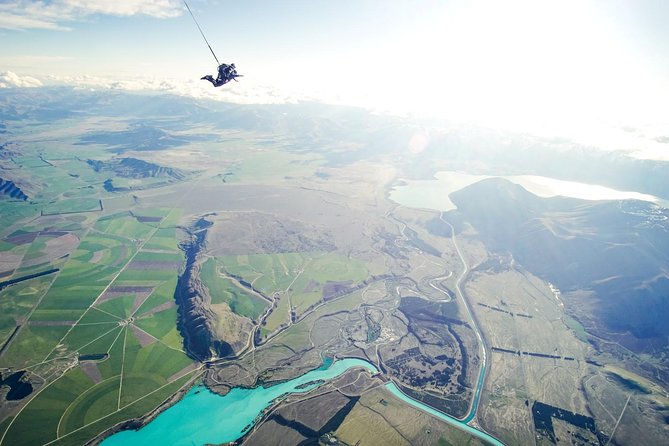
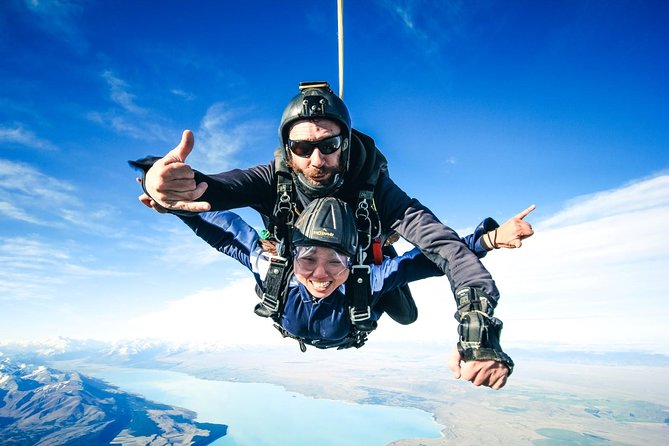
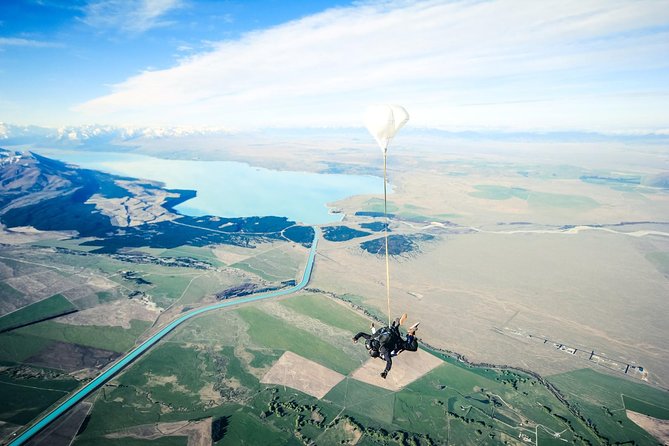
The real draw here is not simply the 10,000-foot freefall. It is the view beneath you: Aoraki/Mt Cook National Park, glaciers, snow-capped peaks, and the blue lakes around Pukaki. You get the rare chance to see one of New Zealand’s grandest corners from above, not just from a roadside lookout.
I like the small maximum group of nine people, which should make the experience feel more personal than a big commercial operation. I also like the staff’s flexibility. Lisa helped rearrange plans for a short-notice birthday jump, and the team has adjusted jump heights when cloud made the original plan unsafe.
The main drawback is weather. Clouds can change the jump height, delay the activity, or cancel it altogether. If your South Island schedule is tight, leave room for a backup date.
Key points to know before you book
- 20-plus seconds of freefall from 10,000 feet: The listed jump height gives you a substantial freefall period before the parachute opens.
- Mountain views instead of a city backdrop: You look toward glaciers, lakes, snow-covered peaks, and Aoraki/Mt Cook National Park.
- Small group size: The activity accepts a maximum of nine people, useful if you prefer a less crowded setup.
- Weather controls the plan: Cloud can lead to a lower jump height, a delay, or a full cancellation.
- Pukaki Airport is the base: You meet at 2 Swallow Drive, Pukaki Airport, near Twizel, and return there at the end.
- A friendly first-jump option: The staff have helped nervous beginners and short-notice birthday jumpers get ready.
Why Pukaki is such a striking place to jump
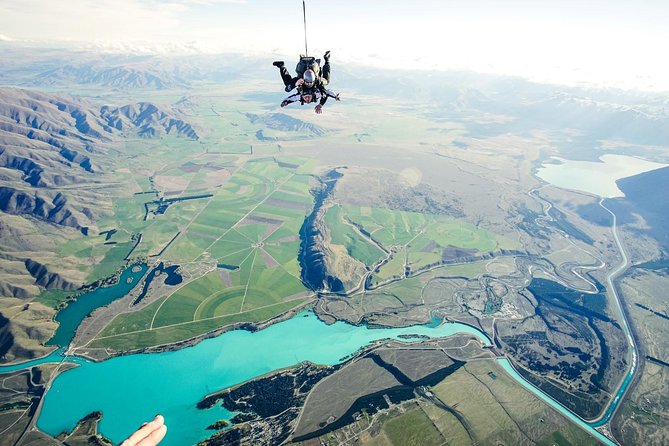
Many parachute jumps give you a thrill and a view. This one gives you a view with real scale.
Pukaki sits in the Mackenzie Basin, close to the road leading toward Aoraki/Mt Cook National Park. From the air, the region’s key features make sense together. Snow-capped mountains rise beyond broad glacial valleys. Ice fields and glaciers mark the high country. Lakes spread across the basin in strong shades of blue. Aoraki/Mt Cook, New Zealand’s highest mountain, gives the view a clear focal point when conditions allow.
That setting matters. You are not looking at a single attraction for a few seconds. You are looking across a huge sweep of the South Island, where water, ice, rock, and farmland meet. Even before the freefall begins, the setting gives the experience a strong sense of place.
I also like that the activity is based at Pukaki rather than in a larger city or a busy resort area. The airport location keeps the focus on the mountains. You will not be pairing the jump with urban views, shopping streets, or a crowded tourist center. This is a straightforward outdoor experience built around the country’s high peaks.
More High-Altitude Skydives in New Zealand:
- 15,000ft Tandem Skydive in Tauranga – Bay of Plenty
★ 5.0 · 305 reviews - Bay of Islands: 12,000ft Skydive
★ 5.0 · 253 reviews - 15,000ft Tandem Skydive in Bay of Plenty
★ 5.0 · 180 reviews
What your two hours at Pukaki Airport involve
The supplied timing is about two hours, though weather and operating conditions can affect the schedule. You meet the team at Skydive Mt Cook, 2 Swallow Drive, Pukaki Airport, Pukaki, Twizel 7999. The activity ends back at this same meeting point, so you do not need to arrange a separate finish location.
At the airport, expect the team to confirm your booking and prepare you for a tandem jump. Since most people taking this activity are first-time jumpers, the practical information and safety preparation are an important part of the visit, not a minor formality.
The group limit of nine is useful here. A smaller operation can feel easier to follow, especially when you are already thinking about the jump. It also means fewer people competing for attention at the meeting point than you might find with a large group activity.
The jump itself is the central event. The advertised height is 10,000 feet, with more than 20 seconds of freefall. The exact plan can change if cloud affects the available altitude. One birthday jump had its height adjusted because of cloud, which is a good reminder that the published height is the target, not an absolute promise in every weather condition.
After the parachute opens, you continue back to the airport and finish where you started. The full visit takes about two hours, so you can fit it into a day that also includes other South Island stops. Still, I would avoid placing an important long-distance connection immediately afterward. Weather-sensitive activities rarely reward a rushed schedule.
Freefall above glaciers, lakes, and Aoraki
The freefall is the part most people focus on, but the view gives it meaning.
At 10,000 feet, you have enough height to take in more than the ground directly below you. The view can include the mountain ranges, glacial features, lakes, and the national park. The listed freefall time of more than 20 seconds gives you a proper stretch of open-air descent before the parachute section begins.
For a first-time jumper, that period may pass quickly. You will be processing the height, the speed, and the scenery all at once. The mountain setting offers something different from a jump over a city, beach, or flat rural area. There is a powerful contrast between the open sky and the solid, snow-covered peaks below.
The parachute portion gives you more time to look around. The information provided does not promise a specific flight path or a guaranteed view of every named feature, so keep expectations sensible. The scenery depends on the day, the cloud, and the operating plan.
That uncertainty is part of the deal. On a clear day, you may get the broad mountain panorama that makes this jump special. On a cloudy day, the team may lower the jump height or move the activity to another time. A safe, lower jump is still a better outcome than chasing a number in poor conditions.
The team, nerves, and first-time jumpers
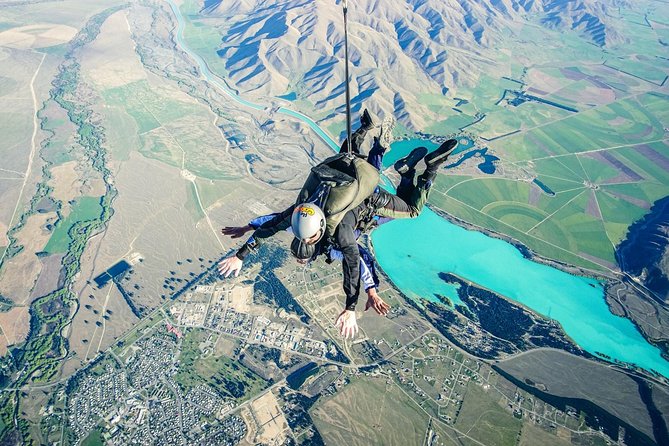
The staff appear to understand that the hardest part for many people happens before the aircraft leaves the ground.
The experience has worked well for first-timers, including people making a birthday jump and a 15-year-old daughter receiving the activity as a Christmas present. The tone described by the available feedback is friendly and reassuring, with easy banter helping people settle their nerves.
Lisa is specifically mentioned as helping a group work out if and when the jump could happen during a changeable weekend. That kind of communication matters more than flashy sales talk. If the weather is uncertain, you need clear updates and a team willing to discuss the options.
This is also a practical birthday gift. One couple used the jump as part of a honeymoon birthday surprise, with the birthday person told one day ahead so she could prepare. That is a smart approach. A parachute jump is a poor surprise if the recipient dislikes heights or needs time to get comfortable with the idea.
The experience can also suit a confidence-building trip. One parent chose it for a teenage daughter after a difficult year. I would not assume a jump will solve personal worries, but a carefully supported first-time challenge can be meaningful for someone who actively wants that experience.
More Skydives in New Zealand:
- Skydive Auckland
★ 5.0 · 1,516 reviews - NZONE Skydive Queenstown
★ 4.5 · 1,438 reviews - Queenstown: Tandem Skydive Experience
★ 4.8 · 475 reviews - Lake Taupo 12,000-Foot Tandem Skydiving
★ 5.0 · 359 reviews
How the weather can change your plan
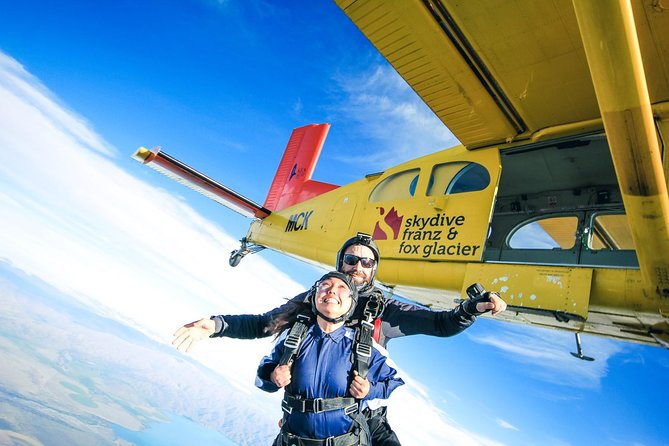
Weather is the biggest practical issue, and you should plan around it rather than treat it as fine print.
The activity requires good weather. Cloud may force the team to adjust the jump height. Poor conditions can also mean a cancellation, with the choice of another date or a full refund. The same option applies if the minimum number of participants is not reached.
That policy is fair, but it does not remove the scheduling problem. If you have only one free morning in the Mackenzie Basin, there is a real chance that weather could interfere. I would book this early in your South Island itinerary if possible, leaving another day available.
The cancellation terms are clear. You can cancel for a full refund if you do so at least 24 hours before the local start time. Cancellations or changes made inside that 24-hour window are not refunded or accepted.
A sensible plan is to avoid booking the jump on the same day as a fixed bus, flight, or long drive. Pukaki and Twizel are useful bases for exploring the area, so an overnight stay gives you more flexibility than passing through for a few hours.
Is the listed price good value?
The listed cost is $192.78 per person. The value depends on what you want from a South Island activity.
For a simple adrenaline ride, the price may feel high. You are paying for far more than a few seconds of excitement, though. The package combines a tandem parachute jump, more than 20 seconds of freefall from the advertised height, and access to a mountain setting that is difficult to experience from the ground.
The small maximum group of nine also improves the value for people who dislike mass-market activities. You are not choosing this because it is the cheapest way to see the region. You are choosing it because the activity gives you a rare view of Aoraki/Mt Cook National Park while adding a serious personal challenge.
The price looks strongest for a milestone: a birthday, honeymoon, Christmas present, or special South Island trip. It makes less sense if your budget is tight and you would rather spend the money on several hikes, scenic drives, or lake activities.
There is no stated accommodation or transport from another town included in the experience details. You should therefore budget for reaching Pukaki Airport yourself. The meeting point is near public transportation, and the activity returns you there, but the information provided does not specify a pickup service.
Who will get the most from this jump
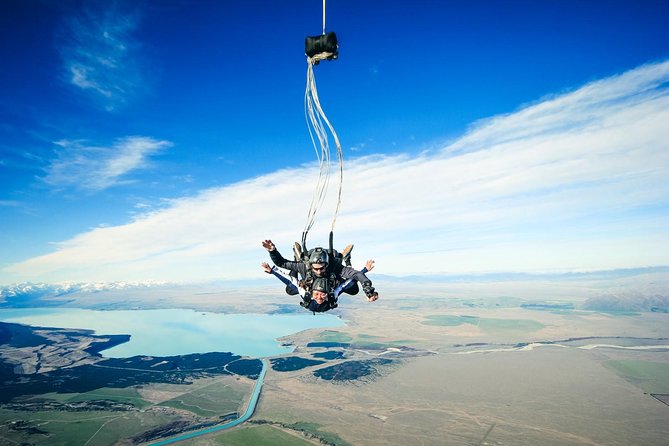
I would recommend it most strongly to you if you meet several of these conditions:
- You want a first tandem parachute experience in a mountain setting.
- You are already visiting the Pukaki, Twizel, or Aoraki/Mt Cook area.
- You value scenery as much as the freefall.
- You can keep your schedule flexible for weather.
- You are comfortable paying for one major, memorable activity.
- You are booking for a birthday or another personal milestone.
It may be less suitable if you need a guaranteed start time, dislike heights, or have no room for a weather change. The activity is described as suitable for most people, but the supplied details do not list specific age, weight, or health requirements. Ask the provider directly if any of those points affect you.
Service animals are allowed. The activity is near public transportation, though no detailed transport instructions are provided.
My practical booking advice
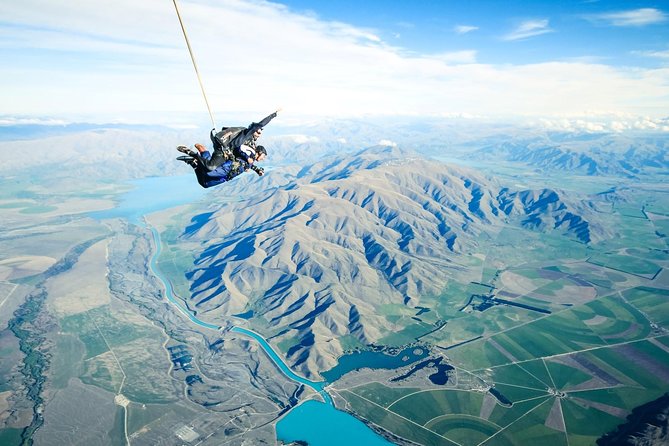
Book this on a day when you can wait, rather than on a day when you must leave Pukaki at a fixed hour.
Keep the morning or afternoon around it open. That gives the team room to respond to cloud and gives you a better chance of jumping at the intended height. If the weather is poor, use the offered alternative date or refund rather than trying to force the original plan.
Bring a calm attitude. Nervousness is normal, especially if this is your first jump. The team has handled beginners and short-notice arrangements, and the friendly approach described by past participants suggests that the human side of the experience is one of its strengths.
Think of the setting when deciding. If you only want the thrill of freefall, you have many possible places to jump. If you want that thrill above glaciers, lakes, snowy mountains, and Aoraki/Mt Cook National Park, Pukaki gives this experience a clear advantage.
Should you book Skydive Mt Cook?
Yes, if you want a major South Island memory and can accept weather uncertainty.
The strongest reasons to book are the setting, the 20-plus seconds of freefall from 10,000 feet, the small group limit, and the supportive handling of first-time nerves. The main caution is simple: the weather controls the day, and the jump height may change.
I would book it for a birthday, honeymoon, special gift, or flexible road trip. I would skip it only if the price strains your budget, your schedule cannot absorb a delay, or you are looking for a guaranteed sightseeing activity. For everyone else, this is one of the more dramatic ways to see the Aoraki/Mt Cook region.
FAQ
Where does Skydive Mt Cook meet?
You meet at Skydive Mt Cook, 2 Swallow Drive, Pukaki Airport, Pukaki, Twizel 7999, New Zealand.
Where does the activity finish?
The activity ends back at the Pukaki Airport meeting point.
How long does the experience take?
The full experience lasts approximately two hours.
How high is the advertised jump?
The advertised jump is from 10,000 feet.
How long is the freefall?
The experience advertises more than 20 seconds of freefall.
What scenery can I see?
The setting includes snow-capped mountains, glaciers, lakes, and Aoraki/Mt Cook National Park. The exact view depends on weather and operating conditions.
How many people can join?
The activity has a maximum of nine participants.
Is the experience suitable for first-time jumpers?
The supplied information and participant experiences indicate that first-time jumpers can take part. Most people can participate, but specific personal requirements are not provided.
What happens if the weather is poor?
The activity may be canceled because it requires good weather. You will then be offered another date or a full refund. Cloud can also lead to an adjusted jump height.
Can I cancel for a full refund?
Yes. You can cancel at least 24 hours before the local start time for a full refund. Cancellations and changes made less than 24 hours before the start are not accepted or refunded.
Just added around New Zealand
- Skydive Mt. Cook – 70+ Seconds of Freefall from 16,500ft★ 5.0 · 5 reviews
- Skydive Mt. Cook – 45+ Seconds of Freefall from 13,000ft★ 5.0 · 14 reviews
- Tasman Experience and Skydive | Combo★ 5.0 · 2 reviews
- Bay of Islands: 9000ft Skydive★ 4.5 · 12 reviews
- Queenstown: Ticket for 2 Indoor Skydiving Flights★ 4.4 · 15 reviews
- Queenstown: Nevis Bungy & Catapult Combo★ 5.0 · 2 reviews
- Queenstown: Nevis Thrillogy (Bungy, Swing, Catapult)★ 5.0 · 5 reviews
- Queenstown: Nevis Bungy & Swing Combo★ 5.0 · 9 reviews
New Zealand Skydiving, compared.
15,000ft Tandem Skydive in Tauranga – Bay of Plenty
Read our review →
Browse the lists this tour appears in