
REVIEW · NEW ZEALAND
Skydive Mt. Cook – 45+ Seconds of Freefall from 13,000ft
The real draw here is the 45-plus seconds of freefall above one of New Zealand’s great mountain settings. From 13,000 feet, you look down toward glaciers, lakes, snow-capped peaks, and Aoraki/Mt Cook National Park. This is not a jump above an anonymous field. The view is the main event.
I like the small maximum group of nine, which should make the airport process feel more personal, and I like the team’s firm approach to safety. A delay can be frustrating, but the staff will postpone or cancel the jump when weather conditions are not right. The main drawback is the non-refundable booking policy, especially since mountain weather can change your plans.
Key points before you book
- 13,000-foot jump: You get more than 45 seconds of freefall before the parachute opens.
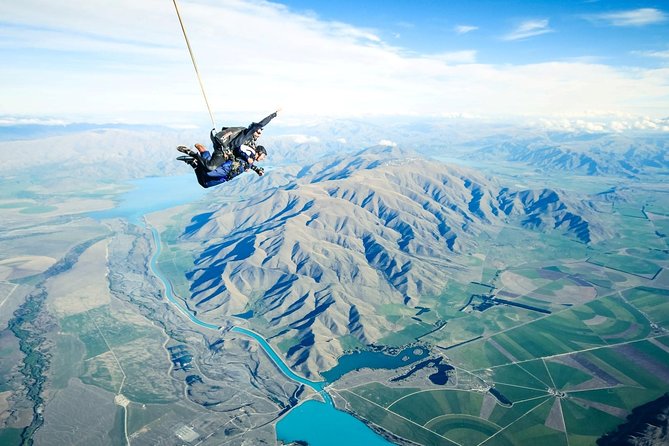
- Aoraki/Mt Cook views: Look for glaciers, lakes, snow-capped mountains, and the national park below.
- Small operation: The group limit is nine people, a useful advantage for a high-adrenaline activity.
- Safety comes first: The team may delay or postpone the jump when weather is unsuitable.
- Weight rules matter: People from 100 to 115 kilograms need assessment and may pay a surcharge.
- Two-hour visit: The full experience takes about two hours and returns to Pukaki Airport.
Why 13,000 feet makes this jump special
Many skydives offer a rush. This one adds a serious sense of place. You are not simply stepping out above a strip of farmland and ticking off an adventure activity. You are freefalling with the Southern Alps, glaciers, and Aoraki/Mt Cook National Park spread below you.
At 13,000 feet, you get more than 45 seconds in freefall. That extra time matters. It gives you a chance to move past the first burst of panic, take in the view, and understand where you are. You still have a powerful adrenaline rush, but the experience is also about scale. Mountains that look huge from the ground become part of a much wider scene from the aircraft.
I would choose this jump for the setting rather than simply for the height. The South Island is famous for its big natural views, and this experience gives you a rare angle on them. Lakes, glaciers, and snowy summits line up beneath you in a way that is difficult to appreciate from a road or lookout.
The setting also makes this a good choice if you are already planning a South Island road trip. Pukaki is a practical base for seeing the Mackenzie Basin and visiting the Aoraki/Mt Cook area. You can fit the jump into a broader visit rather than making it the only reason to come to the region.
More High-Altitude Skydives in New Zealand:
- 15,000ft Tandem Skydive in Tauranga – Bay of Plenty
★ 5.0 · 305 reviews - Bay of Islands: 12,000ft Skydive
★ 5.0 · 253 reviews - 15,000ft Tandem Skydive in Bay of Plenty
★ 5.0 · 180 reviews
Arriving at Pukaki Airport
You meet the team at Skydive Mount Cook, 2 Swallow Drive, Pukaki Airport, Pukaki, near Twizel. The activity begins and ends at this same point, so you do not need to arrange a separate return transfer.
That simple start and finish helps. You arrive at one place, complete the briefing and jump, then return to the same airport. The total visit takes about two hours, although you should keep the rest of your day flexible because weather may affect the timing.
The airport location is near public transportation, and the booking provides a mobile ticket. Those details are useful if you are building a day around several South Island stops. Still, I would avoid scheduling a hard-to-miss connection immediately afterward. A weather delay is always possible, and the company takes conditions seriously.
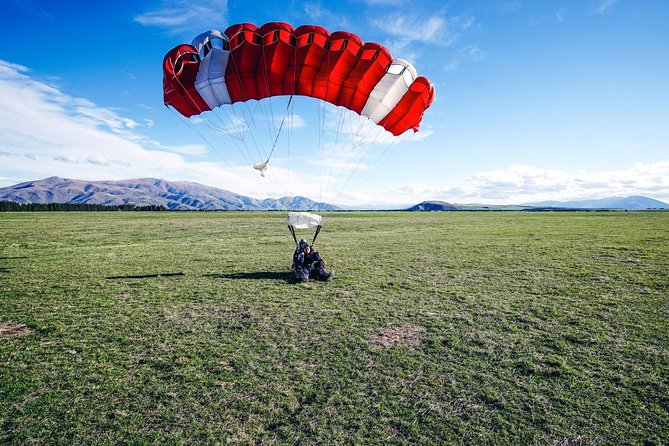
The maximum group size is nine. That does not mean every departure will have nine people, but it gives you an idea of the operation’s scale. You are not signing up for a huge tourist attraction with a crowd moving through on conveyor belts. A smaller group can make the process easier to follow, especially if you are nervous.
The preparation before freefall
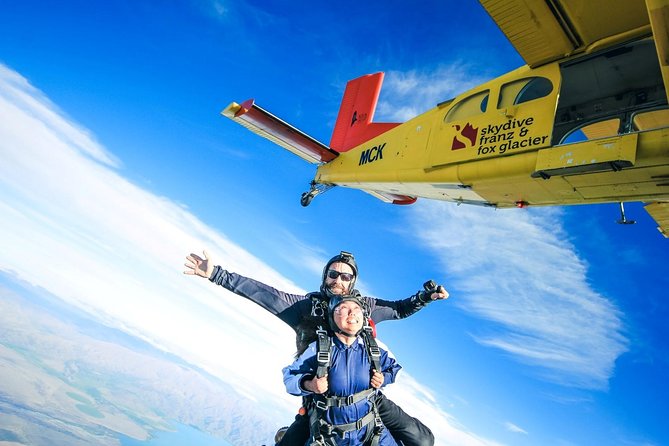
You should expect the first part of the visit to focus on getting ready. The team handles the safety process, checks the harness fit, and prepares you for the tandem jump. The staff’s approach is practical: they take the safety side seriously and will not push ahead simply to protect the timetable.
That matters more here than cheerful talk or a quick turnaround. A tandem skydive asks you to trust another person with a very unusual job. The team’s willingness to delay or postpone when the conditions are poor is a good sign, even if it means your plans change.
If you are anxious, tell the staff. The information provided about the team points to a calm approach for nervous jumpers, with reassurance throughout the process. You do not need to pretend to be fearless. The better plan is to listen closely, follow instructions, and let the professionals handle the technical work.
The weather decision is especially important in the Mt Cook area. Mountain scenery can look clear from one spot while clouds or wind affect conditions elsewhere. If the weather is not suitable, the jump may be canceled. You are then offered a different date or a full refund, but you should not count on the original time going ahead in all conditions.
What the 13,000-foot flight gives you
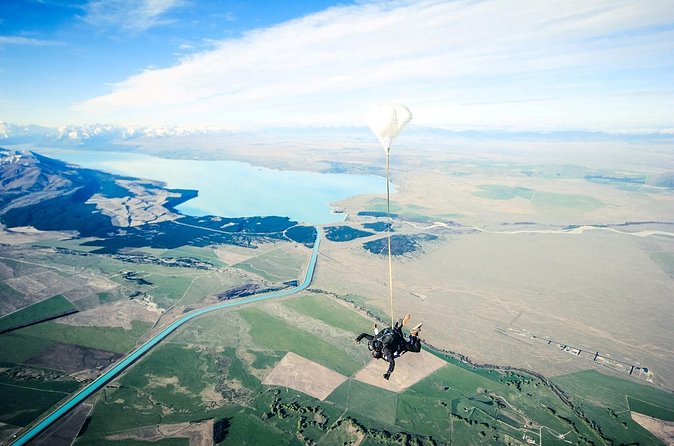
The aircraft ascent is part of the experience, not just a wait before the main event. As you climb, the South Island setting opens beneath you. The lakes and mountain ranges give you a clear sense of the region’s shape, while the snow and ice around Aoraki/Mt Cook add the drama you came for.
At the top, the view can compete with the freefall itself. You have a few moments to register the height and the scene before the jump begins. For some people, that pause may be the most nerve-racking part. For others, it is the moment when the trip feels real.
The central feature is more than 45 seconds of freefall from 13,000 feet. That is enough time for the initial shock to settle. You can look outward, take in the mountain views, and enjoy the sensation instead of experiencing the whole jump as one fast blur.
I would not describe this as a quiet scenic flight. The freefall is intense, and the experience is built around that intensity. If you want to admire the mountains slowly, a flightseeing trip or a viewpoint near Aoraki/Mt Cook may suit you better. If you want the scenery paired with a serious physical thrill, this jump offers both.
More Skydives in New Zealand:
- Skydive Auckland
★ 5.0 · 1,516 reviews - NZONE Skydive Queenstown
★ 4.5 · 1,438 reviews - Queenstown: Tandem Skydive Experience
★ 4.8 · 475 reviews - Lake Taupo 12,000-Foot Tandem Skydiving
★ 5.0 · 359 reviews
A closer look at the scenery below
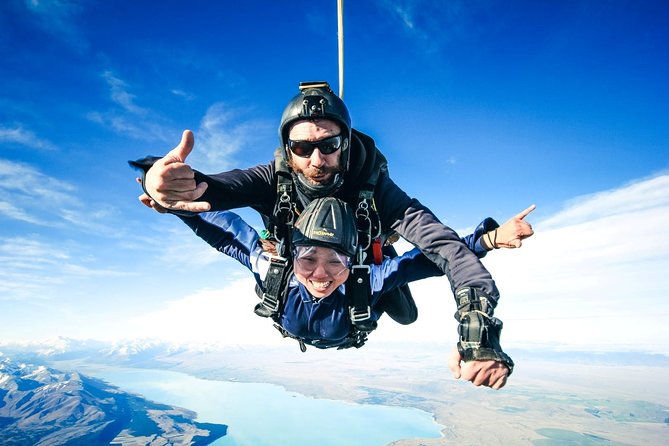
The best part of the view is its variety. Snow-capped mountains give the scene height and structure. Glaciers add broad fields of ice, while the lakes bring strong color and clean lines beneath the aircraft. Aoraki/Mt Cook National Park ties the setting together with one of New Zealand’s most recognizable mountain regions.
You may find that the view changes quickly as you fall. From the aircraft, the whole area has a grand, distant quality. During freefall, your attention shifts between the horizon, the ground, and the sensation of speed. That mix gives the jump more character than a standard adrenaline activity with no major scenery around it.
The setting also gives you something to remember after the rush wears off. You will recall not only the fall, but the shape of the mountains, the lakes below, and the strange feeling of seeing a national park from the sky. That added sense of place helps justify the price for the right person.
Keep your expectations sensible, though. Weather can limit visibility. A cloudy or postponed jump is not a sign that the team is being difficult. In this region, safe conditions must come first, and the company’s policy reflects that.
Cost and what you get for the price
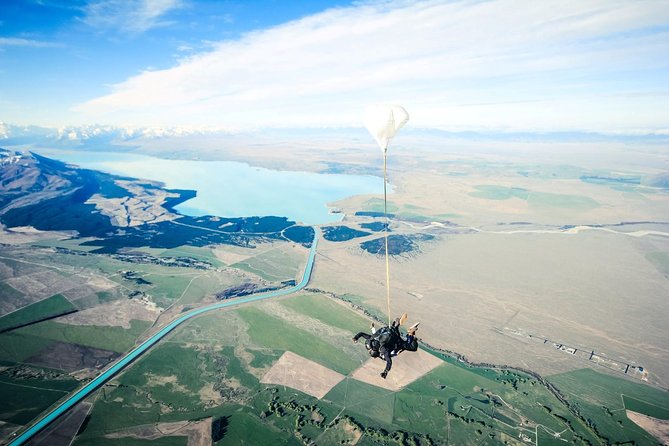
The listed price is $266.23 per person. That is a substantial amount for a two-hour activity, so the value depends on what you want from your South Island trip.
You are paying for a tandem skydive from 13,000 feet, more than 45 seconds of freefall, the aircraft operation, safety equipment, and the staff who manage the experience. You are also paying for the location. A jump above the Aoraki/Mt Cook area offers scenery that gives the activity a stronger sense of place than a generic skydive.
I think the price makes the most sense if this is a major trip highlight. If you are only mildly interested in skydiving, the cost may feel hard to justify. If you have always wanted to jump and want to do it in a remarkable part of New Zealand, the mountain views add real value.
Watch for the weight surcharge. People weighing 100 to 110 kilograms pay an additional $40. Those between 111 and 115 kilograms pay $60. Anyone from 100 to 115 kilograms may jump only after assessment by a tandem master and a harness fitting on the day.
There is a weight limit, so do not assume that booking guarantees participation. If your weight is near the stated range, contact the operator before committing if possible and arrive prepared for an on-site decision.
Who will enjoy this most
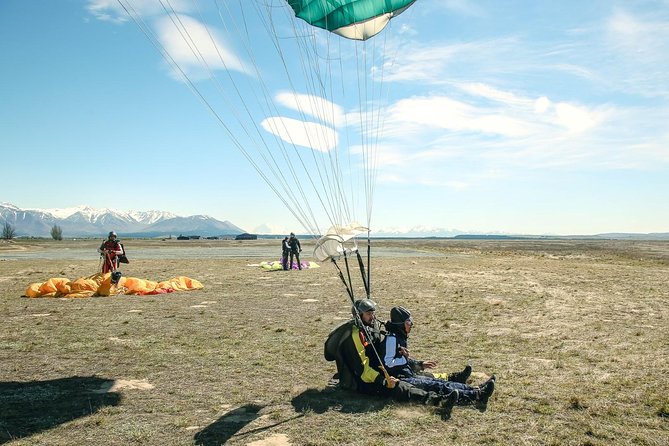
This suits you if you want a high-adrenaline activity with a major scenic payoff. It is especially appealing if you are visiting the South Island for the mountains and want to see Aoraki/Mt Cook National Park from a completely different angle.
It also works well for first-time jumpers who want strong support. The staff focus on safety and help nervous people through the process. You do not need previous experience, and most people can take part.
I would be more cautious if you have a tightly packed itinerary. The experience lasts about two hours, but weather can disrupt the schedule. A flexible day is the better plan.
You should also think carefully before booking if a non-refundable activity would create financial stress. You receive a different date or a full refund if poor weather causes the operator to cancel. But if you cancel or request an amendment for another reason, you do not receive your money back.
Service animals are allowed, and the meeting point is near public transportation. The activity is open to most participants, subject to the stated safety and weight requirements.
Planning your day around Pukaki
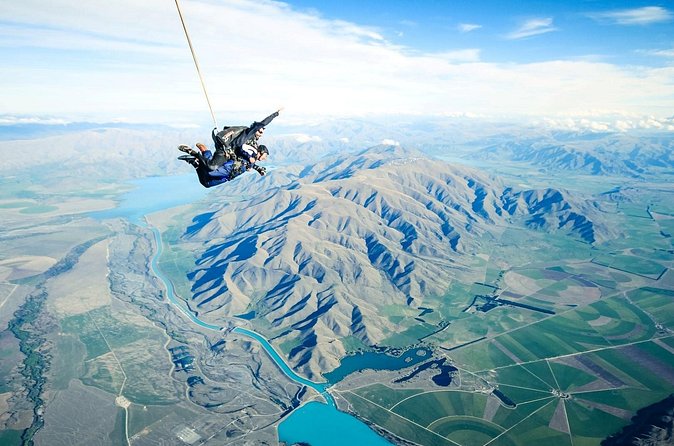
The cleanest plan is to place this experience on a day when you have room to adjust. Do not pair it with a flight, long-distance bus, or fixed evening reservation that leaves no margin. A mountain weather delay can affect the whole day.
Because you return to the Pukaki Airport meeting point, you can continue from there once the activity is finished. The fixed meeting point also makes it easier to arrange your own transport and keep your plans simple.
The area is part of a larger South Island route, so I would treat the skydive as one piece of a Mackenzie Basin or Aoraki/Mt Cook visit. That way, if the jump moves to another time or date, you still have a worthwhile day in the region.
Book ahead if your schedule is fixed. This experience is booked an average of 29 days before the chosen date, which suggests that leaving it until the last minute may not be wise during a busy period. The mobile ticket makes entry easy, but it does not remove the need to plan around the weather.
Safety, weather, and the fine print
The strongest practical point is the operator’s safety judgment. Staff may delay or postpone the jump rather than go ahead in poor conditions. That is exactly the policy you want for an activity involving an aircraft, a parachute, and mountain weather.
The downside is that weather uncertainty belongs to the booking. You may need to change your plans, and the experience is non-refundable if you cancel or ask for an amendment yourself. If the company cancels because of poor weather, you can choose another date or receive a full refund.
Confirmation arrives at booking, and the experience ends back at the meeting point. The group limit is nine, service animals are permitted, and the activity is near public transportation. These are small details, but they help you judge how easily the experience fits into your trip.
Should you book Skydive Mt Cook?
Book it if you want more than a standard adrenaline activity. The combination of a 13,000-foot jump, 45-plus seconds of freefall, and views toward glaciers, lakes, snow-covered mountains, and Aoraki/Mt Cook National Park gives this experience a clear identity.
I especially like the small group limit and the serious approach to weather and safety. Those details do not make the jump risk-free, but they show that the team is willing to protect the quality and safety of the experience rather than force every booking through.
Skip it if you dislike fixed, non-refundable plans or need a guaranteed timetable. Also think twice if the price is beyond your comfort zone, since the experience lasts about two hours and weather may require a change.
For a flexible South Island itinerary and a once-in-a-trip thrill, I would put this high on the list. You get the rush of freefall, but the real memory is likely to be the view of Aoraki/Mt Cook country from above.
FAQ
Where does Skydive Mt Cook begin?
You meet at Skydive Mount Cook, 2 Swallow Drive, Pukaki Airport, Pukaki, Twizel 7999, New Zealand.
Where does the activity end?
The activity ends back at the same meeting point, Pukaki Airport.
How long does the experience take?
The experience takes approximately two hours.
How high is the jump?
The jump takes place from 13,000 feet.
How long is the freefall?
You receive more than 45 seconds of freefall.
What scenery can I see?
The views include snow-capped mountains, glaciers, lakes, and Aoraki/Mt Cook National Park.
How many people can join the activity?
The activity has a maximum of nine participants.
Is there a weight limit?
Yes. People weighing between 100 and 115 kilograms may be able to jump after assessment by a tandem master and a harness fitting on the day.
Are there extra charges for higher weight?
Yes. The surcharge is $40 for people weighing 100 to 110 kilograms and $60 for people weighing 111 to 115 kilograms.
What happens if bad weather cancels the jump?
You are offered a different date or a full refund if the operator cancels the experience because of poor weather.
Just added around New Zealand
- Skydive Mt. Cook – 20+ Seconds of Freefall from 10,000ft★ 5.0 · 5 reviews
- Skydive Mt. Cook – 70+ Seconds of Freefall from 16,500ft★ 5.0 · 5 reviews
- Tasman Experience and Skydive | Combo★ 5.0 · 2 reviews
- Bay of Islands: 9000ft Skydive★ 4.5 · 12 reviews
- Queenstown: Ticket for 2 Indoor Skydiving Flights★ 4.4 · 15 reviews
- Queenstown: Nevis Bungy & Catapult Combo★ 5.0 · 2 reviews
- Queenstown: Nevis Thrillogy (Bungy, Swing, Catapult)★ 5.0 · 5 reviews
- Queenstown: Nevis Bungy & Swing Combo★ 5.0 · 9 reviews
New Zealand Skydiving, compared.
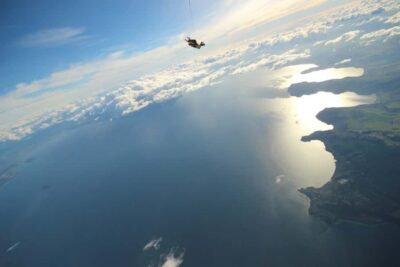
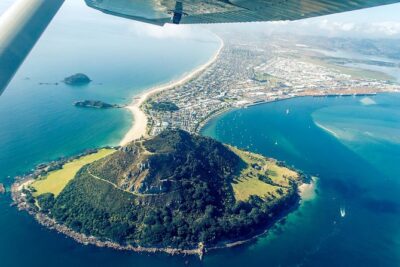
15,000ft Tandem Skydive in Tauranga – Bay of Plenty
Read our review →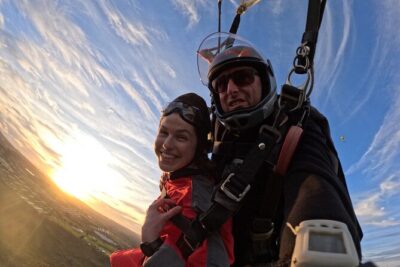
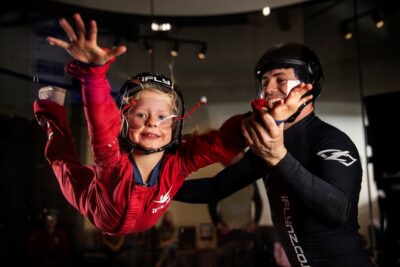
Browse the lists this tour appears in