
REVIEW · NEW ZEALAND
Bay of Islands: 18,000ft Skydive
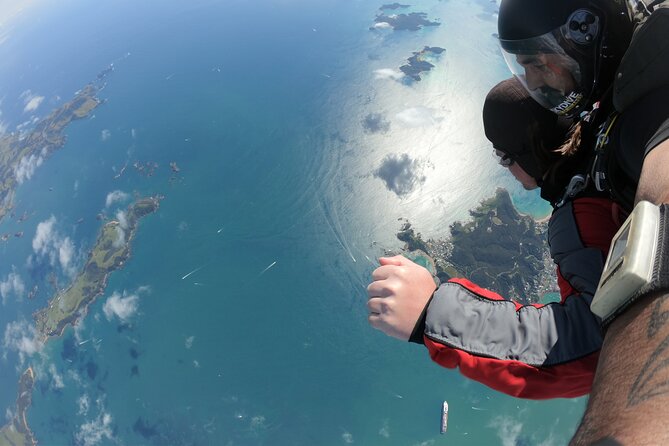
The big draw here is the 18,000-foot jump, the highest available in New Zealand’s North Island. From that height, the Bay of Islands opens below you as a web of blue water, small islands, beaches, headlands, and coastal towns. On a clear day, the view may stretch toward Cape Reinga.
I like two things right away: the complimentary collection service from central Paihia and Kerikeri, and the calm, friendly instruction reported from tandem instructors such as Prashant, Filip, Rhys, and Maurice. The main catch is time. The jump itself may take about 1.5 hours, but you should allow 2 to 4 hours because weather and aviation needs can change the schedule.
Key points to know before you book
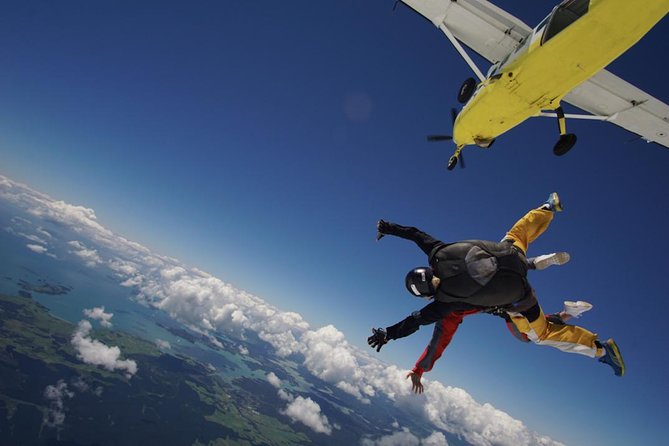
- 18,000 feet is the headline: This is the highest skydive in New Zealand’s North Island, giving you the widest possible view from the available jump heights.
- The Bay of Islands is the scenery: You may see Paihia, Russell, Cape Brett, Motukōkako Island, Cape Reinga, and other Northland sights from above.
- Pickup is useful, but limited: Complimentary collection is offered from central Paihia and Kerikeri, while regular hotel pickup and drop-off are not included.
- Your instructor matters: Prashant is often praised for clear explanations and a reassuring manner. Filip, Rhys, and Maurice are also named as standout tandem instructors.
- Build in spare time: Call one hour before your scheduled jump to confirm conditions, and expect delays if weather or aircraft operations change.
- The $297 price is for the jump: Photos and other souvenir media cost extra, so budget more if you want a record of the experience.
Why 18,000 feet changes the experience
A skydive from 18,000 feet is not simply a higher version of a shorter jump. You get more time above the ground, more room for the scenery to register, and a longer freefall before the parachute opens. That extra height is the reason this experience costs $297 and why it appeals to people who want the biggest possible aerial rush in Northland.
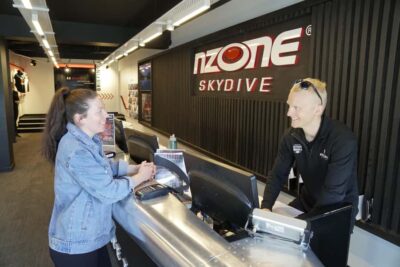
Your jump begins at the drop zone at 182 Wiroa Road in Kerikeri. The team supplies the safety equipment and training, then pairs you with a tandem instructor. You do not need previous experience, but you do need to follow the instructions closely and be comfortable with a physical activity that demands a moderate level of fitness.
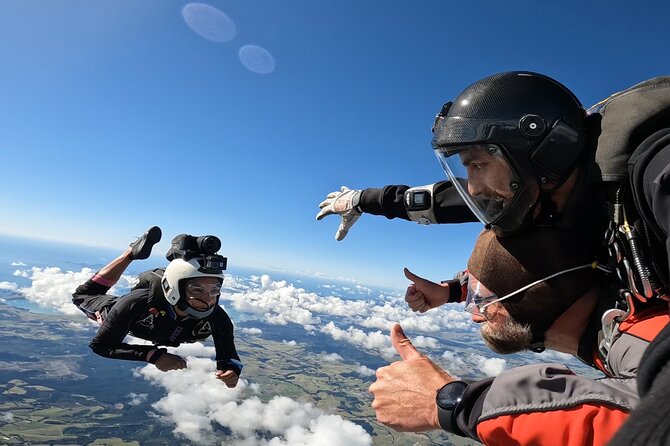
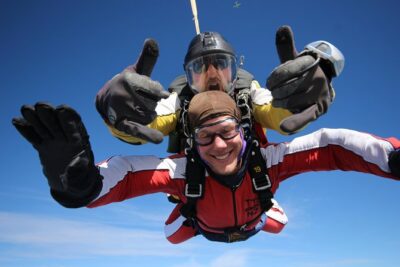
The first moments are likely to be the most demanding mentally. Several people describe their instructor talking them through each step and helping them settle their nerves. Prashant is repeatedly singled out for his calm, professional manner, while Filip is praised for balancing clear guidance with a relaxed presence. That matters because the quality of the briefing and the tone of the instructor can shape the whole experience.
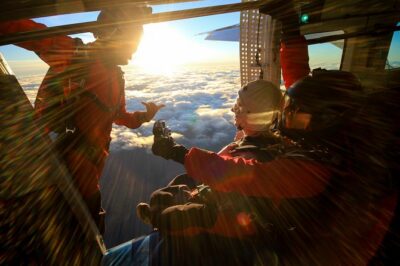
Once the aircraft reaches altitude, the view becomes the main event. The Bay of Islands contains 144 islands, so you are not looking at one simple coastline. You are looking across scattered pieces of land, channels, bays, and open water. The exact view depends on cloud cover, aircraft position, and the day’s operating conditions.
More High-Altitude Skydives in New Zealand:
- 15,000ft Tandem Skydive in Tauranga – Bay of Plenty
★ 5.0 · 305 reviews - Bay of Islands: 12,000ft Skydive
★ 5.0 · 253 reviews - 15,000ft Tandem Skydive in Bay of Plenty
★ 5.0 · 180 reviews
The view over 144 islands
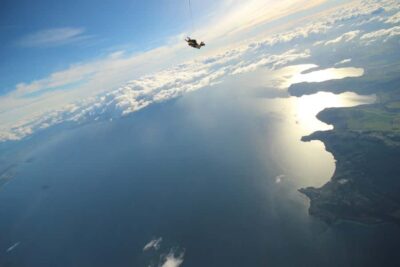
The Bay of Islands is at its best from above because its geography can be hard to grasp from ground level. On the coast, you see one beach or one headland at a time. From the aircraft, the islands fit together as a single pattern.
Paihia is the practical base for many visitors, and its coastal setting may be visible during the jump. You can expect broad views of the water rather than a close look at individual streets or buildings. That is an important distinction: this is an aerial tour first, with the adrenaline of the jump built around it.
Russell sits across the bay from Paihia. Its waterfront and historic setting make it one of the most recognizable places in the area, but from 18,000 feet it will appear as part of the wider coastal picture. If you are hoping to identify every town, beach, and island below, you may find that difficult during the short, intense freefall. The parachute portion gives you more time to take in the scenery.
Moturoa Island, the largest island in the Bay of Islands, is another notable feature. It is known for walking tracks and clear water, and it can be picked out from above when conditions are good. The height gives you a sense of its scale and isolation that you do not get from a beach or boat.
From Cape Brett to Cape Reinga
The northern reach of the view is one of the strongest reasons to choose this jump over a standard scenic flight. On particularly clear days, you may see toward Cape Reinga, the northern tip of New Zealand where the Pacific Ocean and Tasman Sea meet.
Cape Reinga is not directly beneath the jump, and it is not guaranteed to be visible. Treat it as a bonus rather than part of the promised core view. Its importance is also cultural and spiritual, so it adds a sense of place to the experience even when it remains beyond the horizon.
Closer to the Bay of Islands, Cape Brett forms a rugged coastal point with cliffs and open ocean views. Nearby Motukōkako Island is famous for its natural arch, commonly known as the Hole in the Rock. From the sky, the larger shape of the island and the surrounding water may be easier to appreciate than the arch itself. You should not expect a precise sightseeing pass over the formation.
The Cavalli Islands and the northern coastline near Matauri Bay may also form part of the wider view. Near Matauri Bay, the Rainbow Warrior memorial marks the location connected with the 1985 bombing of the Greenpeace ship. It is a small but meaningful historical detail in a region where natural scenery and New Zealand’s modern history sit close together.
Kerikeri and the jump-day setting
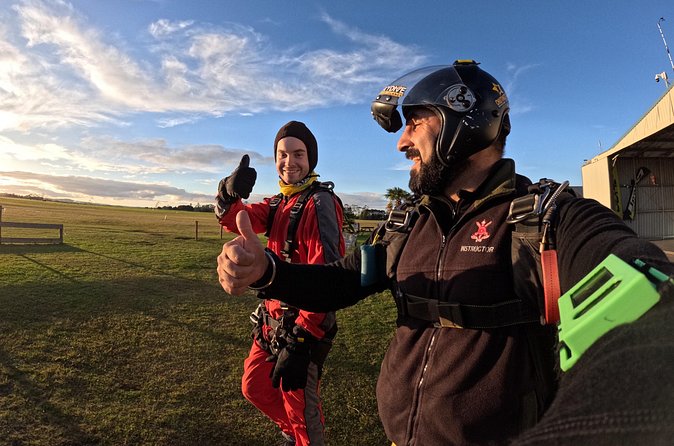
Kerikeri is inland from the main bay and is the meeting point for this activity. It is home to New Zealand’s oldest stone buildings and is surrounded by green country. The drop zone at 182 Wiroa Road is not a sightseeing stop in the usual sense, but it is where the practical side of the day happens: check-in, equipment, briefing, and the return after landing.
You can arrange complimentary collection from central Paihia or Kerikeri. This is helpful if you are staying in either place and do not want to arrange transport to Wiroa Road. The offer is not the same as full hotel pickup, so confirm the exact meeting arrangement before you set off.
Spectators may be able to use the shuttle, but people booked to jump receive priority. If the vans are full, spectators may need to arrange their own transport. That is worth noting if friends or family are coming along mainly to watch.
The activity ends back at the meeting point. You do not finish in a distant part of the bay and need to find your way home, which keeps the day fairly simple.
More Beach and Coastal Skydives in New Zealand:
- Bay of Islands: 9000ft Skydive
★ 4.5 · 12 reviews - Auckland Harbour Bridge Climb & Bungy Combo
★ 5.0 · 3 reviews - Dubai: Skydive at The Palm with Photos, Video & Yacht Tour
★ 4.8 · 1,445 reviews - Airlie Beach: Tandem Skydive over the Whitsundays
★ 4.8 · 726 reviews
What the timing really means
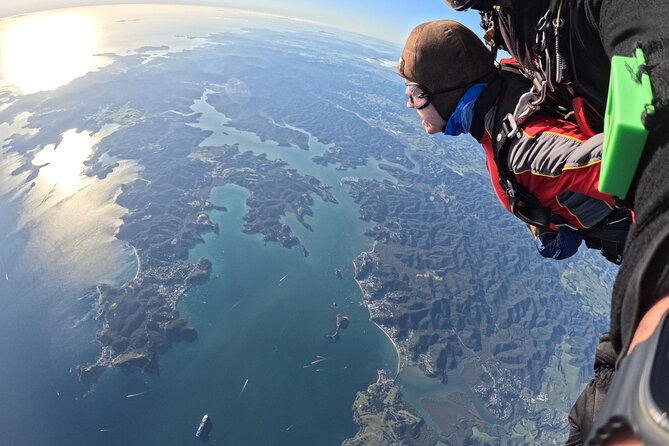
The advertised duration is about two to three hours, but the practical advice is to keep two to four hours free. The jump itself can take about 1.5 hours, yet the schedule depends on weather, aircraft requirements, and the normal unpredictability of aviation.
You must call 0800 GO JUMP one hour before your scheduled time to confirm that conditions are suitable. Do not treat that call as a formality. Cloud, wind, and other conditions can affect whether the aircraft can operate, and a safe jump takes priority over a rigid timetable.
This makes the activity a poor fit for a tight connection or a day packed with fixed tours. I would schedule it early enough to leave room for changes, but not so early that a delay ruins your only other plan. If your holiday schedule is short, keep the rest of that day flexible.
Weather can also affect the scenic value. A jump may still operate safely without the clearest possible view, but a cloudless day gives you the best chance of seeing across the islands and toward the far north. The operator’s weather decision is final, and you should be ready for a rescheduled time if conditions do not cooperate.
The instructors make a real difference
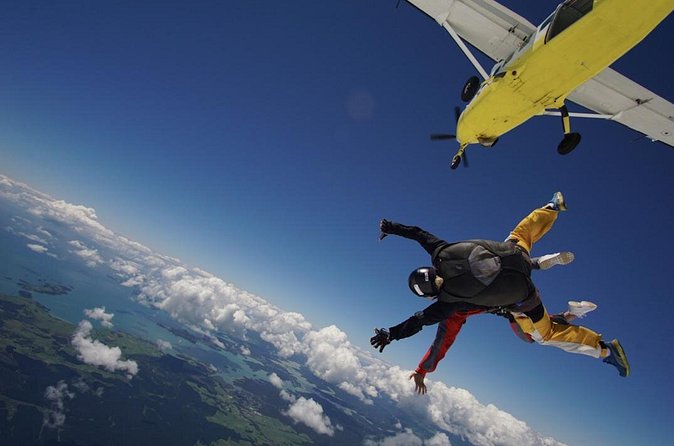
Tandem skydiving is a technical activity, but it does not need to feel cold or mechanical. The strongest part of this operation appears to be the instructor team’s ability to keep the mood light while staying focused on safety.
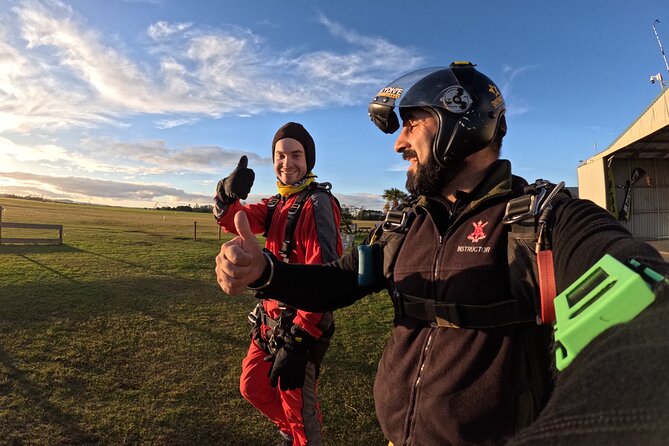
Prashant is the name I would remember if you are looking for clues about the teaching style. He is praised for explaining each step, making first-time jumpers feel safe, and keeping conversation going during the preparation. That is useful if your nerves build while waiting.
Filip receives similar praise for calm authority and a professional but friendly manner. Rhys is described as energetic and entertaining, while Maurice is associated with a more playful jump that included a forward roll and a cloud walk. The exact style of your jump depends on your instructor, conditions, and what is appropriate on the day.
Do not expect the instructor to turn the safety briefing into a comedy show. The reassurance comes from clear directions and steady attention. You may have fun with the team, but their priority is getting you through the process safely and smoothly.
The price and what you get for it
At $297, this is a major activity purchase, especially if you are traveling on a careful budget. The price is easier to justify if you want both the maximum available jump height in the North Island and a large aerial view of Northland, rather than simply checking off any skydive.
You receive the tandem jump, instruction, safety equipment, and the service of a dedicated tandem instructor. Complimentary collection from central Paihia or Kerikeri adds practical value, particularly if you do not have a car.
Photos are not included. Souvenir photos and related media can be purchased separately, so ask about the options and cost before you commit if recording the jump is important to you. The experience is intense and brief enough that many people may want a visual record, but the extra expense can push the total well above $297.
The group size can reach 24 people. That does not mean 24 people are attached to one aircraft or moving through every step together, but it does mean the drop zone may feel active rather than private. If you want a quiet, small-group outing, this may not be the right format.
Clothing, health, and booking rules
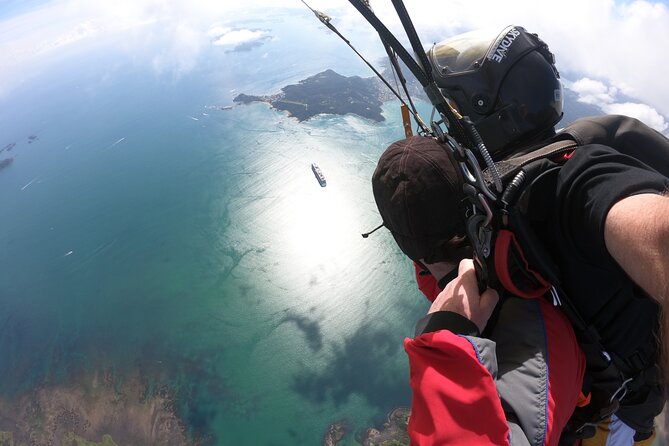
Wear comfortable clothing and closed-toe shoes. You receive the required safety equipment, but your own clothing still matters because you will be moving through training and the jump in a harness.
The weight limit is strict at 100 kilograms. If you may be close to that limit, contact the operator before arriving rather than guessing. Customers under 18 need signed consent from a parent or guardian.
You should seek professional medical advice if you have a condition that could affect your ability to skydive. You also cannot participate if you have gone scuba diving within the previous 24 hours because of pressure changes. These are not minor details, so plan around them before booking.
An open-dated voucher needs to be booked seven days before the requested jump date. For regular bookings, changes or cancellations should be made at least 48 hours ahead when possible. The stated cancellation policy allows a full refund when you cancel at least 24 hours before the start time. Cancellations or changes inside that period are not accepted for a refund.
Who will enjoy this most
This is best for you if you want a high-adrenaline activity with real scenery attached to it. First-time jumpers are well supported by the tandem format, and the repeated praise for instructors such as Prashant and Filip suggests that nervous beginners are a major part of the operation.
It also suits someone with limited time in the Bay of Islands. You will not spend a full day visiting each island, but you can gain a fast, memorable sense of the region’s shape from above.
I would think twice if you dislike uncertain schedules, need guaranteed clear views, or have another booking immediately afterward. The weather may change the plan, and even a successful jump cannot promise that Cape Reinga or every named landmark will be visible.
It may also be a poor value if your main goal is a slow scenic tour. A boat trip lets you linger at water level, while this experience gives you a short burst of extreme sensation and a broad view. They are different kinds of sightseeing.
Should you book the 18,000-foot jump?
Book it if you want the biggest available North Island jump, enjoy a serious adrenaline rush, and can leave your schedule open for weather changes. The combination of 18,000 feet, the 144 islands, and the possibility of views toward Cape Reinga gives this activity a strong sense of place, not just a generic thrill.
I would especially recommend it to a first-time jumper who values patient instruction. Ask about the pickup point, photo packages, and weather procedure before paying, then keep the day flexible. Skip it if $297 is already stretching your budget or if you need a guaranteed start and finish time.
FAQ
Where does the skydive start?
The meeting point is 182 Wiroa Road, Kerikeri 0293, New Zealand. The activity ends back at this meeting point.
Is pickup available from Paihia?
Complimentary collection is offered from central Paihia and Kerikeri. Regular hotel pickup and drop-off are not included, so confirm your exact collection details with the operator.
How high is the jump?
The jump is from 18,000 feet, described as the highest skydive in New Zealand’s North Island.
How long should I allow?
The jump typically takes about 1.5 hours, but you should allow 2 to 4 hours because of weather changes and unexpected aviation requirements.
What should I wear?
Wear comfortable clothing and closed-toe shoes. Safety equipment and training are provided.
Is there a weight limit?
Yes. The strict weight limit is 100 kilograms. Contact the operator if you think you may be close to the limit.
Are photos included in the price?
No. Souvenir photos are available to purchase separately.
Can I skydive after scuba diving?
No. You cannot skydive within 24 hours of scuba diving because of pressure changes.
Just added around New Zealand
- Skydive Mt. Cook – 20+ Seconds of Freefall from 10,000ft★ 5.0 · 5 reviews
- Skydive Mt. Cook – 70+ Seconds of Freefall from 16,500ft★ 5.0 · 5 reviews
- Skydive Mt. Cook – 45+ Seconds of Freefall from 13,000ft★ 5.0 · 14 reviews
- Tasman Experience and Skydive | Combo★ 5.0 · 2 reviews
- Bay of Islands: 9000ft Skydive★ 4.5 · 12 reviews
- Queenstown: Nevis Bungy & Catapult Combo★ 5.0 · 2 reviews
- Queenstown: Ticket for 2 Indoor Skydiving Flights★ 4.4 · 15 reviews
- Queenstown: Nevis Thrillogy (Bungy, Swing, Catapult)★ 5.0 · 5 reviews
New Zealand Skydiving, compared.

15,000ft Tandem Skydive in Tauranga – Bay of Plenty
Read our review →
Browse the lists this tour appears in