
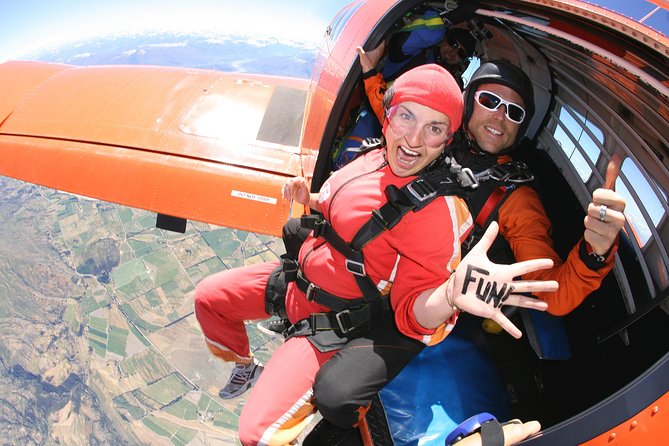
REVIEW · NEW ZEALAND
Skydive Wanaka
Wanaka’s best view comes with a plane ride, a 60-second free-fall, and a parachute. From up to 15,000 feet, you’ll see the Southern Alps, Mt. Cook, Mt. Aspiring, several lakes, and the Clutha River before floating back to the airport.
I like the scenic flight with landmark commentary, since it gives you something to focus on before the door opens. I also like the calm, professional setup, with all gear supplied and a certified Tandem Master beside you. The main drawback is the price: $222.79 covers the tandem jump, but photos and video cost extra.
- Up to 60 seconds of free-fall: The highest jump option gives you the longest rush, with speeds reaching 200 kilometres per hour.
- A 20-minute flight before the jump: Your instructor points out Mt. Cook, Mt. Aspiring, up to six lakes, and the Clutha River.
- Beginner-friendly tandem format: A certified Tandem Master manages the technical work while you follow the safety instructions.
- About three hours from Wanaka and back: The airport is 10 minutes from central Wanaka, with optional pickup from the Wanaka i-SITE.
- Weather can change the plan: Poor conditions may lead to a new date or a full refund.
- Extra costs matter: Media packages, merchandise, and weight surcharges are not included in the listed price.
A High View Over Wanaka, Not Just a Quick Adrenaline Hit
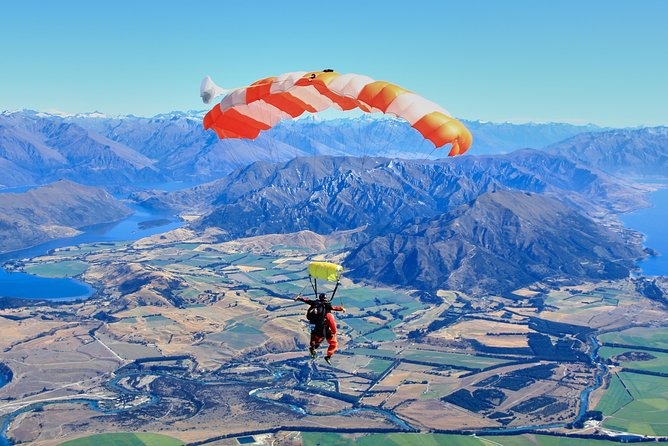
Skydive Wanaka combines three experiences in one: a flight above the South Island, a tandem free-fall, and a parachute ride over the airport. The jump is the headline, but the flight gives the whole outing its sense of place.
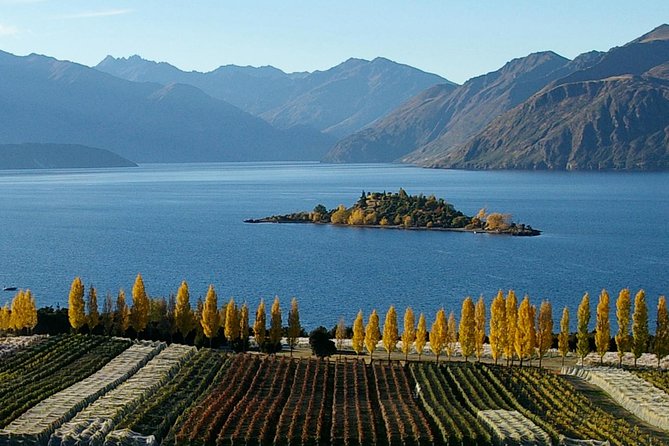
From the air, Wanaka is framed by the Southern Alps and wide-open country. Your Tandem Master points out Mt. Cook, Mt. Aspiring, the Clutha River, and as many as six lakes. That makes this more than a standard first-time parachute jump. You get a useful view of the region before the fast part begins.
The experience costs $222.79 per person. I consider that a fair price for a three-hour activity that includes equipment, instruction, the aircraft flight, the tandem jump, and the return landing. Still, you need to budget separately for photos and video if you want a record of the moment. Those add-ons are available after booking or at the drop zone, but they are not part of the listed price.
Getting to the Wanaka Airport Drop Zone
The meeting point is the Wānaka i-SITE Visitor Information Centre on Ardmore Street. Optional transfers are offered from there, and the airport itself is about 10 minutes from central Wanaka.
Allow about three hours for the full outing. That includes check-in, gearing up, the safety briefing, the flight, the jump, the landing, and time to receive your edited photos or video if you purchase a media package.
I like the flexible jump times because you can fit the activity around other plans in Wanaka. Even so, leave a comfortable gap before anything you cannot miss. Weather can affect the operation, and the exact pace depends on the day’s schedule.
At the drop zone, staff help you check in and put on the supplied safety equipment. You should arrive in warm, comfortable clothes and closed-toe shoes. You do not need to bring a parachute suit or other technical gear.
More Skydives in New Zealand:
- Skydive Auckland
★ 5.0 · 1,516 reviews - NZONE Skydive Queenstown
★ 4.5 · 1,438 reviews - Queenstown: Tandem Skydive Experience
★ 4.8 · 475 reviews
Meeting Your Tandem Master Before Takeoff
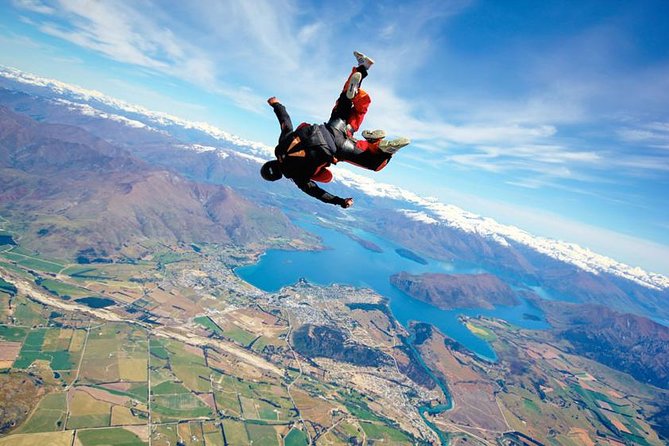
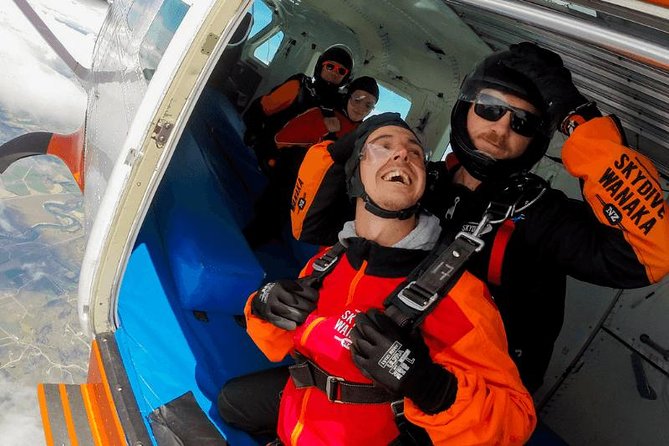
After check-in, you meet the certified Tandem Master who will be attached to you during the jump. This person handles the parachute and guides you through the required body position and safety steps.
That one-to-one setup makes the activity suitable for a first-time jumper. You still need to listen carefully and follow directions, but you are not expected to manage the equipment yourself.
The staff receive strong praise for being friendly, professional, and organized. One instructor, Cuzzy, earned particular praise for keeping a nervous participant calm and engaged from the gear-up stage through the jump. Another first-time participant described the process as safe and smooth, while a separate account noted that the harness fitting was corrected by more experienced staff after an initial attempt was not right.
That last detail is worth noting. The overall operation appears well managed, but you should still pay attention during harness fitting and ask questions if anything feels unclear. A good safety routine depends on clear communication between you and the crew.
The 20-Minute Flight Above the Southern Alps
Once you are ready, you head to the aircraft for a 20-minute scenic flight to altitude. This is a valuable part of the outing, especially if you are nervous. You get time to settle in, look out at the scenery, and hear about the places below before the aircraft door opens.
The views include the Southern Alps, Mt. Cook, Mt. Aspiring, up to six lakes, and the Clutha River. The flight gives you a broad sense of the region, while the parachute ride later lets you watch the ground come closer.
The aircraft portion also helps explain the price. You are not simply being taken up and released. You are paying for an aerial tour, a trained instructor, safety equipment, and the full return process.
Keep your eyes open during the flight if you can. The scenery is part of the point, and it may be the calmest section of the day. If you are visiting Wanaka for mountain views, this offers a perspective that is impossible to get from the roads around town.
Up to 60 Seconds of Free-Fall
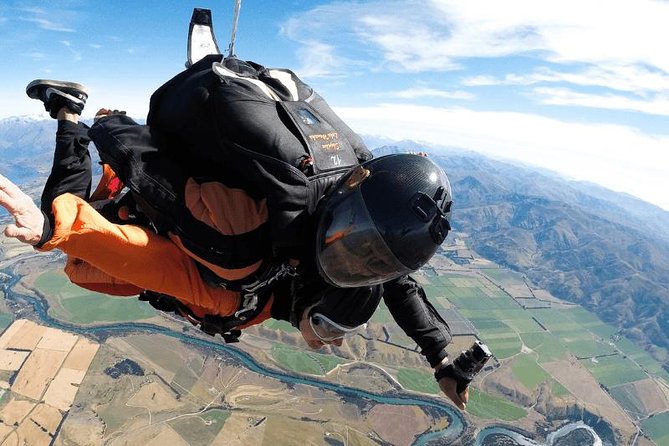
At altitude, the aircraft door opens. You then move into position with your Tandem Master and begin the free-fall.
The top altitude mentioned for the experience is 15,000 feet. At that height, the free-fall can last up to 60 seconds, with speeds reaching 200 kilometres per hour. Lower jump options are also referenced in the experience feedback, including a 12,000-foot option that gives a shorter free-fall.
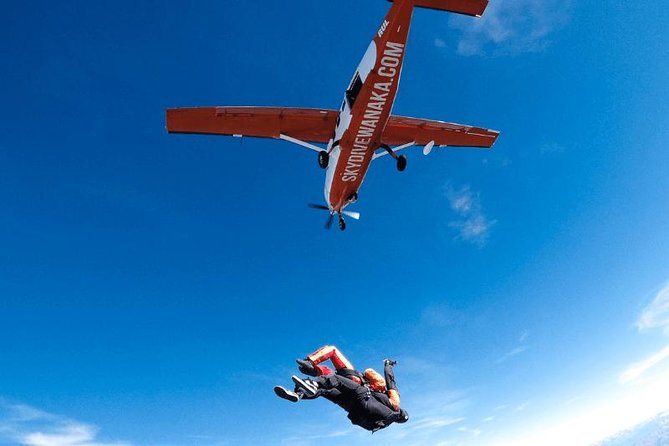
This is the part that demands the most nerve. The sudden speed is intense, but the tandem format means your instructor remains responsible for the parachute and the main technical steps. Your task is to follow the instructions, keep your eyes open, and enjoy the view as much as you can.
One practical tip: do not expect the entire free-fall to feel like a long, quiet scenic moment. It is fast, loud, and physically strong. The parachute opening changes the pace completely, so the experience has a clear rhythm: anticipation, rapid free-fall, then a slower return.
Same drop zone, a different kind of jump:
- Lake Taupo 12,000-Foot Tandem Skydiving
★ 5.0 · 359 reviews - Tandem Skydive Experience in Taupo
★ 5.0 · 324 reviews - 15,000ft Tandem Skydive in Tauranga – Bay of Plenty
★ 5.0 · 305 reviews - Bay of Islands: 12,000ft Skydive
★ 5.0 · 253 reviews
The Parachute Ride Back to the Landing Area
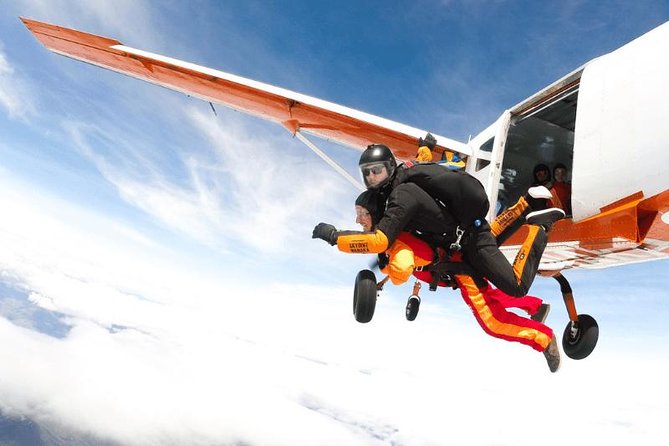
Once the parachute opens, you have time to take in the scenery. The descent becomes gentler, and your Tandem Master can guide the parachute toward the landing area.
Some participants specifically enjoyed the turns during the parachute descent. These tighter movements add another burst of sensation after the free-fall, though they may not suit anyone prone to motion sickness.
The landing brings you back to the airport drop zone. Afterward, you can celebrate the achievement and wait for your edited photos and video if you have purchased them.
I would decide on the media package before the jump if recording the experience matters to you. Several people chose handheld footage, an external camera operator, or both. The footage can be expensive, so include that cost when comparing the activity with other Wanaka outings.
What the $222.79 Price Really Covers
The listed price includes the tandem jump, the safety briefing, all safety equipment, the aircraft ride, and the return landing. Optional transport from the Wanaka i-SITE is also available.
It does not include a photo or video package on USB. Merchandise such as shirts and sunglasses costs extra too. The listed price also does not include weight-related charges for participants over 95 kilograms.
The weight rules are specific:
- Participants must weigh at least 30 kilograms and be large enough to fit safely in the harness.
- Anyone over 95 kilograms is subject to assessment by the Tandem Master.
- A $50 surcharge applies from 95 to 104.9 kilograms.
- A $75 surcharge applies from 105 to 114.9 kilograms.
- The surcharge is $100 for 115 kilograms or more.
These fees are payable at check-in. If you are close to one of the limits, check your weight before booking so the final cost does not surprise you.
For the base price, this is a major activity rather than a casual add-on. I think it offers good value for someone who specifically wants a tandem jump over Wanaka and plans to use the scenic flight as part of the experience. It is less attractive if you mainly want mountain views, since Wanaka has less costly ways to enjoy them from the ground.
Weather, Health, and Age Rules
The experience requires good weather. If poor conditions force a cancellation, you can choose another date or receive a full refund. That weather policy matters in a mountain region, so keep some flexibility in your schedule if possible.
You can cancel for a full refund up to 24 hours before the start time. Changes or cancellations made less than 24 hours before the activity are not accepted for a refund.
The jump is not recommended for people with heart complaints, back problems, or anyone who is pregnant. Anyone under 18 needs an adult onsite to sign the waiver. Service animals are allowed, and most people who meet the stated requirements can participate.
The activity can hold a maximum of 18 participants. That does not mean all 18 people will be attached to one instructor, but it gives you a sense of the operation’s upper size. Expect a scheduled group setting rather than a private outing.
Who Will Enjoy This Most
I would recommend Skydive Wanaka to a first-time jumper who wants a clear structure and a dramatic setting. The tandem format removes much of the technical burden, while the safety briefing and supplied equipment make the preparation straightforward.
It also suits repeat jumpers who want a new view of the South Island. The combination of Mt. Cook, Mt. Aspiring, several lakes, and the Clutha River gives the jump a strong regional identity.
You should think twice if you dislike heights, fast motion, or the possibility of a weather delay. The activity is also a poor match if you need a low-cost outing or do not want to pay extra for photos and video.
For nervous beginners, I would choose the highest option only if the longer free-fall appeals to you. A 12,000-foot jump offers less free-fall time, while the 15,000-foot option can reach up to one minute. Both still provide the tandem format and the aerial views.
Should You Book Skydive Wanaka?
Book it if you want Wanaka’s mountains and lakes from above, and if the idea of a 200-kilometre-per-hour free-fall sounds exciting rather than alarming. The flight, clear safety structure, friendly crew, and tandem setup make this a strong first-time option.
Before paying, check your weight, health, clothing, and schedule. Leave room for bad weather, and add the cost of photos or video if you want proof of the jump. If those points work for you, this is one of Wanaka’s most memorable ways to see the South Island.
FAQ
How long does Skydive Wanaka take?
You should allow about three hours for the return trip from Wanaka. This includes check-in, preparation, the flight, the tandem jump, landing, and the post-jump process.
Where does the experience begin?
The meeting point is the Wānaka i-SITE Visitor Information Centre at 103 Ardmore Street, Wānaka 9305. Optional transfers to the drop zone are available.
How far is the drop zone from central Wanaka?
The Skydive Wanaka drop zone is at Wanaka Airport, about 10 minutes from central Wanaka.
How long is the scenic flight?
The flight to altitude takes about 20 minutes. During the flight, your instructor points out Mt. Cook, Mt. Aspiring, the Southern Alps, up to six lakes, and the Clutha River.
How long is the free-fall?
The free-fall can last up to 60 seconds, depending on the jump height. The highest option mentioned is 15,000 feet, and speeds can reach 200 kilometres per hour.
Is equipment provided?
Yes. All safety equipment is provided. You should bring warm, comfortable clothing and closed-toe shoes.
Are photos and video included in the price?
No. Photo and video packages are optional and available to purchase separately. Merchandise is also not included.
What happens if bad weather cancels the activity?
If poor weather causes a cancellation, you can choose a different date or receive a full refund.
Just added around New Zealand
- Skydive Mt. Cook – 20+ Seconds of Freefall from 10,000ft★ 5.0 · 5 reviews
- Skydive Mt. Cook – 70+ Seconds of Freefall from 16,500ft★ 5.0 · 5 reviews
- Skydive Mt. Cook – 45+ Seconds of Freefall from 13,000ft★ 5.0 · 14 reviews
- Tasman Experience and Skydive | Combo★ 5.0 · 2 reviews
- Bay of Islands: 9000ft Skydive★ 4.5 · 12 reviews
- Queenstown: Ticket for 2 Indoor Skydiving Flights★ 4.4 · 15 reviews
- Queenstown: Nevis Bungy & Catapult Combo★ 5.0 · 2 reviews
- Queenstown: Nevis Thrillogy (Bungy, Swing, Catapult)★ 5.0 · 5 reviews
New Zealand Skydiving, compared.
15,000ft Tandem Skydive in Tauranga – Bay of Plenty
Read our review →
Browse the lists this tour appears in