
REVIEW · NEW ZEALAND
Wanaka: Tandem Skydive Experience
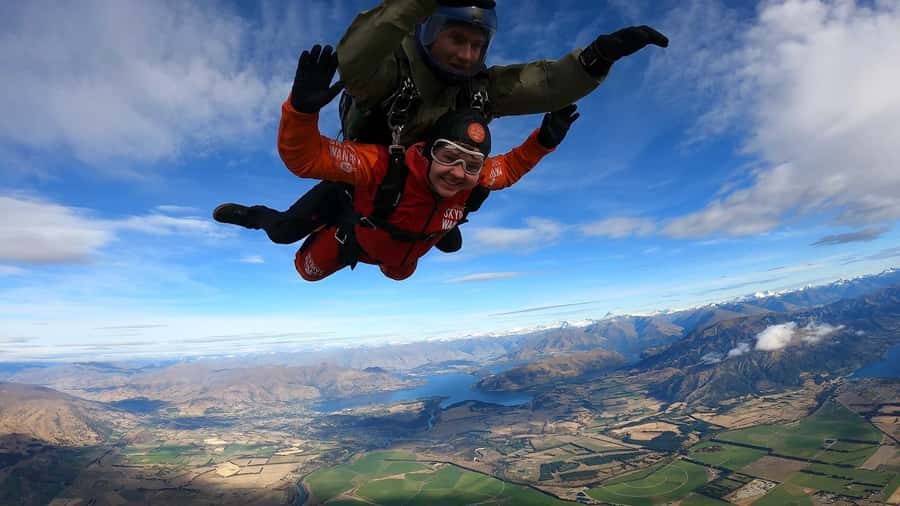
Wanaka gives you a rare kind of parachute jump: the Southern Alps and six lakes spread below you as the plane climbs. At the top, you freefall at up to 200kph, then float under the canopy for about five minutes with time to take in the view.
I like the choice of three altitudes, since you can match the price and freefall time to your nerve level. I also like the careful, friendly instruction, with guides such as Chris, Ben, Jamie, and Lucas singled out for helping nervous first-timers stay calm. The main drawback is cost: the $214 base price does not include the optional photo and video package, which can add a serious extra charge.
Key points at a glance
- Three jump heights: Choose 9,000, 12,000, or 15,000 feet, with 25 to 60 seconds of freefall.
- Big South Island views: Look for Mount Cook, Mount Aspiring, the Southern Alps, six lakes, and the Clutha River.
- A full three-hour outing: Allow time for check-in, briefing, equipment, the flight, jump, landing, and media collection.
- Strong support for nervous beginners: Tandem masters such as Chris, Ben, Rory, Ben, Jamie, and Lucas have been praised for calm, clear help.
- Photos cost extra: Camera and video packages are bought at check-in, not included in the $214 starting price.
- Plan for weather changes: Parachute operations depend on conditions, so keep some flexibility in your Wanaka schedule.
Why Wanaka is such a fine place for a first jump
A parachute jump can happen in many places, but Wanaka gives it a memorable setting. From the aircraft, you look across the Central Otago countryside toward the Southern Alps, with Mount Cook, Mount Aspiring, lakes, and the Clutha River called out during the flight.
That scenic flight matters. The freefall itself lasts only 25 to 60 seconds, depending on the altitude you choose. The ride to altitude gives you about 20 minutes to settle in, look around, and let your tandem master walk you through what comes next.
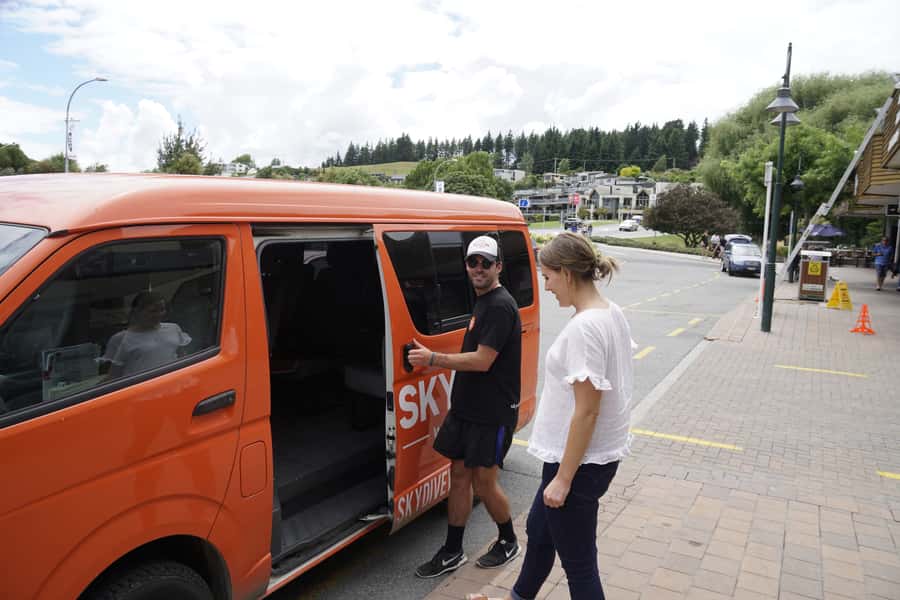
I also like that the experience is not presented as a quick stunt with a rushed handoff. You meet the frontline crew, receive a briefing, put on the equipment, meet your tandem instructor, and then board the aircraft. The process gives you several chances to ask questions before the serious moment arrives.
The setting is especially useful for people who want more than an adrenaline hit. You are not simply looking at the ground below. You are looking out across one of New Zealand’s most striking mountain regions, and the view keeps changing as the aircraft climbs.
More Tandem Skydives in New Zealand:
- Queenstown: Tandem Skydive Experience
★ 4.8 · 475 reviews - Lake Taupo 12,000-Foot Tandem Skydiving
★ 5.0 · 359 reviews - Tandem Skydive Experience in Taupo
★ 5.0 · 324 reviews
Check-in at Mustang Lane and the three-hour timetable
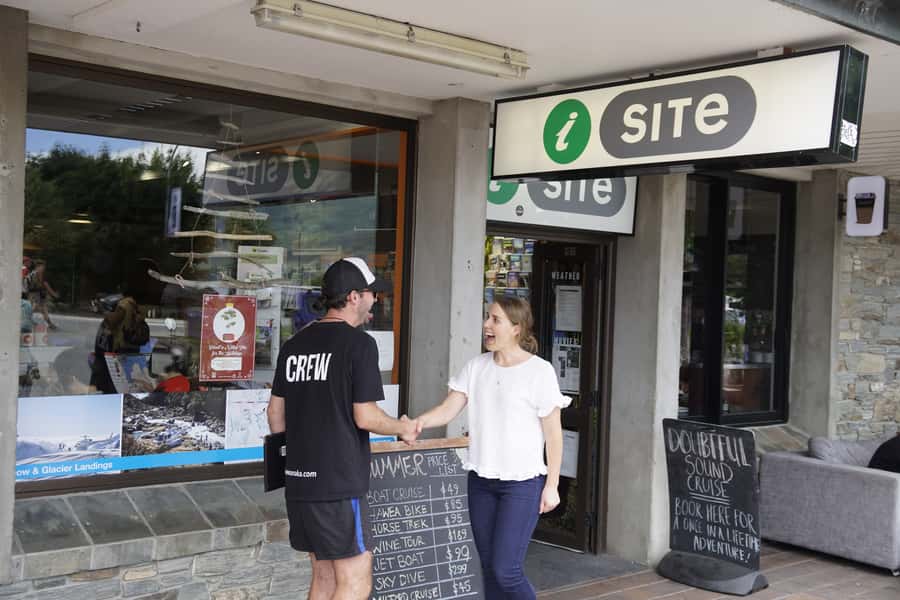
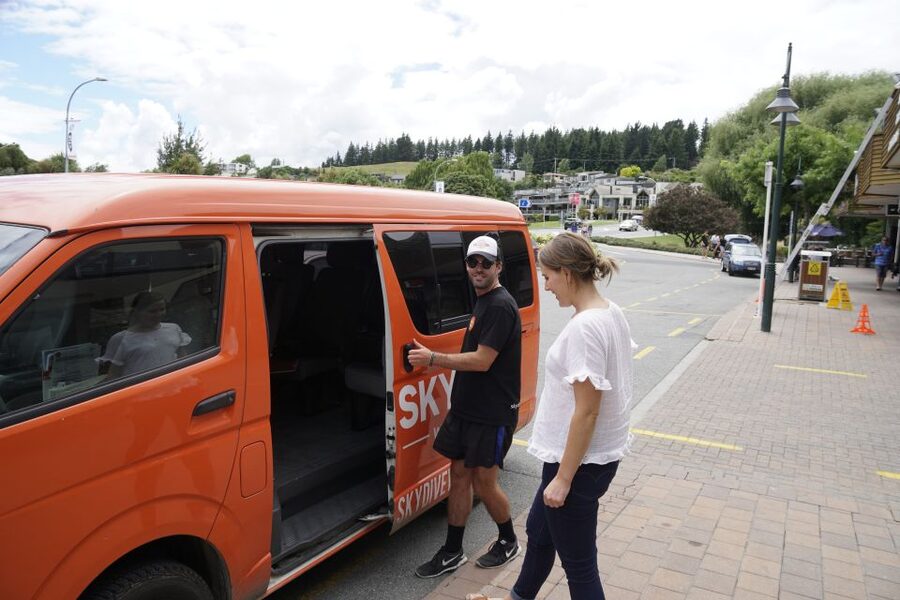
For a self-drive visit, go to 14 Mustang Lane 20 minutes before your scheduled time. If you need the return transfer, meet outside the Wanaka i-Site 30 minutes before departure. The total outing is listed as three hours, although the exact pace can change with aircraft timing, weather, and other jumpers.
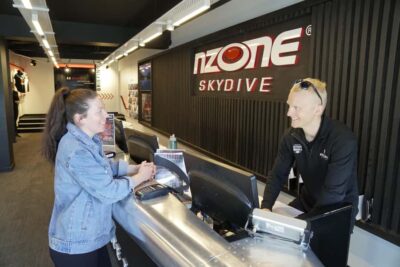
At the base, you meet the crew and complete the initial preparation. You receive a safety briefing and get fitted with a jumpsuit, harness, goggles, gloves, and a frap hat. On-site lockers are available for valuables, and the base has free Wi-Fi and internet kiosks.
Wear closed-toe shoes. Cameras are not allowed, which is sensible given the equipment and the speed of the jump, but it means you cannot record the experience yourself. If you want a visual record, arrange the provider’s photo and video package when you check in.
The operation has received a 4.8 rating from 252 reviews, with 93 percent of customers giving it a perfect score. That does not remove the normal risks of parachuting, but it does point to a well-organized process and staff who are used to helping first-timers through the nerves.
Picking 9,000, 12,000, or 15,000 feet
The altitude choice is the first major decision. It affects both the freefall time and the price, although the supplied information gives a base price of $214 rather than a separate amount for each altitude.
At 9,000 feet, you get about 25 seconds of freefall. This is the option for younger participants and for people who want the experience without choosing the longest possible fall. Children aged 12 and under may only jump from 9,000 feet.
At 12,000 feet, the freefall lasts longer, up to roughly 45 seconds based on the stated range. This is a useful middle ground if you want more time in the air but do not feel drawn to the highest departure point.
At 15,000 feet, you get up to 60 seconds of freefall. The extra time is a real part of the experience, not just a higher number on the booking form. It gives you longer at the fastest, loudest stage of the jump before the parachute opens.
I would choose based on your nerves, budget, and interest in the freefall itself. If this is your first time and the thought of the aircraft door is already enough, 9,000 feet can still deliver the full experience. If you are focused on maximum freefall time, 15,000 feet is the clear choice. Kalista, jumping for the first time from 15,000 feet, found the instructions easy to follow and felt safe throughout.
The 20-minute flight above the Southern Alps
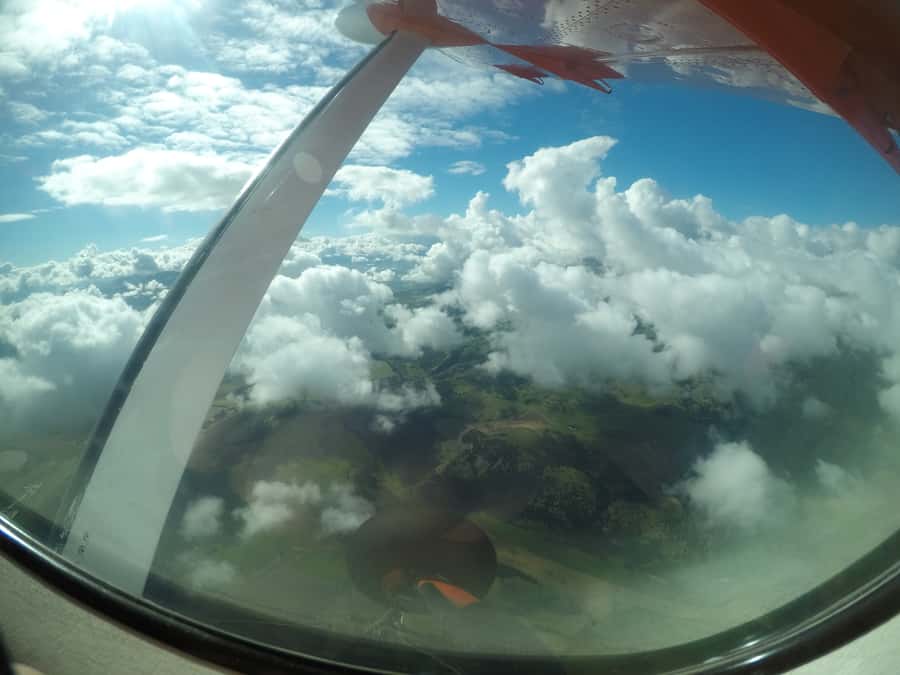
The aircraft ride is more than transport to the jump point. It is a scenic flight of about 20 minutes, and your tandem instructor points out the main landmarks as you climb.
Look for Mount Cook and Mount Aspiring, then take in the wider Southern Alps, the lakes, and the Clutha River. The views are broad rather than close-up, so this is a good moment to look carefully before the freefall begins. Once you are moving at 200kph, you will have less time to study the mountains.
This part may also be the most helpful stage for a nervous person. Your instructor is beside you, the steps are familiar by then, and the aircraft gives you time to focus on the view rather than the final leap. Several participants have praised guides for making them feel safe and at ease, including Chris, Ben, Rory, Jamie, Lucas, and Vance.
The experience uses tandem masters, so you are attached to an experienced instructor throughout the jump. You still need to follow instructions and take part in the process, but you are not managing the parachute alone.
More Skydives in New Zealand:
- Skydive Auckland
★ 5.0 · 1,516 reviews - NZONE Skydive Queenstown
★ 4.5 · 1,438 reviews - 15,000ft Tandem Skydive in Tauranga – Bay of Plenty
★ 5.0 · 305 reviews - Bay of Islands: 12,000ft Skydive
★ 5.0 · 253 reviews
The freefall, canopy ride, and return to earth
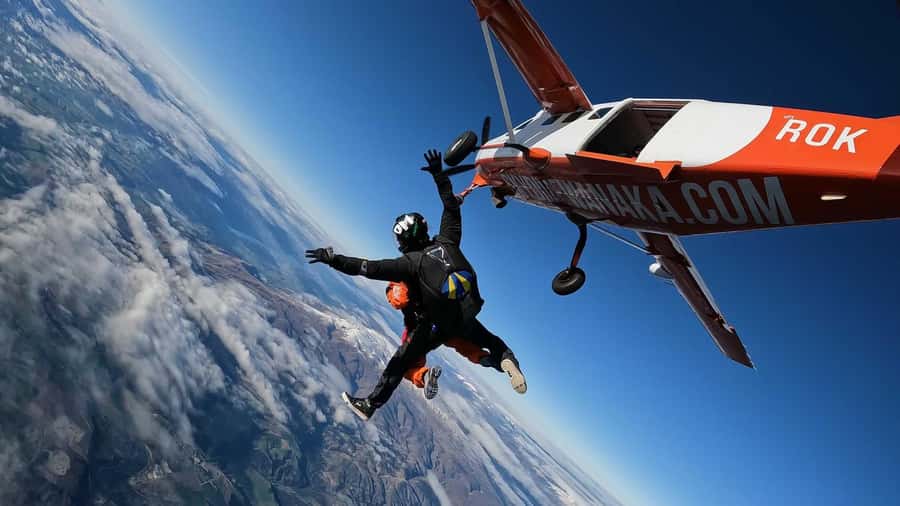
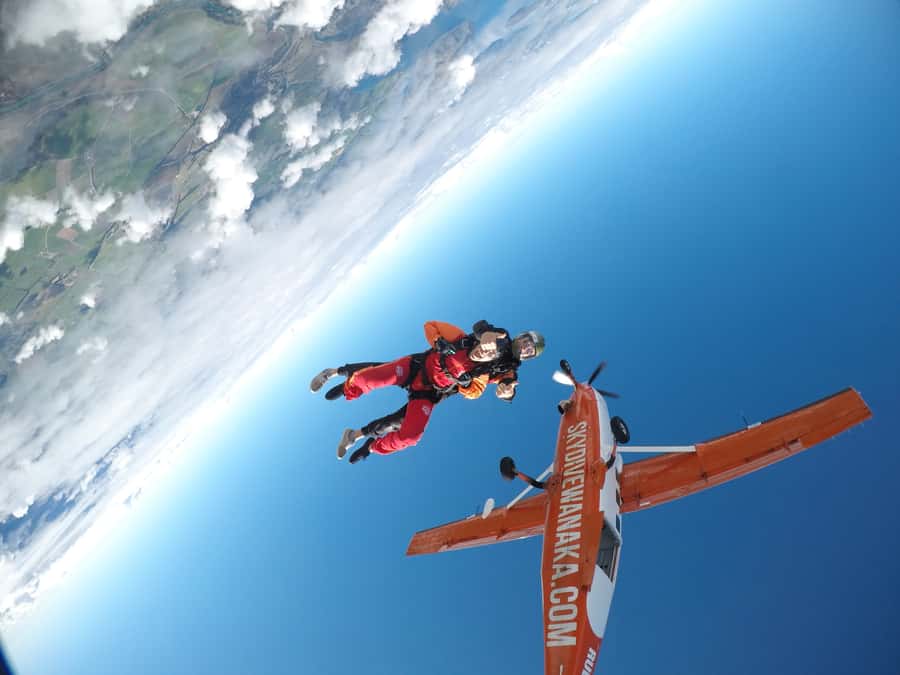
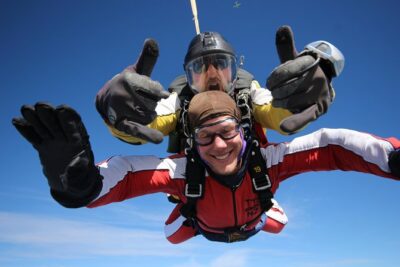
At the chosen altitude, you leave the aircraft with your tandem master. The freefall reaches speeds of up to 200kph and lasts between 25 and 60 seconds, depending on your selection.
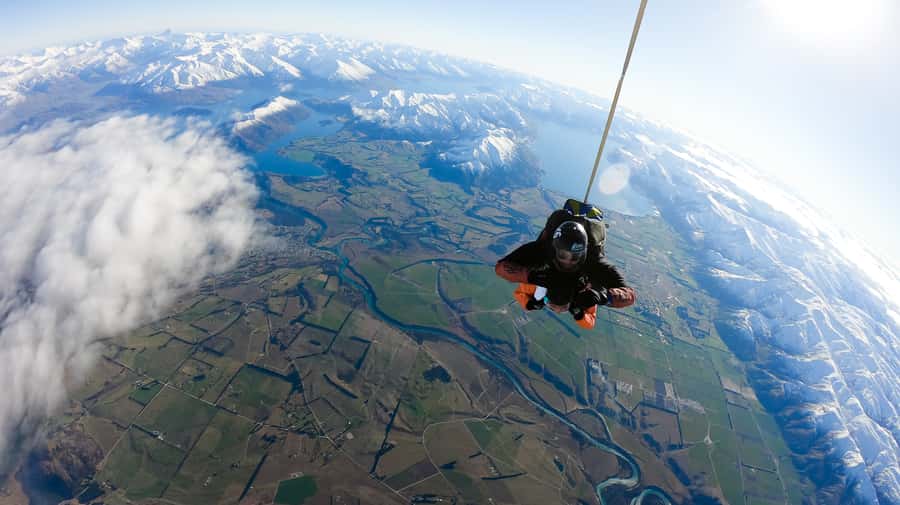
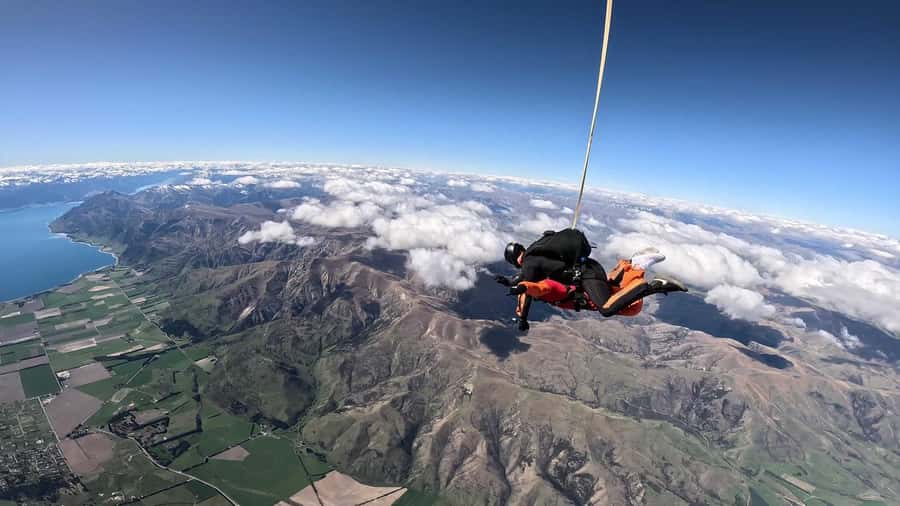
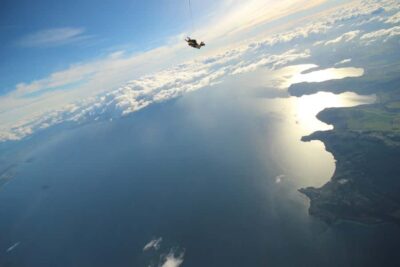
That is the part most people imagine when they think about a parachute jump, but it is not the whole outing. After the freefall, the parachute opens and you have about five minutes under canopy. This is the calmer part, with time to catch your breath and look at Wanaka from above before returning to the drop zone.
One practical note: a participant with motion sickness found the spinning after the parachute opened a bit much. That does not mean it will happen to you, but it is worth telling your tandem master if you are sensitive to motion. The canopy stage is also where you may get a better chance to absorb the views, provided you are feeling steady.
On landing, you return to the base, remove the gear, and wait for your edited photos and video if you purchased them. The post-jump mood is usually high energy, with smiles, hugs, and plenty of relief. You can then gather around the computer and watch the footage with friends or family.
The instructors are a major part of the experience
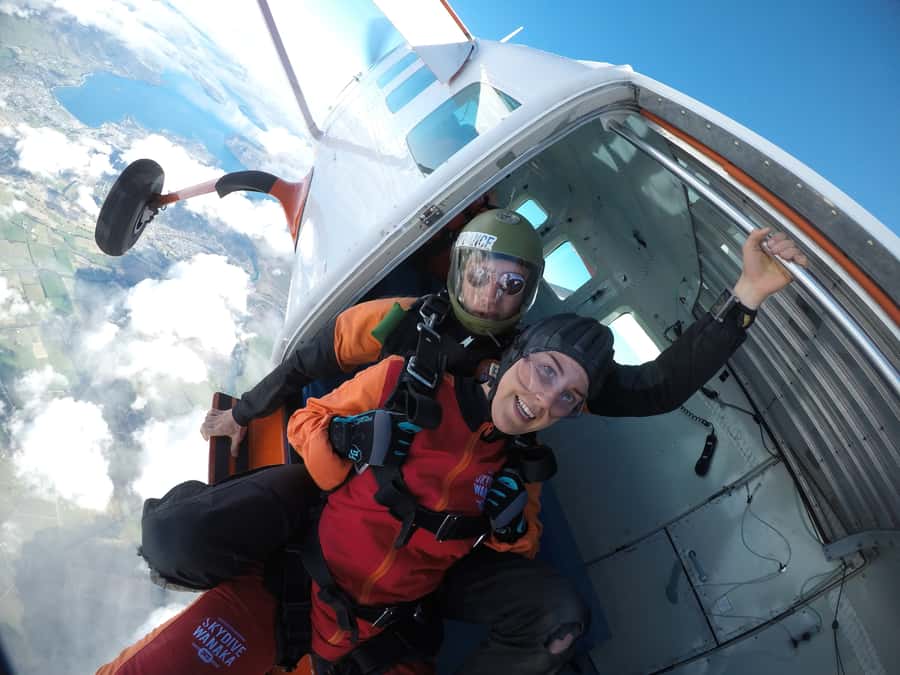
The mountains get the headline, but the tandem master shapes your day. You need someone who can give simple instructions, keep the mood light, and stay focused on safety.
Chris receives especially warm praise for making nervous people feel relaxed and bringing real energy to the jump. Ben is noted for helping participants settle before the aircraft door, while Jamie, Rory, and Lucas are also named for friendly, reassuring support. Vance appears in connection with camera work as well as the jump experience.
These names do not guarantee who you will be paired with. They do show the kind of staff presence you should expect: professional, upbeat, and used to first-timers. The equipment is described as current and clean, and the procedure includes repeated checks before departure.
That combination matters more than a clever speech. You may arrive excited, frightened, or both. A good tandem master can turn the waiting period from dead time into preparation, while clear instructions help you act when the moment arrives.
What the $214 price includes, and what it does not
At $214 per person, the base price includes the tandem jump from your chosen altitude, the freefall, the canopy ride, your tandem master, and all required safety gear. You also get access to the base facilities and lockers.
The value depends on what you want from the day. For the actual jump, this is a substantial but understandable price for a three-hour operation with trained staff, aircraft time, specialist gear, and a scenic flight over the Southern Alps.
The cost can rise sharply if you want a permanent record. Photo and video packages are not included and are available to purchase at check-in. One parent specifically felt that a roughly $200-per-person charge for photos and video was too high, especially when two family members were jumping and no shared package discount was offered.
My advice is simple: decide before arrival how much the footage matters to you. If you want to relive the moment, ask about the media cost at check-in and budget for it. If the jump itself is your priority, skip the add-on and enjoy the experience without feeling that you need to buy the final product.
Transport, weather, and small practical issues
Self-driving is straightforward if you can reach 14 Mustang Lane. Arrive 20 minutes early. For return transfers, use the pickup point outside the Wanaka i-Site and allow 30 minutes before the scheduled departure.
The transport service has been rated highly overall, but one person waited about 40 minutes for the shuttle back. That is not a reason to reject the experience, but it is a reason not to schedule a tight connection or meal reservation immediately afterward.
Weather can also alter your plans. One booking was cancelled in Wanaka because of conditions and shifted to Queenstown the next day. The information provided does not promise that every cancellation will receive the same alternative, so keep a spare half-day or full day in your itinerary when possible.
Free cancellation is available up to 24 hours before the activity for a full refund, and you can reserve now and pay later. Those policies are useful here because mountain weather can change, though you should still check the exact terms attached to your booking.
Age, weight, and safety requirements
The minimum age is six, and the minimum weight is 30 kilograms. Participants over 115 kilograms, or 254 pounds, cannot take part. Everyone is assessed by the tandem master at the drop zone, and each passenger must fit securely into the harness.
Children aged 12 and under are limited to the 9,000-foot option. Pregnant women cannot participate. These restrictions are not small print to skim past, especially if you are booking for a family group.
Parachuting carries real risk. The provider’s warning includes possible problems during the aircraft flight, descent, opening of the parachute, or landing, as well as risks related to weather or health. You take part at your own risk, so speak up about health concerns and follow the tandem master’s directions carefully.
The experience is not appropriate for someone looking for a passive sightseeing flight. Even with a tandem instructor handling the main technical work, you are taking part in an activity with genuine physical risk.
Who will get the most from this Wanaka jump
This is a strong choice for a first-time parachute jump, especially if scenery matters as much as the thrill. The clear briefing, tandem format, equipment provision, and repeated safety checks make it approachable for people who are excited but unsure.
It can also work well for families with eligible teenagers. Two young people aged 13 and 15 enjoyed the 9,000-foot option, although the accompanying parent could not see the jump or landing clearly from the ground. Spectators should not assume they will have a close view of the action.
Older participants may also be eligible. A 76-year-old completed the experience with a younger family member and enjoyed it, but age alone does not replace the drop-zone assessment. The harness fit, health condition, and tandem master’s decision remain important.
I would be less quick to recommend it to someone with a very tight schedule, strong motion sickness, or a firm limit on extra costs. Build in weather flexibility, ask about the media package before you commit, and allow the full three hours rather than treating it as a quick activity between other plans.
Should you book the Wanaka tandem jump?
Book it if you want a major New Zealand memory and are ready for more than a scenic flight. Wanaka gives you a beautiful setting, three altitude choices, a long canopy ride, and staff who have repeatedly helped nervous people feel prepared.
The $214 price is reasonable for the core experience, but the optional photos and video can change the total considerably. Check that cost before you arrive, wear closed-toe shoes, keep your schedule flexible, and choose your altitude honestly rather than automatically selecting the highest one.
For most eligible first-timers, I would choose the 12,000-foot option as the practical middle ground. Choose 9,000 feet for a shorter freefall or for children aged 12 and under. Pick 15,000 feet if the longest possible freefall is the main reason you are booking.
FAQ
How long does the Wanaka tandem parachute experience take?
Allow about three hours from check-in through the jump and return to the base. The aircraft flight to altitude takes about 20 minutes, and the canopy ride lasts about five minutes.
How much freefall time do I get?
The freefall lasts 25 to 60 seconds, depending on whether you choose 9,000, 12,000, or 15,000 feet.
What landmarks can I see from the aircraft?
The flight may include views of Mount Cook, Mount Aspiring, the Southern Alps, several lakes, and the Clutha River.
What is included in the $214 price?
The price includes the tandem jump, your selected altitude, the freefall, the five-minute canopy ride, a tandem master, safety equipment, an on-site locker, and access to the base facilities. Photos and video are extra.
What should I bring?
Bring closed-toe shoes. Cameras are not allowed.
Can children take part?
The minimum age is six and the minimum weight is 30 kilograms. Children aged 12 and under may only jump from 9,000 feet. All participants must pass the tandem master’s assessment and fit securely into the harness.
Can I cancel if my plans change?
You can cancel up to 24 hours in advance for a full refund. Reserve now and pay later is also available, which can help keep your plans flexible.
Just added around New Zealand
- Skydive Mt. Cook – 20+ Seconds of Freefall from 10,000ft★ 5.0 · 5 reviews
- Skydive Mt. Cook – 70+ Seconds of Freefall from 16,500ft★ 5.0 · 5 reviews
- Skydive Mt. Cook – 45+ Seconds of Freefall from 13,000ft★ 5.0 · 14 reviews
- Tasman Experience and Skydive | Combo★ 5.0 · 2 reviews
- Bay of Islands: 9000ft Skydive★ 4.5 · 12 reviews
- Queenstown: Ticket for 2 Indoor Skydiving Flights★ 4.4 · 15 reviews
- Queenstown: Nevis Bungy & Catapult Combo★ 5.0 · 2 reviews
- Queenstown: Nevis Thrillogy (Bungy, Swing, Catapult)★ 5.0 · 5 reviews
New Zealand Skydiving, compared.
15,000ft Tandem Skydive in Tauranga – Bay of Plenty
Read our review →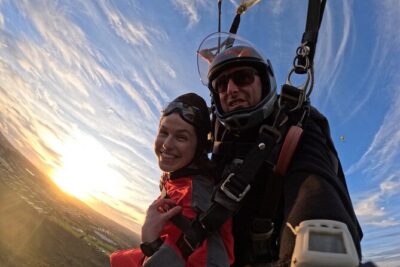
Browse the lists this tour appears in